
You are currently browsing the tag archive for the ‘Japan’ tag.
What We Learn From 5 Japanese Centenarians
By Shlomo Maital

On November 7, New York Times ran a lovely piece on five Japanese centenarians (aged 100 or over) who continue to work every day. Here is a brief summary of what we learn. By the way, Japan has 100,000 centenarians! More per capita than any other country. Diet, health care, exercise… all are important. But according to these five, work is key.
Massafumi Matsuo, 101, farmer. “I work to stay healthy,” he says simply. He grows eggplants, cucumbers and beans. He has survived esophageal cancer and COVID.
Tomeyo Ono, story teller. She is a teller of minwa, folk tales, a career she took up after 70. (At 101, she is the oldest member of a story telling collective). She says she is determined to keep telling stories “until she joins her friends and family who have passed on”.
Tomoko Horino, 102, beauty consultant. She says, “when I first tried on makeup I felt so pretty. I wanted to make others feel the same way”. “I love making people beautiful”. She makes her sales over the phone, with occasional visits to her home. Keeping busy helps her fend off loneliness.
Fuku Amikawa, 102, ramen chef. Five or six days a week, Fuku works the lunch shift at her family’s ramen restaurant alongside her son and daughters, using long chopsticks to swirl ramen noodles… Her restaurant marked its 60th anniversary. She says that physically and emotionally, work changes the quality of her life.
Seichi Ishii, 103, bicycle repairman. He goes to bed every night excited about the customers who might show up the next day. If I die here in the workshop, he says, I will be happy. Working at his shop gives him more joy than even singing karaoke every Sunday at his favorite snack bar.
I think we need to give our brains a reason to keep us alive. If we do, then our brains will continue to function well. Retirement? Make sure you retire TO something, not just FROM something.
The Tragedy of Okinawa: A Lesson for the World
By Shlomo Maital

Consider Okinawa, a Japanese island. A sad natural experiment is underway. A natural experiment is when without intervention of scholars, changes occur that enable us to gain major insights.
Once, Okinawa was a ‘blue zone’, a region where the elderly lived very long lives in good health. But… no longer. As a scholar reports to the German Deutsche Welt website: “An influx of foreign influences, ranging from fast food to less exercise, the stress of modern life, as well as a loss of the traditional sense of ‘ikigai’ in younger people are all to blame.”
“For generations, the people of Okinawa prefecture in Japan have enjoyed the reputation of being among the longest-lived humans on the planet. Medical experts and gerontologists have flocked to these semi-tropical islands off southern Japan in search of the secret to the local population’s longevity, with most concluding it was a combination of a nutritious diet, regular exercise and the support of family and the broader community.”
But then? US military bases in Okinawa began exposing young people to fast food and American diets. And then…
“The life expectancy of the people of Okinawa is coming down quite rapidly and we believe the problem is that younger people have failed to follow in the footsteps of earlier generations,” said a part time as a clinical cardiologist and is joint-founder of the Naha-based Okinawa Research Center for Longevity Sciences. “The people of Okinawa have been influenced by the food and lifestyle choices of other societies, particularly that of the United States.”
“Since Japan’s surrender at the end of World War II in 1945, Okinawa has remained home to a large number of US military bases and tens of thousands of troops. A culture of fast food and television over physical exercise has rubbed off on local people, he said, and the results can now be seen.”
And “ikigai”? An 89-year-old Japanese man, Suzuki, recounts: “”I believe the concept of ‘ikigai’ is important to our lives, especially in older people,” Suzuki said, referring to the traditional idea of the reason a person has for living. “My job at the hospital is very busy and that is my ikigai,” he said. “It is important for me to help people who are sick and I do not consider them my patients, I see them as my friends. But being with them also helps me as isolation and loneliness are very dangerous for old people.
Diet. Activity. Exercise. Purpose in life. As Okinawa replaces its own culture with that of the US and the West – people live shorter lives, and perhaps, less fulfilled ones.
Is there a lesson here?
Economic Recovery: We All Should Prepare for a Long Convalescence
By Shlomo Maital

How quickly will economies in the US, Canada, Japan and Europe bounce back? Will it be fast, like China, or very slow, like the US?
Bloomberg has been tracking this key issue, using a wide variety of indicators; the visual track for 10 countries is shown in the diagram.
It has been 5 months since these economies bottomed out, with 60% – 80% decline in the economy, owing to lockdown, in a very short period of a month or six weeks.
So far, no matter what the national strategy (or lack of one, as in the US) — herd immunity (Sweden), local lockdown (Italy), school-opening and back-to-normal prematurely (US) — economies are plateau-ing, at 60% to 80% of their previous pre-pandemic level. And in most of the 10, COVID-19 is making a comeback, in a second or third wave — with the age of those infected declining sharply, as young people emerge, head to bars, and parties, and colleges – and become ill.
And, if that isn’t bad enough, a new forecast from the leading pandemic prediction institution, at Univ. of Washington, reports this: A new long-term forecast predicts a significant acceleration in Covid-19 deaths in the U.S. as colder weather takes hold. Under the latest projections from the Institute for Health Metrics and Evaluation at the University of Washington’s School of Medicine, deaths could rise to 410,000 by the end of 2020. In a worst-case scenario, there could be 620,000 fatalities, more than three times the number of Americans who have died over the past eight months. The difference between the projected and worst-case scenarios comes down to how diligent authorities are in mandating masks and social distancing, according to the report.
Readers, fasten your seat belts. Many of us yearn for the good old days, like, those we have 6 months ago. It does not seem likely any time soon. Prepare yourself and your family for a rocky road to recovery. It will be a marathon, not a sprint. Even optimistists believe an effective vaccine won’t be available for many months – and then, how many vaccine-deniers will turn it down, lacking trust in leaders who follow politics rather than science?
Who’s In Charge? Hey – I am!!!
What We in the West Can Learn from the East
By Shlomo Maital

Why is Asia, in general, doing so much better than the US and South America, in battling the pandemic? I found a possible answer in an old American Psychologist article, published 36 years ago. *
In times of enormous uncertainty, as today, people grasp at straws. They try to re-establish control of their lives, when they feel it has slipped away.
According to Weisz et al., there are “two general paths to a feeling of control”: Primary control, and secondary control.
* Primary control: “individuals enhance their rewards by influencing existing realities (i.e. other people, circumstances, symptoms, or behavior problems).” In the US South and West (Florida, Texas, Mississippi, Arizona), people take control by saying, who are you, Governor, Mayor, to tell me to lock down, stay inside, wear a mask??!! Nuts to that. I’ll do what I wish. I am a free person. I have First Amendment rights. Who’s in charge here? I am!!!
This is primary control. And – it leads to disaster, as we are seeing now. Because it focuses on the wellbeing of me, the individual, and the hell with everyone else. And it denies reality, even when spoken by those who know.
* Secondary control: “Individuals enhance their rewards by accommodating to existing realities and maximizing satisfaction or goodness of fit with things as they are”.
Primary control is highly valued in the US, for example. Secondary control is far more highly valued in Japan – and other Asian nations. China, for instance, has a 5,000-year-old tradition of “the greater good”. This is the basis of ‘secondary control’. Accommodating to existing realities.
Primary control people seem to deny the pandemic; there have been COVID-19 parties in the US — where a person with novel coronavirus is invited to a party, as a sign of defiance, a belief it’s all a hoax. Recently, according to news reports, “a 30-year-old dies after attending ‘Covid party’ in Texas. Patient said: ‘I think I made a mistake, I thought this was a hoax, but it’s not’. He paid a heavy price.
I believe that in general, if you drew a color map of the world – color countries with “primary control” red, color countries with “secondary control” green – you will get a fairly close match with the coronavirus hotspot countries today, with a few exceptions.
It sounds very extreme but – I believe we are seeing a global drama of social evolution. A black-swan pandemic event occurs that kills people. Nations try to adapt. Some have cultures that kill many people, rather than save them. Other nations have cultures that save people’s lives rather than kill them. And out of this mess, emerge nations whose culture is better adapted to the environment, stronger and fitter.
It’s not too late. We in the West can learn from the nations in the East. After decades of arrogance and alleged superiority, it is now time to become very very humble. The East knows something. We can learn from them, before it’s too late.
* “Standing Out and Standing In: the Psychology of Control in America and Japan.” John R. Weisz et al. American Psychologist, September 1984. Pp 955-969.
Local Empathy: Toilet Innovation in Japan and Kenya
Incremental Excremental Innovation
By Shlomo Maital
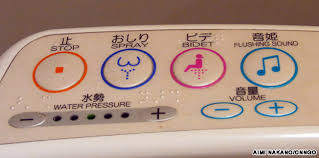
Toto’s Sound Princess
The core of innovation is meeting an unmet want or need in a creative manner. The tough part is simply identifying that need. Here are two examples of how empathy – feeling AS IF you were the person in need – is crucial. And how incremental innovation can be…excremental.
* A Japanese toy company, Toto, invented the otohime, or “Sound Princess”. It is installed in thousands of restrooms across Japan. What does the Sound Princess do? When you press the button (see photo), it mimics the sound of flushing water.
Why? Many Japanese women were continually flushing, so that the sound would mask the sounds they made in using the facility. The portable purse-friendly device is a huge best-seller in Japan.
I would LOVE to know the back story, of how (and more important, WHO!) invented this device.
* The Umande Trust, a Kenyan community organization, tackled the problem of disposing of human waste in Africa. A common solution is the ‘flying toilet’ – plastic bags of human waste, flung as far as possible. Umande builds massive biodigesters that composts the output of a fleet of toilets. Each toilet charges a few pennies for each use, and makes about $400 per month. The biodigester composts the waste, creates biogas and makes hot water for some 400 residents.
There are probably millions of would-be entrepreneurs who are trying to devise apps, to rival WhatsApp, sold recently for $19 b. The field is too crowded. I wish they would focus on dark corners, basic areas where there are unmet needs because, well, human waste is just not appealing. By empathizing with ordinary people, observing their daily lives, entrepreneurs can create value in areas far from the standard smartphone. But, it starts with empathy, a keen eye and sharp ear, and a deep passion for making the lives of ordinary people better, even incrementally.
* Dayo Olopade, International New York Times, March 1-2, 2014, p. 6

 TIMnovate