You are currently browsing the category archive for the ‘Global Crisis Blog’ category.
Superheroes Meet the 3D Printer Prosthetic Hand
By Shlomo Maital

A year ago, I blogged about Daniel Omar, South Sudan, and his 3D prosthetic arm, created by an American startup called Not Impossible Labs, founded by Mike Ebeling. Ebeling found a way to create inexpensive functional prosthetic arms for Sudanese children badly wounded in the Sudanese civil war, by using 3D printers and teaching locals how to use them to ‘print’ arms.
Today, the New York Times, “Making the Hand of a Super Hero”, by Jacqueline Mroz, reports that another online volunteer group, E-nable, founded by Dr. Jon Schull, “matches [American] children in need of prosthetic hands and fingers with volunteers able to make them on 3-D printers.” Designs are downloaded onto the machines at no charge. Charity indeed begins at home. These prosthetic limbs cost as little as $20 to $30, a fraction of the cost of conventional prosthetics, and they work just as well.
And the neatest part? The limbs are designed to look like, say, limbs from Transformers or Cyborg superheroes. The photo shows Cyborg Beast, a prosthetic hand that could well be one used by superhero Steve Austin, the bionic man. Rather than try to hide or disguise them, they are in bright fluorescent colors and scream, ‘hey look at me! I’m cool!’. The prosthetic hands say, I’m not disabled, I’m actually, well, kind of a superhero. And “transformer” is the right word – the printed hands transform a disability into a superhero cool device.
Some of the statistics that demonstrate need are shocking. Some 9,000 American kids receive amputations yearly just as a result of lawn mower accidents alone, and one in 1,000 infants is born with missing fingers.
We’re still waiting for 3D printing to change our lives. Meanwhile, good people have discovered a wonderful use for them. As always, the best ideas are always the simplest.
The Desperate Search for Good Jobs
By Shlomo Maital

Writing in the recent issue of Scientific American, the Swedish-British economist Karl Benedict Lund raises an issue at the core of our economic woes, and not sufficiently discussed: Where in the world will we find well-paying jobs for young people, jobs that can sustain and help the middle class to endure?
The problem is, in the past, new industries that were born out of innovation created jobs to replace the industries that were obsolete and dying. Sunrise industries’ new employment offset the lost jobs of sunset industries.
But no longer. Frey notes: The video-streaming startup Twitch, bought by Amazon for almost $1 billion, employs only 170 people. In the past a $1 b. company would employ many times that. Google has annual revenues of $66 b., and employs only 53,000. IBM, with roughly similar revenues, employs 8 times that (431,000 in 2013). Dell employs 108,000. But Dell and IBM are shedding huge numbers of workers. Once, Dell came along to absorb many of the 250,000 (!) workers that IBM shed in 1993-5. No longer.
And Facebook? Facebook employed only about 9,500 employees in 2014, with $8 billion in revenues. When Internet companies like Google, Twitter and Facebook can generate a million dollars in revenue per employee, the founders and shareholders rejoice, but ordinary folks who seek employment do not.
Frey’s research reveals this fact: only 0.5 per cent of the U.S. labor force was employed, in 2010, in industries that did not exist 10 years ago. And there are quite a few such industries.
How will society deal with innovation that creates wealth, products, services, and in general wellbeing, without actually producing many new jobs? Will we have to accept a bifurcated society, where a fortunate handful become millionaires and the rest of us scrounge for handouts? What happens when the old pattern of new industries creating jobs to replace ones lost by dying industries fails, and new industries simply don’t create jobs?
One possible solution: A great many more of us will need to become independent business persons, creating our own job by starting small businesses. This will take a whole new approach to the way we educate our young people, and a new support system that, for instance, can supply micro-credit to such businesses.
Bye, Jon Stewart!
By Shlomo Maital

Jon Stewart announced this week that he is retiring from The Daily Show on Comedy Central, after 16 years. His motive? “I heard from multiple sources that my family is …really nice people”…. And indeed, that may well be the reason.
I personally learned a powerful lesson from Jon Stewart, born Jonathan Stuart Leibowitz on Nov. 28, 1962. To make a point, you can yell, scream, protest. You can write articles and blogs, with massive data, tables and numbers.
Or, you can use humor, satire, a sardonic smile, and make a point to get a laugh.
Which is most effective? Humor, by far. Why? Because, people are never more serious than when they are joking. I learn far more about what people are thinking from their jokes than from what they say. Why? Because some things are hard to say, and if you couch them in humor, satire or a joke, somehow it’s easier to be frank.
Listen carefully to how people kid you. You will learn a great deal about yourself, and about what others think of you. Even your spouse or significant other.
Jon Stewart tore strips off Israel, off Israel, off Obama. He especially loved to expose hypocrisy, which alone can account for the 98 per cent of missing ‘dark matter’ in the universe. He especially spoke to young people, who hate conventional news but loved the way he presented it.
He was great at discovering talent. And above all, as Senator Tim Kaine (Virginia) says, “even as he cracked jokes, ultimately he was making a serious point.” Like when he had the Secretary of Health Kathleen Sibelius on his program, and tried to see which was longer, downloading every movie ever made onto his laptop or signing up for coverage under the Affordable Care Act.
Bye, Jon Stewart. Enjoy your family. Rest well. We’ll miss you.
When Is Good News Bad News? When It’s the Stock Market
By Shlomo Maital

Love that stock market! It goes up on bad news, down on good news. Can we understand why?
I belong to a panel of the German Ifo Institute, that quarterly surveys experts around the world to assess the global economic situation. The latest report? “world economic climate deteriorates, economic expectations less positive, inflation expectations remain low, US dollar expected to rise (it has), interest rates look set to remain stable (maybe not).”.
The U.S. stock market has risen sharply in the past year. But it recently declined. Why? Good news on the American economy – U.S. job creation and GDP growth are stronger than expected.
Run that by me again? How can good news be bad news for the stock market?
It’s simple. Wall St. is incurably addicted to cheap money and low interest rates, and plentiful credit. When the economy gets stronger, it increases the likelihood that Janet Yallen and the Fed will raise interest rates, ending the era of cheap money, and denying Wall St. from its daily/weekly fix of low-interest cash, used to speculate and earn billions. So the stock market drops, because good news for the economy is bad news for Wall St.
Does this show a sharp conflict of interest between the general population and the moneybags who run Wall St.?
“Choose Life!” – Kayla Mueller
By Shlomo Maital
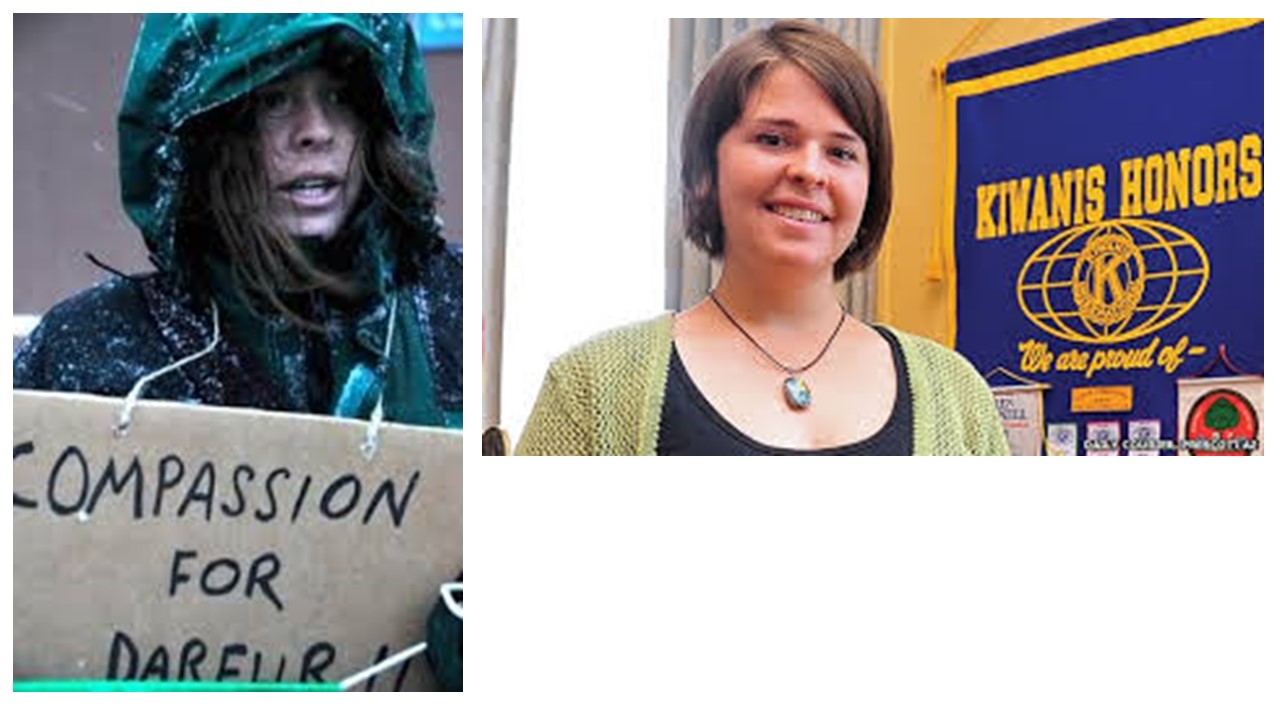
One of the most powerful and terse passages in the Bible is Deuteronomy 30:19: “I have set before you life and death, blessings and curses. Now choose life”. The message is clear. We DO have a choice. We can see the dark side of everything, or we can see the bright side, the ‘life’ side.
Kayla Jean Mueller was a 26-year-old Jewish aid worker from Arizona, held in ISIS captivity. As a teenager in Prescott Arizona, she was voted “best smile” in her graduating year in high school. She was always drawn toward helping the weak, the downtrodden, according to her parents. She led marches to help Darfur, and was college president of a student-led movement to end mass atrocities. Her story is beautifully told by Dana Harman in today’s English edition of the daily Haaretz.
Mueller had been in Syria, as an aid worker, for one year and a day, when she was kidnapped on Aug. 4, 2013. Earlier, she had travelled the world, volunteered in India and in Israel, and then in the West Bank.
President Obama recently announced that Kayla was dead. ISIS says she was killed in the Jordanian bombing raids. In any event, ISIS is responsible. Her family managed to keep her identity secret, hoping this would help gain her release.
During her 18-month captivity with ISIS, Kayla wrote a note to her parents. Here is part of it:
“I have been shown in darkness, light – and have learned that even in prison, one can be free. I am grateful. I have come to see that there is good in every situation, sometimes we just have to look for it.”
Kayla may be physically dead. But her message will live forever. Choose life, even when the forces of darkness choose death. Choose light. Choose to see the bright side. Long after the murderous thugs of ISIS are dead and buried, Kayla’s message to the world will live on.
What Innovators Learn from the Google Glass Failure
By Shlomo Maital

Diane von Furstenberg wearing Google glasses
OK, Google Glass has failed. Google announced last week that it is ‘going away’. From the buzz at New York Fashion Week, when fashion designer Diane von Furstenberg sported a red pair and sent her models down the runway with multi-colored ones in 2012, to the cancellation, many things happened. Much can be learned by innovators. Many lessons are found in today’s New York Times piece by Nick Bilton, who broke the original story about Google glass. (“How Google Glass went from the hottest thing in wearables to Tech’s Edsel”. Friday Feb. 6)
- It was not a failure. Perhaps there is no such thing as failure, in innovation. Why? Google learned a great deal. It learned, again, about the super-sensitive issue of privacy. Only a handful of people are concerned about it, but they are vocal and active, enough to sink a project. Some companies banned the wearing of Google glasses in their premises, for privacy reasons. Who wants everything you do, see and say broadcast to the world?
- Skunk works: Lockheed ran a secretive Skunk Works operation in California, where its crazy inventors developed things that changed the world. Google had its own skunk works inside Google, Google X, even though you cannot imagine a more creative, open culture than Google’s Mountainview, CA., campus. Somehow you have to protect the ‘crazies’ and give them space and freedom.
- Interdisciplinary teams; Google Glass was developed by a weird team, with rock-star scientists and designers. Sergei Brin, Google co-founder, even joined the team. Having the company founder in the team helps a lot – gives it credibility.
- Freedom: The Google X team did not have a predefined pre-ordained project. They themselves invented Google Glass.
- Marketing: Google got to market quickly, but, through Glass Explorers, a select group of geeks and journalists who paid $1,500 for the privilege of being an early adopter. I think this was a good idea, in general. It applies Guy Kawasaki’s principle, “ship, then test”…get to market FAST. But “the strategy backfired”, according to Nick Bilton (who broke the first story about Google glass). The product just wasn’t even CLOSE to ready for ‘prime time’. Reviewers described it as the “worst product of all time”, noted its abysmal battery life.
- What’s love got to do with it? Yup — there was Cupid, involved, and he wasn’t wearing Google glasses. Sergei Brin became romantically involved with the Google glass marketing manager, even though he was married, and the person he courted was one of his wife’s friends. Vanity Fair reported the affair. Ouch.
- Radical ideas are reborn, like the Phoenix. A former Apple product executive is working on a new and improved version of Google glass. Someday, someone, maybe not even Google, will get it right. Apple’s culture is far better at this than Google’s.
Explaining (again) the Euro/Greece Crisis to Grade 5
By Shlomo Maital

Hello Grade 5’ers! Thanks for inviting me. I know my subject, money and economics, is BOOOOOring. But believe me, it is important for you to know what is going on, because when you are just a few years older, what happens in Europe will affect you. Because Europe is the world’s biggest, or next-to-biggest, economy, depending on how you add the numbers.
So here’s the deal. Europe has had lots and lots of terrible wars, with France, Germany England and others fighting each other. Someone (in France) had a great idea. What if we stopped fighting and made money together, by buying each other’s stuff? If you buy my stuff, I’m not likely to want to fight you. So they called it the European Single Market. And it worked beautifully. No-one thinks Europe will have a big fight any time soon (though, Russia may be an exception – that’s another scary story).
If you sell and buy, you use money. But there are 28 countries that belong to this European club. What a mess if you have to start finding escudos, guilders, lira, pounds, francs, and all kinds of weird money. So 19 of the countries decided they would use the same new currency, which they called the “euro”. Kind of like America, where the 50 states all use the same money, the dollar. Some 332 million Europeans use the euro.
But there is a problem. If you have the same money, you have to have the same rules for making the money. That means, you have to get all those 19 countries to agree on the “rules of the game”. You can’t play baseball or football if neither team agrees what the rules are, right? And here is where things broke down.
Some countries want there to be lots and lots and lots of euros. Some countries want just a little bit of money. Some countries (like, a little country called Greece, only 11 million people) broke the rules, spent too much money, and got into trouble, just like we do when we spend too much. Because they had to borrow and now they have trouble paying back what they owe. Other countries, like Germany, who had lots of money, helped Greece but sent Greece kind of to the penalty box. No more spending. Less treats, less goodies. And Greece didn’t like it. I wouldn’t either.
So Greece has had elections and its new leaders are making a big fuss about the punishments other countries have given it. Some think Greece might even leave the ‘club’ (the euro). That might be terrible, because then some other countries might do the same, and the whole club would collapse. So, the 27 countries want Greece to stay in the club but they do not agree how to make that happen. It’s like, do you punish the Greek people for overspending (they didn’t do it, their leaders did)? Do you forgive them, and then others might do the same? Why should other countries give money to Greece? But if they don’t, they will lose too, because the whole Euro club might come apart.
And you know, Grade 5’ers, I guess you could see this coming. If you start a game, and you have not all agreed clearly on the rules, including for things that are really strange (like, what if two guys are on second base – who’s out? What if one player’s mother comes on the ice and drags him (the goalie) off to Hebrew School? (yup, happened to me) – you’re going to get into trouble. Those Europeans, they started a club without a clear set of rules, and worse, without any way of leaving it without causing REAL trouble.
I’m pretty sure they will muddle through and keep that weird euro club going. They all have too much to lose. But boy, kids, I think you Grade 5’ers could have done a far better job. Those Europeans, they couldn’t see their fingers even if they were right in front of their nose. So, when you go to play a game, or start a club, make sure everyone knows the rules. Kids usually do. It’s the grownups who are dumb about that sometime.
Feeling Empathy for Others: It’s Not Enough!
By Shlomo Maital

In a recent blog, I recounted NYT columnist Nicholas Kristof’s story about his high school chum, Kevin, who died recently after sinking into poverty and despair:
In his Op-Ed piece, Nicholas Kristof mourns the death of his school chum Kevin Green. They grew up together in Yamhill, Oregon, and ran cross-country together. Kevin lost a good job, went on welfare, got divorced, became obese, lived on food stamps, got diabetes, and died at age 54. Tea Party Republicans say he “had it easy because he got government benefits without doing anything”. Kristof notes that Kevin collected cans and bottles by the roadside, to make $20 a day for subsistence. Easy? Want to trade places? Did Republican wealth “trickle down” to Kevin and help him get a good job? Not a chance.
Kristof, in a later column, reports that he got immense flack from readers for this column. They said, it was Kevin’s own fault. He brought it on himself. Those hard-hearted readers lacked empathy, he notes.
So do our leaders. It’s no wonder. Did you know that half of all members of the U.S. Congress (House and Senate) are millionaires? How can they feel our pain, our middle-class pain?
We need leaders with empathy. Empathy – feeling the pain of others – is built-in to our physiology. We have ‘mirror neurons’ that enable us to feel what our counterpart is feeling at a given moment, not just pain, but joy, embarrassment, grief, happiness. But over time, we can easily turn off those empathy neurons, and rationalize them away.
But even strong feelings of empathy, I feel, is not enough. I found David Brooks’ NYT column, written over three years ago, in Sept. 2011:
Empathy orients you toward moral action, but it doesn’t seem to help much when that action comes at a personal cost. You may feel a pang for the homeless guy on the other side of the street, but the odds are that you are not going to cross the street to give him a dollar. There have been piles of studies investigating the link between empathy and moral action. Different scholars come to different conclusions, but, in a recent paper, Jesse Prinz, a philosopher at City University of New York, summarized the research this way: “These studies suggest that empathy is not a major player when it comes to moral motivation. Its contribution is negligible in children, modest in adults, and nonexistent when costs are significant.” Other scholars have called empathy a “fragile flower,” easily crushed by self-concern.
In other words: It’s not enough to feel empathy toward others. You have to ACT on your feelings and do something about it, even something small and symbolic, at least once in a while, so that your empathy muscles do not wither.
In our recent book Cracking the Creativity Code, we list 10 brain exercises to develop creativity. The first of the 10, and most important, is “Act, Don’t Gripe”. If you see something wrong, injustice, try to fix it, take action, at least once in a while. I know a friend, who always, as a matter of principle, gives small change to homeless and those who beg on the streets, even ones who are clearly running a scam.
I wish we had political leaders who were middle class working people. We really don’t. Until we do, it’s up to us. Sharpen your feelings toward others. Develop your empathy. But don’t leave it at that. Try to act on it. If more people did that, maybe we wouldn’t even need to bother with those millionaires in Congress.
McDonalds: The Price of Falling Asleep
By Shlomo Maital

McDonalds, the $87 b. global fast food chain, is in trouble. The world has changed and its senior management team missed the bus. The price for this is heavy. The newly appointed CEO Steve Easterbrook, an accountant, will have to deal with slumping sales and falling stock price. For years consumers have been opting for healthier food. McDonalds simply failed to meet or recognize the trend.
Here is how Bloomberg Businessweek describes McDonalds’ decline under its previous CEO: “The rocky two-and-a-half-year tenure of Don Thompson, Mr Easterbrook’s predecessor, was marked by flagging sales as the company’s key low-income customers continued to struggle in the wake of the financial crisis. It also coincided with the rise of upmarket burger chains such as Five Guys and Smashburger, and the explosive growth of fast-casual restaurants such as Chipotle. …. Last year, McDonald’s recorded its first annual decline in global same-store sales in a dozen years. The US, where McDonald’s is the target of criticism for its contribution to the obesity epidemic and wage inequality, is not its only tough market. Operations in Germany, Japan, Russia and China are also struggling. Consumers are no longer interested in food that is simply fast — they need to be convinced that it is, among other things, healthy, fresh and natural.”
McDonalds is an exceptionally arrogant organization, I am told. The global economic downturn began early in 2008; McDonalds could have seen that its customers would be pinched and less able to dine out. The trend toward healthy fresh fast food has been ongoing for years; Wendy’s and Subway have leveraged it with great success. People simply get tired of the same Big Mac.
To me, McDonalds proves a core dilemma in management. McDonalds has great operational discipline in its franchises; it has to, to survive. But the same discipline destroys creativity, flexibility and innovation. Somehow, McDonalds has to revive its agility, its ideation, without ruining its fabled discipline and cost management.
Let’s see if Steve Easterbrook, who played cricket in a British private school, will adopt a strategy that isn’t precisely “cricket”.
A Deep Contrite Apology to the people of Greece
By Shlomo Maital

Greece’s new prime minister Alexis Tsipras has been sworn in and vows to lead an anti-austerity coalition. He could possibly lead Greece out of the euro and back to the drachma. This would be unspeakably painful for Greece, in the short run, but possibly best in the long run.
Meanwhile, we economists all owe Greece an apology. We have caused immense suffering, needlessly, to 11 million innocent Greeks. According to Nobel Laureate Paul Krugman, economists drafted the ‘troika’ agreement in May 2010, under which the IMF, European Central Bank and European Commission lent Greece money, in return for extreme austerity. Greece had no choice in the matter.
This document assumed Greece would suffer only a small contraction in 2011 and by 2012 would be recovering. Yes, unemployment would rise to 15 per cent (Would Merkel’s Germany ever accept such a scenario??) in 2012, but then it would fall rapidly. Why? Because austerity would work quickly, heal Greece’s economy, and restore growth.
Really? Did the troika economists ever find a single (just one! One!) example in history where austerity worked?
No. There are none.
Instead, Greece suffered a depression, 28 per cent unemployment, its young people migrated abroad, learning German for instance, and youth unemployment reached nearly 60 per cent.
Greece kept its part of the bargain, slashing public spending by 20 per cent. But the promised benefits of austerity turned out to be disaster. That is why Tsipras won the election. And it is why the euro has dived. The EU and its economists brought it on themselves.
It isn’t complicated at all. To heal a budget deficit, you need a growing economy, because when the GDP grows, tax revenues grow much faster, 1.5 times faster. To get a growing economy, you need spending and demand. If people can’t spend, because they have no jobs and their wages are falling, only the government can take up the slack. But if you slash government budgets, the economy will shrink, not grow, and the debt problem will become even worse. That is what ‘austerity’ does. It’s pretty simple.
On behalf of my fellow economists, I would like to apologize to the people of Greece. We screwed up. And worse of all — none of those responsible seem willing to admit it.