
You are currently browsing the category archive for the ‘Global Crisis Blog’ category.
Good-bye America ?
By Shlomo Maital

A terrible leaky social safety net, social and economic inequality, poor schools, a broken divisive political system, a worse-than-awful President (worst in history) – and a pandemic. It has finally caught up to America. All its problems seem to be converging, at one point in time. Here is how Bloomberg News sums it up:
¨ In the three months since isolation measures were first imposed in a belated effort to slow the spread of Covid-19, the world’s largest economy has become a basket case. One quarter of small businesses and two-fifths of restaurants have closed. Some 1 in 4 American workers is out of a job.
¨ At least 40 million people have filed for unemployment. And while the virus has devastated almost every economy it’s touched, individual Americans entered the crisis in an especially vulnerable position. The planet’s wealthiest country is renowned for having one of the weakest social safety nets among developed nations. It is home to more than two-fifths of all millionaires but has the highest poverty rate and the widest wealth gap among its peers.
¨ Despite a booming stock market (increasingly disconnected from the reality of everyday people) and robust job growth (largely low-paying service jobs) in recent years, more than 38 million Americans scrape by. The causes of U.S. inequality are well known, but they have jumped to the fore now that the nation is transfixed by disease, recession and outrage. —Josh Petri
¨ Racial repression is built into the American economy, Peter Coy writes in Bloomberg Businessweek. Almost two centuries after the U.S. defeated the slave states, the color of money is still white.
¨ Over the past four decades, the cost of policing in the U.S. has almost tripled, from $42.3 billion in 1977 to $114.5 billion in 2017, according to an analysis of U.S. Census Bureau data conducted by the Urban Institute on behalf of Bloomberg Businessweek. That budget is 10 times greater than the Centers for Disease Control and Prevention (which led the Trump administration’s botched response to the pandemic) and 12 times greater than the Environmental Protection Agency ( which has been dismantling environmental protections). Crime, however, has been trending downward since the early 1990s. As protests over police killings of unarmed black people continue, this disconnect is leading to calls to defund law enforcement agencies and instead fund mental health and social services.
¨ Trump’s performance during national upheaval and the pandemic appears to be having a disastrous effect on his reelection bid. Polls show him performing poorly in 2020 battleground states, and one of his campaign’s most recent ads, entitled “Make Space Great Again” violates NASA guidelines.
¨ Americans filed almost 2 million applications for unemployment benefits last week, reflecting a slowing of the torrent of job losses. Trump administration officials say they expect to spend up to $1 trillion in the next round of economic stimulus, though of course that’s up to Congress. Senate Majority Leader Mitch McConnell, who has said Democratic-leaning states crushed by the virus shouldn’t get financial help (despite being the biggest source of those federal dollars), said any new bailout wouldn’t occur until after July 20.
COVID-19: The 80-20 Law & Superspreading
By Shlomo Maital

Some 124 years ago, an Italian economist, Vilfredo Pareto, showed that about 80% of the land in Italy was owned by 20% of the population. Since then management consultants and other experts have extended this Pareto Law, 80-20, to all realms of our lives:
- roughly 20% of the exercises and habits have 80% of the impact
- by fixing the top 20% of the most-reported bugs, 80% of the related errors and crashes in a given system are eliminated
- 80% of crimes are committed by 20% of criminals
Now comes “80-20” in the context of COVID-19.
Today’s New York Times has an article by two infectious disease researchers, Dillon C. Adam and Benjamin Cowling, “Just stop the superspreading”. For Hong Kong, they found that “superspreading [a small number of virus spreaders infecting a large number of people] overwhelmingly contributed to the transmission of SARS-Cov2 in the city overall… In our study just 20 per cent of cases all of them involving social gatherings accounted for an astonishing 80 per cent of transmissions.” And, they add, another 10 per cent of cases accounted for the remaining 20 per cent of transmissions. In other words, 30 per cent of cases account for ALL of the transmissions!
Does this apply only to Hong Kong, a very densely populated city? No. Many other studies confirm the 80-20 principle.
Bottom line?
The researchers note, “Forget about maintaining – or, if infections resurge, resuming – sweeping measures designed to stem the virus’s spread in all forms. Just focus on stopping the superspreading.” Stop that 20 per cent, and you stop 80 per cent of the new cases.
But how?
In Israel, the premier football league has resume play. Two teams played in the Bloomfield Stadium; spectators were banned and the stands were empty. But after their team HaPoel Tel Aviv won 2-0, thousands of fans gathered outside the stadium, clustered together, and celebrated the win. Police were helpless.
Israel’s COVID-19 Success: Smart? Lucky? Or Just …Young?!
By Shlomo Maital

Israel is deemed to have had relative success in controlling the coronavirus pandemic. It has been counted among the ranks of South Korea, Austria and Taiwan, all of which acted rapidly and effectively, and as a result had relatively favorable statistics.
However, a closer look at the data reveals a different picture.

Source: Meirav Arlosoroff, The Marker, May 28/2020.
A study by Prof. Zvi Eckstein, formerly deputy governor of the Bank of Israel, reaches the following conclusion. Israel and Austria had similar rates of infection — about 1,800 cases of COVID-19 per million inhabitants.
Israel had significantly lower death rates than the EU average (about 1%, compared with 6.3% for the EU), and lower than Austria, (4%). (See Figure above).
However, Eckstein notes, Israel has significantly younger populations that EU nations, and than South Korea and Taiwan, owing to a relatively high fertility rate. In addition, the mortality rate from COVID-19 is particularly high among the elderly, over 65 and over 80. In many countries, most of the elderly are in homes for the aged, which have been notorious incubators for the coronavirus in many countries. In Israel, a relatively larger proportion of the elderly live in their own homes or with children. In Israel, as in the US, there have been tragic cases of infection and death in homes for the elderly, but proportionately fewer such homes limited these tragedies.
So, was Israel smart? Lucky? Or, simply, does it have a younger population, less vulnerable? According to Eckstein, probably the latter. Perhaps this may shorten the very long line of political leaders and officials who would like to take credit.
COVID-19: Plasma DOES Help!
By Shlomo Maital

Plasma is a component of our blood. Some 44% of our blood comprises red cells (that carry oxygen to and from the heart and the lungs and other organs), 1% are white blood cells that fight ‘invaders’, and 55% is plasma. It is the liquid part of the blood that carries cells and proteins throughout the body.
There is a theory that plasma from patients who have had COVID-19 and recovered contain antibodies, that can be helpful for other patients in overcoming the illness – especially those who are very seriously ill.
Research in Israel has provided serious confirmation. For those who are very seriously ill with COVID-19, many of them elderly with other serious preconditions, some 50% or so do not recover. When they are administered plasma, that contains antibodies generated by the body to fight the virus, drawn from recovered patients, he rate of recovery improves from about half to one-third, 33%.
Many Israelis have volunteered to donate plasma, after recovering – especially among the ultra-Orthodox community, which has been heavily afflicted by COVID-19.
Israel now has a special plasma bank, with many doses of such plasma, in the event that there is a second wave of the virus. Meanwhile, on May 18, there were only 16 new cases, and two deaths. In total Israel has suffered 278 deaths from COVID-19, a relatively low number, out of some 17,000 cases; of those, 13,435 have fully recovered. Only 50 persons remain in critical condition, on ventilators.
Why We Can’t Swat Flies
By Shlomo Maital

Jeff Goldblum in the cult movie The Fly
After 66 blogs on COVID-19, it’s time for a break. Let’s talk about something more pleasant – like, flies. And, how come we are not able to swat them?
The answer to this crucial troubling question was found by Prof. Shannon Olsson and doctoral student Pavan Kumar Kaushik at the Tata Institute of Fundamental Research in Bengaluru, India, with Marian Renz at Universität Bielefeld, Germany. They have just published their results in Proceedings of the National Academy of Sciences.
“It took five years to design a VR world for the apple fly,” Shannon confides, “because first one has to nail down how the insect views the world. There’s little point in testing its skills if we put it in a virtual movie made for humans. Not only do they have compound eyes: but they also see much faster than we do. Movies for humans are projected at 24 frames per second. “For insects to see a movie they need 200 to 300 frames per second,” the professor explains. “Under 200 frames per second they would see the individual images flickering, just like we would at 10 frames per second.”
So basically, the researchers found a way to tether an apple fly, embed it in a virtual reality world (a film), and then they showed the film at 200-300 frames per second, ten times faster than films made for humans. And observed the fly’s reactions.
OK, so why do flies evade swatting? “They see you coming a lot faster than you see them,” the researcher sums up. What seems to be rapid motion for us is rather slow motion for flies.
By the way, the tethering does not harm the flies. They are treated humanely.
So the next time you try to swat a fly, keep this in mind. Evolution has equipped them with remarkable vision. Far faster than ours. It’s no contest. The fly will beat you, nine times out of nine.
Kerala and KK Shailaja Show the Way!
By Shlomo Maital

KK Shailaja, Kerala Health Minister
On Jan. 21: The first case of the coronavirus is confirmed in the United States, in Seattle.
On Jan. 22: Trump makes his first comments about the coronavirus, saying he is not concerned about a pandemic: “No. Not at all. And we have it totally under control. … It’s going to be just fine.”
Contrast this with the Health Minister of Kerala, K.K. Shailaja, a former teacher. (She is known affectionately as Shailaja Teacher). Kerala is a state in southwest India, with some 35 million people, and its population is quite highly educated; its politics are socialist and, let’s say it, Communist.
According to a fine article in The Guardian by Laura Spinney:
“On 20 January, KK Shailaja phoned one of her medically trained deputies. She had read online about a dangerous new virus spreading in China. “Will it come to us?” she asked. “Definitely, Madam,” he replied. And so the health minister of the Indian state of Kerala began her preparations. Four months later, Kerala has reported only 524 cases of Covid-19, four deaths and – according to Shailaja – no community transmission. The state has a population of about 35 million and a GDP per capita of only £2,200. By contrast, the UK (double the population, GDP per capita of £33,100) has reported more than 40,000 deaths, while the US (10 times the population, GDP per capita of £51,000) has reported more than 82,000 deaths; both countries have rampant community transmission.
What does Shailaja Teacher and Kerala understand, that President Trump does not?
The Guardian continues: “Three days after reading about the new virus in China, and before Kerala had its first case of Covid-19, Shailaja held the first meeting of her rapid response team. The next day, 24 January, the team set up a control room and instructed the medical officers in Kerala’s 14 districts to do the same at their level. By the time the first case arrived, on 27 January, via a plane from Wuhan, the state had already adopted the World Health Organization’s protocol of test, trace, isolate and support. As the passengers filed off the Chinese flight, they had their temperatures checked. Three who were found to be running a fever were isolated in a nearby hospital. The remaining passengers were placed in home quarantine – sent there with information pamphlets about Covid-19 that had already been printed in the local language, Malayalam. The hospitalised patients tested positive for Covid-19, but the disease had been contained. “The first part was a victory,” says Shailaja. “But the virus continued to spread beyond China and soon it was everywhere.” In late February, encountering one of Shailaja’s surveillance teams at the airport, a Malayali family returning from Venice was evasive about its travel history and went home without submitting to the now-standard controls. By the time medical personnel detected a case of Covid-19 and traced it back to them, their contacts were in the hundreds. Contact tracers tracked them all down, with the help of advertisements and social media, and they were placed in quarantine. Six developed Covid-19.”
Spinney observes: “ The Communist Party of India (Marxist), of which she is a member, has been prominent in Kerala’s governments since 1957, the year after her birth. (It was part of the Communist Party of India until 1964, when it broke away.) Born into a family of activists and freedom fighters – her grandmother campaigned against untouchability – she watched the so-called “Kerala model” be assembled from the ground up; when we speak, this is what she wants to talk about.”
Trump vilifies socialism without understanding what it is, calls the Democrats ‘socialists’, and his sycophants caution against becoming “like Denmark” (a society and economy far more equitable, healthy and unified than the US). Imagine what Trump would say about Kerala, if he knew where India was on the map or what Shailaja Teacher had done.
How many people died, because Trump leads the US and not Communist Shailaja? How many lives could have been saved, had Trump acted weeks or even days sooner?
And will voters rightly fix the blame on his shoulders, on November 3, in the US?
Postscript: One of the world’s leading medical journals is The Lancet. Read The Lancet’s unprecedented Editorial, showing how Trump gutted the Center for Disease Control (CDC), politicized it, and made it unable to deal properly with the COVID-19 crisis. No-one can remember the last time when a scientific journal like the Lancet has editorialized so fiercely.
[Special thanks to Pramod Arikal, my former student, for drawing my attention to this important story].
COVID-19 Vaccine: We Need a GLOBAL Plan NOW!
By Shlomo Maital

The race is on! Between 80 and 100 labs are hard at work trying to develop a COVID-19 vaccine that is both safe and effective. And eight of them have now begun clinical trials with human beings.
Now is the time to develop a global strategic plan to produce and distribute the vaccine, worldwide, when it is proven and the Phase 3 trials end successfully. Rapid massive production will be highly complex, and several plants will be needed in several countries.
The only organization capable of organizing such a plan is the WHO World Health Organization. President Trump has crippled it, by cutting off funding, as part of his bogus fake claim to blame the whole crisis on China and on the WHO for complicity.
We need to know: Where can the vaccine be produced? What reagents and raw materials will be needed? What will the cost of production be? How will the vaccine be distributed fairly, worldwide, when demand will be massive, basically, for all 7.594 billion people in the world? How will the vaccine be priced, so that those in poor countries will also get it and afford it?
All these are crucial questions that need answers. Now is the time to start working on them.
This is a crucial test for the US, Europe and Asia. If the principle “every man for himself” or “America First” prevails, there will be disaster. The rancor and hatred that will result will echo around the world for generations – and with good reason.
There has to be a global agreement that, first, the vaccine science and technology will be freely provided to everyone, without a blocking patent or patents. Second, the science and technology of producing it will be shared freely for all nations to use, with teams of consulting experts available, with packed bags, to fly on a moment’s notice to assist and consult. Third, a very large fund, with billions of dollars, must be raised, to subsidize costs of the vaccine for poor countries. Fourth, within each country, the vaccine must be provided according to clear priorities, those most at risk, and not according to whomever can afford the cost. There must be steps to prevent and control illicit black markets, and fake vaccines sold by scammers – there will be a lot of those.
THIS is the time for planning. The plan has to be global, so that there is not an arms race among countries, about who will be first to reap propaganda benefits and to serve only their own people.
If “America first” prevails, as Trump wants, the good name, values and even affection for America will be destroyed for many decades. Fortunately, the presidential election on Nov. 3 may be the one thing that puts an end to this shameful episode in US history.
How Israel Solved the Ventilator Shortage:
Organizing Creativity
By Shlomo Maital

As the world seems to be slowly emerging from the pandemic, fears now turn to a possible second wave. So, we may still need ventilators, in large quantities.
Here is how a creative Israeli team has attacked this problem, according to Rosella Tercatin, writing in the daily Jerusalem Post, May 10:
“Manshema, a $200-a-piece open source technology created by an Israeli team, could solve the problem of the shortage of ventilators crucial to assist patients who contract the most serious forms of COVID-19 worldwide.
“Around mid-March, a group of Israeli organizations – including the IDF, the Assuta Medical Center in Ashdod and Rafael Advanced Technology – engaged several hundreds of their affiliated experts in what they called a “COVID-19 sprint.” The participants were divided into 16 teams to work on finding solutions to a list of problems related to the pandemic. One of the teams decided to tackle the problem of creating a very simple but effective ventilator.
“As explained to The Jerusalem Post by Mordechai Halfon, an officer at the Technological Division of the IDF Ground Forces, within two weeks a first working prototype of the machine was ready.
“Our device does not intubate patients, no tube is inserted in their throat to push the air in, they can still breath on their own but the hard work is done by the machine,” he said. “It is catered specifically to COVID-19 patients, who required a very specific type of ventilation. This is why it is so simple, as opposed to regular ventilators which need to be suitable for many different kinds of needs.”
“The Manshema team includes different kind of engineers, medical experts, product managers, who had never met before. Seven of them have been working on the project full time – Gil Bachar, Stav B., Elad Grozovski, Ronen Zilberman, Roi Galili Darnell, Ivry Shapira, Omri Mizrachi – others are contributing in different capacities.
“At the beginning, the group worked on the task by themselves, meeting online when required. Afterwards, they started to meet at the Tel Aviv branch of Assuta.
“The project is completely nonprofit and opensource, which means that all the relevant information is available to any manufacturer interested in producing them or medical center in using them all over the world.”
Coronavirus: Cheap Israeli technology may solve world ventilator shortage
The project is completely nonprofit and opensource.
By ROSSELLA TERCATIN
MAY 10, 2020 17:
“Because we are talking about a world-wide pandemic, it was important for the ventilator to be cheap and easy to manufacture. We also wanted it to be disposable,” Stav B., a doctoral student at the Tel Aviv University, told the Post. “Quite at the beginning, we were selected by the Health Ministry as a pilot project and they supported us.”
Since the cost of production of every unit stands at about $200 and the time required at around two/three hours of work, while ventilators available to the market cost from several thousands to several dozen thousand dollars and have become harder and harder to find and purchase, the product could really revolutionize the fight against the virus even in the poorest countries.
“We have received a lot of support also from many companies here in Israel. We have found out that since nobody is involved in the initiative to make money, everyone has been very happy to help us in providing what we needed just for the goal of fighting the virus,” Halfon explained.
The product will undergo clinical trials at Assuta Medical Center in the next few weeks.
“In the first phase, we are going to test it on healthy volunteers, which should be easy to find, after on patients and critical patients. We are not sure how long it will take to complete the trial, but we are hoping that we are going to be ready before the next wave of the virus, if it comes,” the captain pointed out. “We believe that this machine can save a lot of lives.”
Halfon explained that when everything started, they did not think they would be able to arrive to this point.
“We worked through steps. First, we decided to dive into the actual requirements that the machine would need, then we focused on how the solution would look in a broader perspective and only then on how to build the machine,” he said.
“I think it is important to highlight two key elements in our work: the quality of the team effort and the will to do something good,” he concluded.
A Laboratory Study of “Love Your Fellow Man As Yourself”
By Shlomo Maital
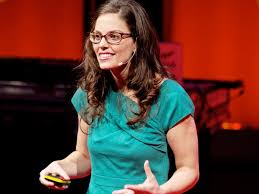
Molly J. Crockett, Yale Univ.
A recent BBC program put me on to some lovely research done by Molly J. Crockett, at Yale University, on altruism and morality. Her work was published in the Proceedings of the National Academy of Sciences.* She is a neuroscientist who uses lab experiments and functional MRI (brain mapping) to study moral behavior.
In her lab, subjects administer small electric shocks to others and to themselves, for payment. Here is the main, surprising finding:
“In two studies we show that most people valued others’ pain more than their own pain. This was evident in a willingness to pay more to reduce others’ pain than their own and a requirement for more compensation to increase others’ pain relative to their own. …… Our results provide evidence for a circumstance in which people care more for others than themselves.”
In our synagogue we are studying philosopher Martin Buber’s pathbreaking book I and Thou, published in 1923 in German and in 1937 in English. In it Buber examines in deep philosophical terms our intimate relationship with God and with others. “Thou”, archaic English used often for God, fails to capture the German “Du”, which is ‘familiar’, used only for persons with whom we are closely linked, usually our age or younger, as opposed to Dir, which is formal, respectful, used for those older than us. Buber’s key point is the very personal, intimate relationship we have with God, as ‘du’.
How is Crockett’s work related to Buber? Apparently, she explains in her BBC interview, when we are deciding on our moral behavior (administer a small painful shock to others), we step outside ourselves, and become “Thou”. The I-Thou transforms the I, as we empathize with the person with whom we are relating, and become ‘thou’. This is proven, by fMRI visuals showing the areas of the lateral pre-frontal cortex, which in general ‘imagine’ situations and outcomes.
So Buber’s I-Thou is indeed the foundation of morality, except that in Crockett’s work, a key part of morality is the ability to actually BECOME our neighbor, the person with whom we are interacting. So there IS a scientific foundation to the Jewish precept of “Love they neighbor as thyself”. This occurs, when we actually become our neighbor, stepping outside of our own selves. It is highly significant that for most people, they prefer to administer an electric shock to themselves rather than to someone else. I know I certainly would.
By the way, Crockett’s lab experiments are done under strict ethical standards. The electric shocks are slight, short and, as the BBC interviewer mentioned, perhaps no more than briefly putting your hands under hot water.
She has a brilliant 11 minute TED talking that is worth watching.
* “Harm to others outweighs harm to self in moral decision making”. Molly J. Crockett, Zeb Kurth-Nelson, Jenifer Z. Siegel, Peter Dayan, and Raymond J. Dolan PNAS Proceedings of the National Academy of Sciences December 2, 2014 111 (48) 17320-17325; first published November 17, 2014
A Look Inside Virus-Infected Cells
By Shlomo Maital

Researchers at Israel’s Weizmann Institute have provided us with a revealing look inside cells infected with novel coronavirus. The research was led by Prof. Ido Amit, Dept. of Immunology, and reported in a front-page article in today’s Haaretz daily, by Ido Efrati.
Amit is an expert in single-cell genomics, in which scientists analyze the DNA of single human cells. By analyzing single cells of severely ill patients with COVID-19, moderately ill ones and healthy persons, the scientists can map precisely how the insidious virus wreaks its havoc.
Here is a short summary. The virus attacks epithelial cells in the lungs; these cells transport oxygen from the lungs to the blood, where it is distributed to the body’s vital organs. This attack induces macrophages, a specialized cell that detects and (tries to) destroy the virus. The Weizmann Institute scientists found that in seriously ill patients, the macrophages were replaced by monocytes, which are blood cells created by the body’s immune reaction. Ironically, an excess of those monocytes (as the body fights back against the virus) produces an overload of the immune reaction, known as a cytokine storm. This creates massive inflammation and actually hampers the immune system.
The researchers, who have cooperated with other scholars in China and Italy, note that this cytokine storm occurs even before other signs appear.
This suggests that a blood test could reveal which patients are high risk, even before their lungs show distress. They also note that perhaps drugs or treatments can be developed to protect the lungs’ macrophages before the virus can seriously damage them.
It is clear that those with unhealthy lungs, perhaps through smoking or other conditions, are more vulnerable.
It is taking time, but thanks to cooperation among scientists worldwide, a clearer picture is beginning to emerge of precisely how the novel coronavirus makes us ill and kills some of us. This knowledge will ultimately lead to effective treatments.
 TIMnovate