
You are currently browsing the category archive for the ‘Innovation Blog’ category.
Mukherjee: Worth Reading and Heeding
By Shlomo Maital
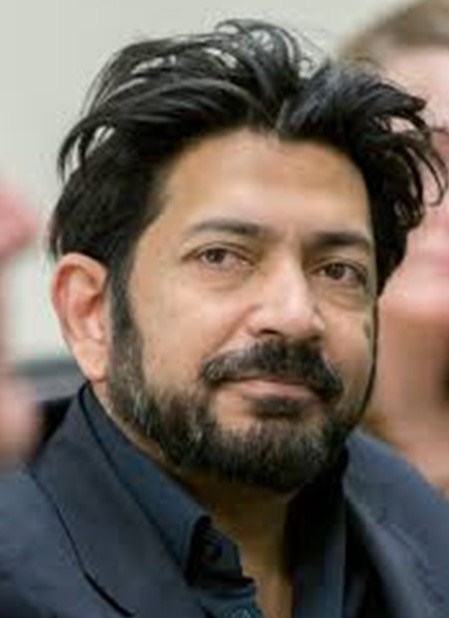
Siddhartha Mukherjee, MD
Who is Dr. Siddhartha Mukherjee? He is a 49-year-old Indian-American, physician, biologist, oncologist, author, TV commentator. His book on cancer won the Pulitzer Prize in 2011. He is an Associate Professor of Medicine in the Division of Hematology and Oncology, Columbia University Medical Center.
The Government of India conferred on him its fourth highest civilian award, the Padma Shri, in 2014.
His article in The New Yorker, March 26, on the pandemic is brilliant and clear. Here is a brief summary of his main points. (800 words…).
* Ancient Chinese and Indians, and Arab doctors, knew long ago, that you could ‘vaccinate’: e.g. “taking matter from a smallpox patient’s pustule and applying it to the pricked skin of an uninfected person, then covering the spot with a linen rag.” Healers in China did this as early as 1100 AD.
* Three question deserve attention: 1) “do people exposed to higher ‘doses’ of virus have increased risk of infection? (e.g. healthcare workers). 2) Is there a relationship between the ‘dose’ of virus and the severity of the disease?” 3) “can exact quantitative measures of how the virus behaves in infected patients (peak viral load, patterns of its rise and fall…) predict the severity of the illness, and its infectiousness to others? We need to start measuring the virus WITHIN people!”
The fact that we do not have strong proven answers to these questions, show how little we really know about COVID-19 and how we are fighting in the pitch dark!
For HIV, Mukerjee notes, how much was in a patient’s blood produced a distinct pattern; the virus count in the blood rises to a peak “Peak viremia”, patients with the highest peak viremia “typically became sick sooner, they were least able to resist the virus.” (Same goes for coronavirus? We don’t know). The set point too is crucial (the level to which a virus count settles and stabilizes, after its initial peak. People with a high set point move quicker to actuall AIDS (autoimmune disease). Same for COVID-19? Also, viral load (quantity of the virus in the body) helped predicts (AIDS’) nature, course and transmissibility. (Same for COVID-19?)….
For kids – could an initial low-level exposure (as the ancient Chinese Indians and Arabs did) lead to a lower set point, (and hence less COVID-19 danger and risk?)….
Mukherjee cites research showing “the more virus you shed, the more likely you are to infect others” from HIV research. I.e., the R0 number (numbers infected by one infected person) is variable, depending on how much virus the infected person ‘sheds’.
“Does a large viral dose result in more severe disease? “For reasons we don’t understand front-line healthcare workers are at greatr risk for serious illness despite their younger age.” Is it because they are exposed to ‘higher doses’? (Correlation between dose and severity varies widely from one strain of flu to the next). Corona viruses “seem to follow the pattern seen in influenza”. A SARS study showed (in Hong Kong) that “a higher initial load of virus measured in the deep part of your throat above your palate was correlated with more severe respiratory illness”. For measles, there is proven links between dose and severity.
Finally, can we track viral load and hence predict the course of the disease? Here’s the catch. Tests are done with oral swabs. But viral dose varies immensely with how the oral swab is administered, and it varies tremendously among doctors and healthcare workers who administer the swab! A study in the Lancet medical journal does show that “viral loads…from patients with severe COVID-19 were 60 times higher on average than loads among patients with a mild form of the disease”!.
Data. Bring me data. We need to know how much virus COVID-19 patients harbor, not just whether they harbor any.
“If we had “dosimetry” (viral dose measures), we can quarantine those who are most infectious.”
Let’s do a two-step procedure. 1. Identify infected patients. 2. Quantify viral loads in nasal or respiratory secretions. Plan medical care accordingly.
End Lockdown? Mukherjee says, we need two criteria: people have no measured viral shedding, and they have signs of persistent immunity in their blood (antibody test). Healthy immune workers are crucial – they can work with no danger to themselves or others, and they can care of other sick people!
Why should we listen to an oncologist? “Measurement and enumeration are the mainstays of medicine for people in my field. We do ‘risk stratification’. “ This should be the case for treating COVID-19 too.
Mukherjee makes a simple medical point. “To win the (battle) against COVID19, it is essential to trace the coure of the virus as it moves through the populations. But it’s equally essential to measure its course within a single patient. The one becomes the many. Count both; both count.”
Emerging from Virus:
Academics Step Up
By Shlomo Maital

Public health officials, who are in control in most countries, have their hands full, dealing with the medical crisis. So it is up to us, academics and others, to begin weighing options for emerging from the lockdown.
An interuniversity team led by Tel Aviv U. President Ariel Porat and Weizmann Institute President Alon Chen, have prepared an excellent 27-page plan. Details are reported by Haaretz journalist Meirav Arlosoroff.
(Suggestion to other countries: why not set up a similar team? Include epidemiologists, virologists, economics, psychology, law, computer science, even quantitative physics, and of course public health).
Here are the options the experts present. Option One: Maintain the strick lockdown. Option Two: the opposite, speed up the rate of infection among Israel’s non-vulnerable population (is there such a thing?) to achieve ‘herd immunity’ (VERY bad term – we are NOT a herd… why not population immunity? Or mass immunity?). Under the second option, the elderly would remain in isolation for their protection.
Neither are very attractive, are they? There is a missing link – widespread testing, to provide detailed data. The required number of tests is not available.
So the committee suggests a third option — a “gradual lifting of the lockdown while officials carefully monitor numbers related to the pandemic. Divide Israel into equally sized ‘risk zones’ based on how far and wide the coronavirus has spread. Red zones would maintain total lockdown. Yellow zones would be where people are allowed to leave their homes for work, provide they stay inside the yellow zone! In Green Zones residents are free to go to their jobs, including jobs outside their zone. Those showing symptoms remain in quarantine in all three zones. Those shown to be immune are free to go wherever they please. (A key here is a serological antibody test, not yet widely available) Places of work would reopen, subject to strict rules on hygiene and social distancing. Workplaces would be graded, according to how risky they are for a ‘second wave’ outbreak. Workplaces barred from opening would be exempt from rent.
The committee also recommended tax incentives to encourage work from home.
Division into red, orange, green zones is based on sophisticated mathematical models that predict the epidemic’s spread – along with high levels of testing. Sampling tests that show less the 2-3% infection rates would enable ease of the lockdown. Green zones are where the number of serious cases doesn’t exceed 100 and the infection rate is less than 8 %. Technologies like location technology and artificial intelligence will be used to predict the possible rate of contagion.
Since test kits are in short supply, a model for sampling should be used, for each cone, including children, so schools can reopen.
The Committee says that a measured exit from the lockdown can and should already begin. It calls for allowing between 900,000 and 1.5 million workers to return to their jobs. This is between one quarter and a third of Israel’s work force.
“Data from the math models shows that the virus’ high infection rate does not allow for complete release from lockdown, even for Green zones”, they note. Social distancing still is the main tool, to reduce infection parameters by a factor of 2 to 3. Areas of especially high infection must receive special treatment, such as the ultra-Orthodox areas.
I believe that each country needs its own inter-University committee of this sort, because each country has its own culture and unique circumstances. It needs to be a non-governmental civilian effort, because governments are simply focused on the day-to-day.
Corona Capitalism:
Sell at Cost
By Shlomo Maital

My friend Tran Luong Son, an MIT graduate and entrepreneur/software expert, calls me and asks about how to saving businesses, rapidly going bankrupt.
Here is a small simple suggestion. Amend capitalism. Shift from “produce for profit” (Pharma – take note!) to “produce and sell at cost”. And for governments? For those businesses valiantly applying the new capitalist compassion, producing at cost, to save businesses and keep the economy at float – lend at cost – i.e. zero. (Some countries, including my own, are initiating credit for small businesses, at 0.1% interest, with long repayment paeriods).
Produce and sell at cost. Why at cost? If at less than cost, you need subsidies, and government budgets are strapped. At cost – you can do this forever. Not quite forever – profits generate investment. So in the short run investment will dry up (it will anyway). But in the long run, Keynes said, we are all dead… (figuratively…).
So, let’s build an emergence strategy, based on asking every business to produce a business plan, for producing X units, employing Y people, paying lower but livable wages, producing at prices that reflect accurately costs…, variable costs, because fixed costs are ‘sunk costs’….
Can capitalism reinvent itself as compassionate capitalism? Coronavirus capitalism.
It can. Let’s hope it happens. And big companies? You get on board too…
The Coronavirus Vaccine Will Be French:
Meet Prof. Frederick Tanji
By Shlomo Maital
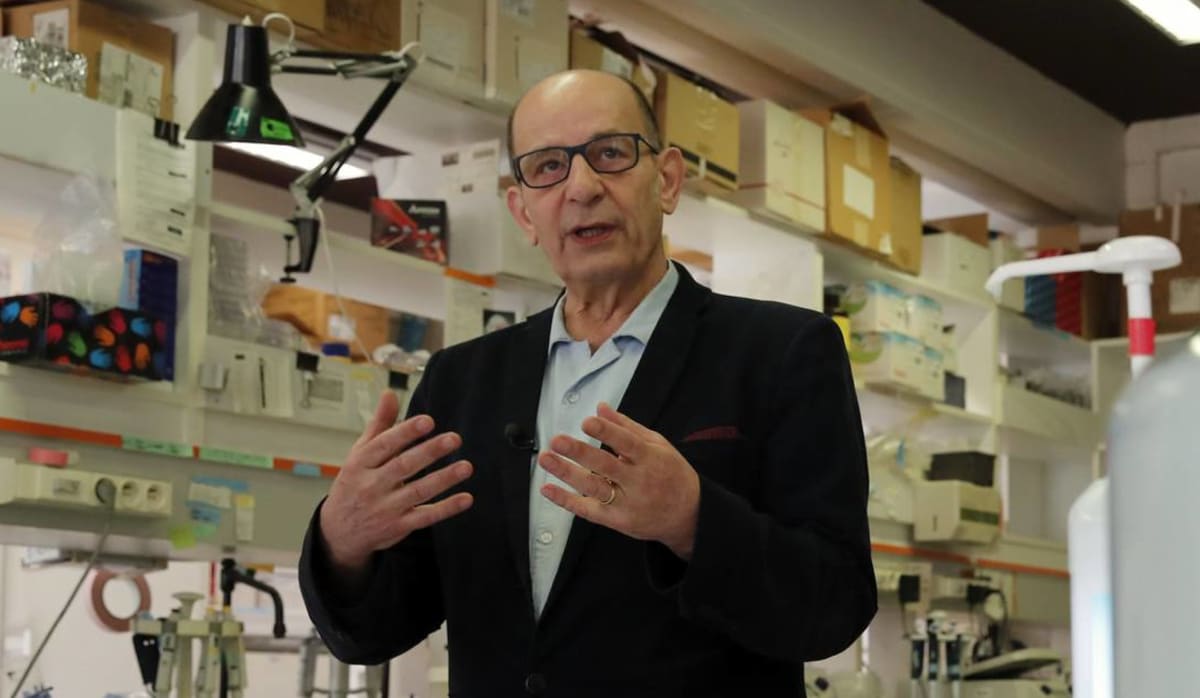
Prof. Frederick Tanji
“Louis Pasteur wa born on December 27, 1822 –and died on September 28, 1895. He was a French biologist, microbiologist and chemist renowned for his discoveries of the principles of vaccination, microbial fermentation and pasteurization. He made remarkable breakthroughs in the causes and prevention of diseases, and his discoveries have saved many lives ever since. He reduced mortality from puerperal fever and created the first vaccines for rabies and anthrax.” The Pasteur Institute in Paris, named after him, is a world leader in this field.
Fast forward. Prof. Frederick Tanji is a senior professor at the Pasteur Institute in France and the head of the Department of Virology at the National Institute of Scientific Research (CNRS). He works day and night on developing a vaccine against a corona virus, and is one of the top candidates to get to the finish line first.
According to press accounts, “Tanji’s development team received € 4.3 million in funding to start clinical trials for the corona vaccine he developed, which, like others developed at the institute, is based on measles vaccine. “I developed a measles vaccine given to every baby born, which is effective and safe,” Tanji explains. “All the vaccine makers in the world know how to produce this vaccine in large quantities – which is very important. It’s also very cheap. This vaccine can be used as a (vector) basis for the Corona vaccine. I have engineered the measles virus genome so pathogenic sequences can be added to it. Like other viruses. That’s what we’re doing now with the Corona virus. “
“Tanji’s method – based on measles vaccine – has already been applied to other vaccines that have undergone clinical trials and some are already in production, and are designed to prevent Zika’s disease, Lassa fever, 1SARS, and MERS, “so we already have experience developing corona vaccine vaccines “, Says Tanji.
If Tanji succeeds, we need to thank the Chinese. “The speed at which vaccine development researchers came to be due in part to the early and rapid Chinese effort to sequence the genome of the new virus. China shared the genetic information in early January, allowing distance groups around the world to grow and investigate a live virus.”
Tanji wants the vaccine to be produced and sold at cost.
Tanji thinks human behavior will have to change radically post-COVID-19. “Social behavior will have to change, and we will have to significantly reduce travel. 4 billion people are flying every month – half the world’s population, that’s crazy. It transmits diseases. The economy needs to change.”
Corona Commandos to the Rescue
By Shlomo Maital

No question, the heroes of the pandemic are the doctors nurses and healthcare workers. But there are other heroes… rather unusual ones, here in Israel.
Raviv Drucker, writing in the daily Haaretz, notes the key role played by Israel’s elite special forces (commando) unit, known as “Mat’kal” or simply, in slang, “THE unit”, and Israel’s intelligence unit known as The Mosad.
Mosad managed to obtain 10 million surgical masks, ventilators, and 500,000 coronavirus tests – rumor has it, from Saudi Arabia!
And the Corona Commandos? They were given the mission of tracking down chemical reagents, used in the key coronavirus tests, in very short supply. And they succeeded, I believe, by finding a way to quickly produce the reagent, or a close substitute for it, close enough to be suitable. A second mission? Find those known to have COVID-19 who have gone missing… and in this too they are succeeding, with technology and persistence.
The city in greater Tel Aviv known as Bnei Brak houses 200,000 persons, mostly Ultra-Orthodox. It took a long time to get the message across there, not to congregate in synagogues and yeshivas (halls of Torah study). As a result many Bnei Brak residents have become infected. It has thus been necessary to send Border Police into the area, to ensure lockdown, and at the same time, a brigade of paratroopers, with their red berets, have been distributing door-to-door food parcels, for Passover, to families that generally have many children.
These are unusual roles for soldiers and officers. But the Army is uniquely equipped, in organization, planning, discipline and dedication, to carry out Corona Commando missions. Perhaps other countries, too, can learn from this. In general Israelis accept the presence, and orders from, the army, and cooperate. There is a huge gap between the immense technical capabilities of the Israel Defense Forces and the rather backward Ministry of Health. In these times, we can use nothing less than the very best.
Beware of the Second Wave!
By Shlomo Maital

As the ‘rate of doubling’ (number of days COVID-19 cases double, from every three days to weekly or more) slows, in some countries, even plague-ridden ones like Italy, a new danger emerges: Complacency.
Writing in the New York Times, Nicholas Kristof warns of a second wave.
“….countless thousands will still die because of past mistakes and complacency. A pandemic is like an oil tanker: It continues to move forward long after you hit the brakes. In China, deaths didn’t fall sharply until a month after controls had been imposed. The benefits from social distancing in the United States will take time to ripple through the system, and there will continue to be new infections — and many more deaths.
Kristof continues: “The Institute for Health Metrics and Evaluation at the University of Washington has a constantly updated model that predicts that the daily death toll across the United States will rise until April 16 and then slowly decline. By the beginning of August, it estimates that more than 93,000 Americans will have died from Covid-19.”
“More bad news: Case fatality rates have been creeping up, and lethality may be greater than many had expected. Germany was hailed for a death rate of only about 0.5 percent, and South Korea was not much higher; now both have case fatality rates well above 1 percent. In models of the virus that my colleague Stuart A. Thompson and I published, we used a death rate of 1 percent. But if the South Korean death rate by age is applied to the demography of the United States, the American case fatality rate is about 2 percent, according to Dr. Christopher Murray, the director of the Institute for Health Metrics and Evaluation.
“A great majority of the deaths in the United States will have been avoidable. South Korea and the United States had their first coronavirus cases on the same day, but Seoul did a far better job managing the response. The upshot: It has suffered only 174 coronavirus deaths, equivalent to 1,100 for a population the size of America’s.
“That suggests that we may lose 90,000 Americans in this wave of infections because the United States did not manage the crisis as well as South Korea did. As of Friday night, the U.S. had already had more than 7,000 deaths. ….. while we can bend the curve, it will bend back when we relax our social distancing.
“This is more bad news, for many people seem to believe that once we get through this grim month or two, the nightmare will be over. But the virus is resilient, and health experts warn that this may be just the first wave of what may be many waves of infections until we get a vaccine sometime in 2021.
“We’re just looking at this first wave,” noted Dr. Murray. He estimates that in June, some 95 percent of Americans will still be susceptible to the virus. “The world’s on fire with this virus,” said Michael Osterholm, an epidemiologist at the University of Minnesota, and this means that even if one country succeeds in putting out the blaze, sparks will keep arriving from elsewhere to cause new outbreaks. He added: “I think the transmission will continue to occur for some time.”
Emerging from Plague: Thinking Ahead
By Shlomo Maital

With many nations still weeks from the ‘apex’ (the peak number of COVID-19 cases), it seems premature to discuss what the press and experts call ‘exit’ strategies – the period AFTER the plague. The word itself is wrongheaded. Exit strategies are what startups do, when they succeed in creating value and need to capture the wealth and return it to their investors and founders. Usually, by acquisition or issuing shares and selling them.
We do not seek an ‘exit’ strategy. We need an ‘emergence’ strategy, when we come out of our tunnels and rabbit holes and resume our regular lives. Words matter. There is no ‘exit’ from COVID-19, because it will remain endemic for a long time. There is ‘emergence’…with great caution.
How best can this be done? How should our governments be planning emergence?
Here are some wise thoughts by Prof. Ron Balicer, a person with whom I’ve worked, Chief Innovation Officer at Israel’s Clalit Health Services (a large HMO) and a member of the Health Ministry’s Epidemic Management Team. His article was published in the daily Haaretz newspaper.
“Mathematical models and past experience show that the spread of infection in communities living in overcrowded conditions can spark a renewed and serious outbreak among all segments of society. From an epidemiological perspective, Israel’s population (as well as, to a large extent, that of the Palestinian Authority) constitutes interconnecting “communicating vessels” with immediate collateral impact.
“In the current setting, the most stable and reliable marker of population-based trends in disease dissemination is the trend in the numbers of severely ill and respirator-aided Covid-19 patients. However, this marker lags behind the real-time spread by several weeks. If we continue to see that this marker is stabilizing – a collective sigh of relief will be heard. In the meantime, we must not wait for absolute certainty before planning the next phase of contending with this crisis and its attendant closure: the exit strategy.
“I propose two preconditions for initiating this strategy: The first is a significant halt in the exponential rate of the disease spread, and the availability of a substantial number of free beds in intensive care units, which will serve as the buffer and allow a margin of error to prevent a collapse should easing of the lockdown spur a sudden increase in infections. Let’s use some numbers as an illustration: In the optimistic scenario in which there are up to 100 seriously ill or respirated people in Israel on the eve of Passover, the distance between where we are now and the point of health system insufficiency is 4-5 doublings of the number of people needing artificial respiration. In recent weeks we’ve seen that the doubling time is three days, with faster rates in some localities.
“The second condition required before embarking on that strategy is to obtain a real-time intelligence assessment, detailed and updated, regarding the rates of infection among different communities. This is a precondition for resorting to a rapid intervention vis-a-vis every new patient, as is happening in countries that have managed to successfully curb the epidemic to date.
“In other words, there needs to be an efficient system of conducting lab tests for Covid-19 among a wide swathe of the population, in order to exercise an effective exit strategy. To that end, Israel is hopefully gaining what will be an exceptional per-capita testing capacity, even in comparison to the advanced countries. The 30,000 daily tests we hope to be able to conduct in a few weeks’ time should be conducted dynamically and judiciously in order to facilitate this intelligence assessment.
“An exit strategy requires a change: a transition from social distancing and full lockdown enforced on the entire population in a sweeping and non-selective manner, to a new status quo. This new routine could be based on three components: a fast and focused effort to locate and tackle infected individuals; a differential and dynamic lockdown policy among targeted communities; and designated policies for allowing recovered immune patients to return to normal life and take a continuously increasing role in sustaining the economy.
“All this needs to be done while adapting the economy to working remotely with strong delivery services, to daily conduct based on social distancing and environmental hygiene in every workplace, and to continued construction of medical infrastructure, with maximal protection of medical teams.
“As part of the new status quo, the older population will remain as isolated “islands” within each community for a longer period, having its physical, emotional and social needs met on a daily basis.
[“There are several components –] The first component involves the efficient and determined tracking down of newly infected people and their rapid removal from the infective pool. This demands a rapid “closing of the circle” capacity. The multi-stage process of locating people suspected of being infected and having them tested for Covid-19, the rapid quarantine of sick people removed from home, an epidemiological investigation and a quick isolation of their contacts – all this must be accomplished with speed and precision. Moreover, it must be done in large numbers of cases and contacts.
For this condition to be met, a combination of capabilities – which at present are suboptimal – must be achieved. These include extensive and carefully thought-out testing of all people who have been in contact with the new cases; the ability to obtain results quickly for those who tested positive, and their removal from their families to hotels or other facilities; both manual and electronic epidemiological investigation, contact tracing and their quarantine; and firm enforcement of social-distancing instructions, among all segments of society.
“The second component is a geographically differential lockdown/quarantine policy, dynamically updated according to the available data. Communities in which there is persistent transmission of the virus, and those with individuals who are particlarly vulnerable, must remain under a stricter lockdown, whereas communities in which transmission has effectively been mitigated can enjoy a continued easing of restrictions.
“The country can be divided into sub-regions. Imagine that one day the radio announces that areas A, B and D can go to work from now on, whereas area C (i.e., Jerusalem or Rahat) is still to be confined to home. On another day, area A might be asked to reinstate a four-week lockdown, in view of ensuing infection. Obviously, such a policy won’t completely prevent “leakage” between areas and communities, but it will significantly head it off, and with the other components in place, this may be sufficient.
“In order to facilitate and supervise such a policy, an ongoing process of real-time intelligence-gathering must be established, including the continual monitoring of self-reported symptoms and continuous screening for infected people, in order to detect potential outbreaks as early as possible.
“The third component: Once serologic blood tests will become largely available, we will be able to conduct mass testing and define a growing number of recovered immune individuals. This group will assume an increasing role in re-operating businesses with few restrictions. Moreover, older people who got sick and recovered could also return to a “new normal” routine.
“In my view, easing of the closure will take place as a continuous, gradual process of experimentation and re-assessment, in cycles of several weeks each. In each cycle, significant restrictions will be lifted, followed by a tense watchful waiting period of several weeks, required to evaluate its impact on the dissemination rates. If the doubling time does not accelerate significantly, and the safety margin of available intensive care beds has not been reduced to the danger level, further easing of measures can be then implemented.”
Leadership In the Time of Plague:
Learning from Winston Churchill
By Shlomo Maital
Destruction During the 1940 London Blitz
Erik Larson. The Splendid and the Vile: A Saga of Churchill, Family, and Defiance During the Blitz. Crown, 2020. 546 pages.
In days of crisis, people everywhere look to leadership. Many of our leaders have alas fallen short. Perhaps they each should read Erik Larson’s new book, The Splendid and the Vile, about the leadership of British Prime Minister Winston Churchill, during the terrifying days of the blitz, when the German Luftwaffe bombed London daily, for 57 days and nights, including a huge daylight raid on Sept. 15, 1940.
The damage was enormous. Historians note: “More than 40,000 civilians were killed by Luftwaffe bombing during the war, almost half of them in the capital [London], where more than a million houses were destroyed or damaged. A million houses!
What did Churchill do to show leadership?
(Luftwaffe head Hermann Goring was ordered by Hitler to begin bombing London, on Sept. 6/7. The goal was to terrify London citizens and draw the sparse Royal Air Force into a battle, where, outnumbered, RAF plans would be destroyed, leaving Britain open for invasion).
First, he was there. He regularly went out to sites that had been bombed, spoke to those who had lost their homes, and showed empathy.
Second, he condensed his message to two simple qualities; Truth. Defiance. Truth, to recognize the desperate situation. He told the people the truth – how the RAF was far outnumbered. Defiance, to spark the British people’s morale and fighting spirit. Churchill regularly watched the bombing at night from the roof of 10 Downing St., exposed and unafraid.
Churchill understood his people. British anti-aircraft guns were silent in early September, because the nighttime raids meant you could not see the Nazi bombers. No point in wasting ammunition. But Churchill understood – he ordered the anti-aircraft guns to fire anyway – and the Londoners cheered and were cheered and buoyed.
Enemy bombers are a different enemy than a silent killer virus. But leadership remains similar. Truth. Defiance. Tell the truth – something some leaders fail to do, such as the criminal behavior of the President of Brazil. Defiance — Fierce determination to defeat the virus, by telling people what to do and how to do it, even if it means sacrifice. The WHO made an enormous error in the early stages, saying that wearing masks was not needed. This turns out to be wrong – Researchers show that even home-made cloth masks (of the kind my wife zapped together in no time, with a handkerchief and two elastic bands) can do a lot of good, protecting others from infection from those who are asymptomatic. [Great Leader Trump refuses to wear a mask, seeing it as a sign of weakness… I wonder, would Churchill have worn a mask, had he led Britain today?].
COVID-19: The Rule of 72 Rules
By Shlomo Maital
Albert Einstein once said famously, that compound interest is the “most powerful force in the universe.” It is indeed, especially when compound interest is at work, in transmitting virus from one person to another, at varying rates.
So, here is the Rule of 72, and some optimistic news from my country Israel.
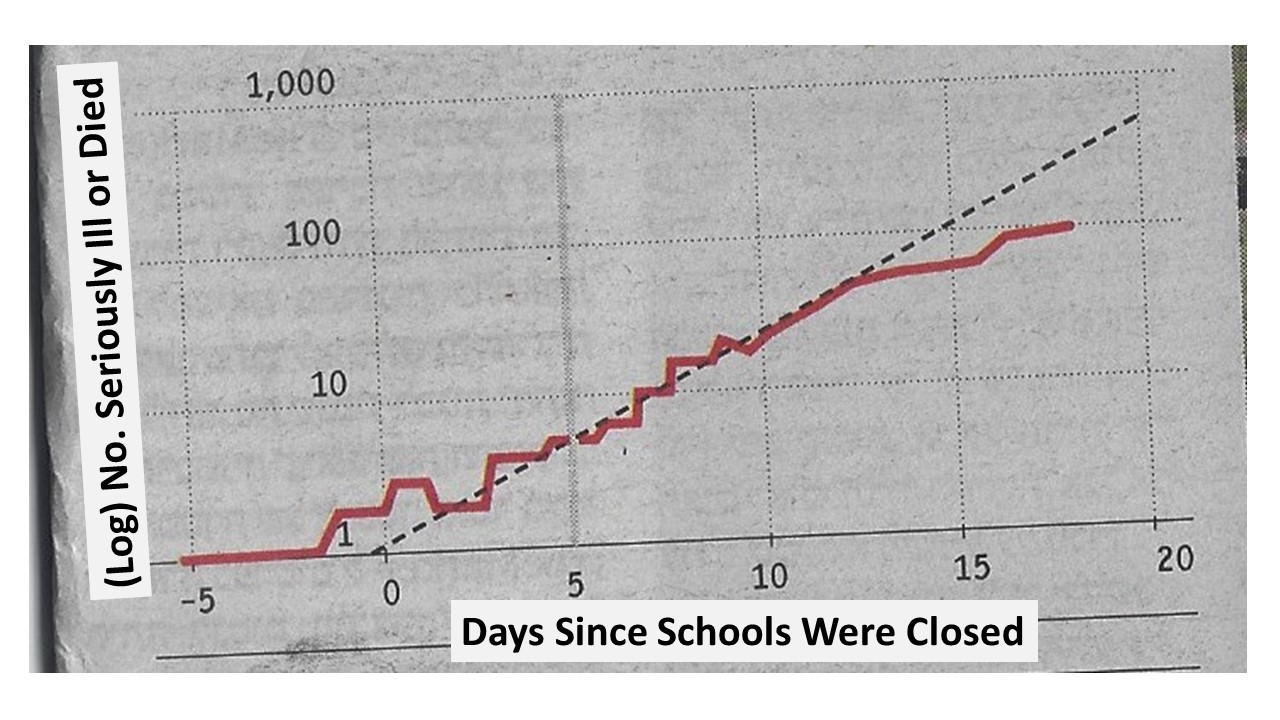
How fast is the number of infected persons doubling? How often? Are we succeeding in slowing it? The graph above shows the number seriously ill, or who have died, from COVID-19, in Israel, dated from when schools closed – and the dotted line shows the future projection. The data are by the National Security Council.
Initially, it was assumed that the daily growth in COVID-19 seriously ill and deaths was growing at a compounded interest rate of 25% daily !! (why compound: because 25% more people, infect 25% more people, infect 25% more people..and so on…like bank compound interest).
Here is the Rule of 72: The Rule of 72 shows you how quickly you’ll double your money. All you have to do is divide 72 by the interest rate it’s earning. This is the number of years it will take for your money to double.
Translate that to virus: Divide 72 by the daily rate of increase at which people fall seriously ill or die – that tells how rapidly the number of victims doubles – in how many days. 25% daily growth? 72/25 = about 3. Every 3 days. So in one month, 30 days, we have 10 doublings. 2 raised to the 10th power is 1,024. A thousand times more ill and dead, in one month. Simply not a situation hospitals can handle.
And that was the initial doubling rate in Israel, in the early days of school closure. Then people got the message and sheltered at home.
The daily infection rate then declined, to 15%. According to the National Security experts.
What does that mean? Rule of 72: 72/15 or about 5. Doubling every five days. How many doublings in 30 days? 30/5 equals 6. Two to the 6th power equals 64.
Sixty-four times more victims.
Something we can handle. Difficult, tragic – but – do-able.
Sixty-four times more victims is hugely better than 1,024 times more victims.
This is the Rule of 72. And the key point is – the Rule of 72 is in OUR hands. As my cell phone tells me each time I open it: Stay Home. Getting the ‘compound interest’ rate down from 25% to 15% is hugely valuable. When we invest we want more interest; when we shelter, we want a whole lot less (virus spread). And even small differences in the rate of spread make a huge improvement.
Now – next step, how do we figure out who can emerge from home to run the factories and farms? And when? But so far, the Rule of 72 Rules.
A Vaccine Is On The Way – Soon?
By Shlomo Maital

Today’s Jerusalem Post daily paper, published in Jerusalem, brings some much-needed good news about progress in creating a vaccine against COVID-19.
The report notes:
“A team of Israeli researchers says that they are days away from completing the production of the active component of a coronavirus vaccine that could be tested on humans as early as June 1. “We are in the final stages and within a few days we will hold the proteins – the active component of the vaccine,” Dr. Chen Katz, group leader of MIGAL’s biotechnology group, told The Jerusalem Post. In late February, MIGAL [The Galilee Research Institute] committed to completing production of its vaccine within three weeks and having it on the market in 90 days. Katz said they were slightly delayed because it took longer than expected to receive the genetic construct that they ordered from China due to the airways being closed and it having to be rerouted.”
(Note: the ‘genetic construct’ from China, is simply the RNA ribonucleic acid that defines COVID-19 — shame that cancellation of flights from China to Israel caused the delay – every day counts!).
“As a reminder, for the past four years, researchers at MIGAL scientists have been developing a vaccine against infectious bronchitis virus (IBV), which causes a bronchial disease affecting poultry. The effectiveness of the vaccine has been proven in preclinical trials carried out at the Veterinary Institute.”
Amazing that chickens, maybe, and their vaccine can help save human lives?
The report continues: “Our basic concept was to develop the technology and not specifically a vaccine for this kind or that kind of virus,” said Katz. “The scientific framework for the vaccine is based on a new protein expression vector, which forms and secretes a chimeric soluble protein that delivers the viral antigen into mucosal tissues by self-activated endocytosis, causing the body to form antibodies against the virus.”
What does this mean? Basically: The vaccine helps the body produce a key protein able to penetrate the cells infected by COVID-19 in the throat and lung mucous. How does it penetrate? Endocytosis is “the process of actively transporting molecules into the cell by engulfing it with its membrane.” This helps the cell produce antibodies that kill the virus, before it can kill the cell and reproduce, creating millions of new viruses that spread through the lungs.
“In preclinical trials, the team demonstrated that the oral vaccination induces high levels of specific anti-IBV antibodies, “ a MAGAL expert said.
A worldwide race is on, to develop an effective safe COVID-19 vaccine. Whoever wins, humanity will be the big winner. This is one race that can benefit everyone, even the spectators.

 TIMnovate