Can You Come Out to Play?  WILL You?

By Shlomo  Maital

play        

   I’m married to a very smart psychologist, who is an expert on children and play; as a result, I get to read many interesting, sometimes wonderful, articles.   The latest is one published in 2007, by L.A. Barnett, titled “The nature of playfulness in young adults”.  The purpose of the article was to see if the term “playfulness” could become a valid “construct”, i.e. a clear, well-defined concept recognizable by all and useful for further research.  To this end, the author used focus groups of adults.

     The result:  A rather long, but insightful, definition of “playfulness” in adults.

      Here it is.  Read it.  See if you have these qualities.  Why?  Because, as the author notes, “playful people are uniquely able to transform virtually any environment to make it more stimulating, enjoyable and entertaining.”    Want an extreme example:  Roberto Benigni’s Life is Beautiful, a film about a father who made life in a Nazi concentration camp into a game, for his young son (Academy Award, Best Actor 1999). 

 Playfulness is the predisposition to frame (or reframe) a situation in such a way as to provide oneself (and possibly others) with amusement, humor and/or entertainment.  Individuals who have such a heightened predisposition are typically funny, humorous, spontaneous, unpredictable, impulsive, active, energetic, adventurous, sociable, outgoing, cheerful, and happy, and are likely to manifest playful behavior by joking, teasing, clowning, and acting silly.

   Do any of those adjectives describe you?  Yes?  No?  If no – do you want them to?  If so, you can definitely change.   Just remember how you played when you were a child, and copy yourself as you once were.  

   What does this have to do with innovation?   “Reframing” (seeing the same thing differently from others) is a key part of playfulness, and a key aspect of creativity.  If you can ‘reframe’ to play, you can reframe to create.   

  • L.A. Barnett. The Nature of Playfulness in Young Adults.   Personality and Individual Differences, 43 (2007), pp. 949-958.
Two Perspectives on America: Optimist vs Pessimist

By Shlomo  Maital  

 optimist

 The two major weekly news magazines, TIME and The Economist, each analyzed the U.S. economy in their most recent issues.

    TIME’s take:  A two-page spread headline, reading, in 120-point,  Surprise: The Economy isn’t as bad as you think; 7 signs America has turned the corner.    It is by Roger Altman, an investment banker who was deputy undersecretary of the Treasury, under President Bill Clinton. 

    The Economist’s take:  A brilliant cover showing a jockey riding a … tortoise,  headlined:  America’s lost oomph:  Why its long-term growth rate has slowed.

     Here are the arguments.  You judge.

     Altman:  1. Americans are spending more; 2. Housing has come back, with a 26% average increase in home prices in 20 key metro areas since April 2012;  3. Manufacturing is returning home to America;  4. Energy production is booming; in 2015 America will be the world’s leading oil producer!  5.  The environment is improving. 6.  American schools are working smarter; 7. Social trends are moving in the right direction; 80 % of high school students graduated, up from 73% in 2006.  

    The Economist:   The post-2008 recovery has been the weakest in the post WWII period.  The supply of workers and their productivity have not grown as expected. Many Americans have just given up job hunting and have disappeared from the labor force.   America spends little on retraining the jobless, has not raised the retirement age, as happened elsewhere, and has made disability insurance into a widespread welfare scheme.  Conclusion:  “The odds are that America’s economy will continue to lumber along at an underwhelming pace, and Americans will have no one to blame but their leaders.”

     They’re both right.  There ARE ‘upticks’ in America, as Altman claims.  He searched really hard for them; and he has a strong interest in optimism, because investment banking is built on it.  But The Economist too is right.  Long-term, it’s hard to see America growing much faster than its anemic 2.0 – 2.5 percent, without a boom in innovation that drives productivity.

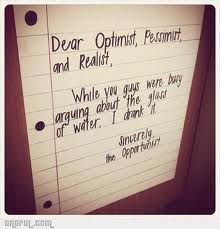
     Conclusion?   That old half-full half-empty cup?  Drink the water.  Find opportunities, while the optimists and the pessimists are haranguing one another.     

It Takes Two to (Create the) Tango

By Shlomo  Maital

 tango

  Not only does it take two to tango —  it probably takes two to INVENT the tango. Tango probably comes from the Latin tangere, to touch,  and it is a wonderful dance that was invented along the Rio del Plate, on the border between Uruguay and Argentina – and spread from there to the world. 

   Writing in the Global New York Times today (July 21),  Joshua Wolf Shenk summarizes his forthcoming book Powers of Two: Finding the Essence of Innovation in Creative Pairs.  His main point:  The idea of a lone-wolf genius inventing breakthrough things is untrue.  Usually great breakthroughs take two people. 

  He brings many examples:  Lennon and McCartney; (I would add,  Richard Rogers and Lorenz Hart, the wonderful song writing team);  Freud and his colleague Dr. Wilhelm Fliess;  Martin Luther King and Ralph Abernathy;  Picasso and Georges Braque;  Picasso and his fierce adversary Henri Matisse (sometimes, creativity emerges not from collaboration but from competition);   Einstein and his friend Michele Besso, with whom he walked through the Swiss mountains and discussed his ideas. 

   “Two people are the root of social experience – and of creative work,”  Shenk argues.  Why two?  “We’re likely set up to interact with a single person more openly and deeply than with any group.”

    I strongly believe this is true. When I embarked on writing a book on creativity (soon available as Cracking the Creativity Code),  I felt it would be unbalanced, if I wrote it solo, as I had mainly an academic background. So I sought out my former student and current friend, Arie Ruttenberg, whose legendary creativity built a powerful ad agency.  It was a wonderful collaboration, and our book was far better than if either of us had written it alone.  By the way,  we chose to preserve our individual ‘voices’ in the book, and hence identify the author of each chapter. 

   “The core experience of … one entity helping to inspire another is almost always true,” Shenk notes.  I agree.  So – if you seek ideas, if you have ideas, find a great partner.  Preferably, someone very different from you.  You’ll see – it will greatly enrich your creative productivity. 

Thrive – Why We Underinvest in Mental Health

By Shlomo  Maital   

Obama mental health

  My career has been spent largely in Academe, producing ideas and words, words, words.  This is why I greatly admire those who generate ideas – and implement them to change the world.   This is what two creative distinguished British persons, Prof. Richard Layard, an economist,  and expert on labor economics and cost-benefit analysis, and David M. Clark, a clinical psychologist and expert on CBT (cognitive behavioral therapy).

    Ten years ago, Layard and Clark joined forces and went to speak to Britain’s newly-appointed Health Minister.  Here is what they said:   “If your bone is broken, you are treated automatically; but if your spirit is broken, you are not.   …Treating mental health problems produces extraordinary savings.  They cost society nothing. The treatments pay for themselves. Yet they are provided to under a tthirdof those who need them.  This is a great injustice and a gross inefficiency.”

     They note that in Britain, 1 of 6 adults suffer from depression or crippling acute anxiety disorder.  In America, more people commit suicide than are killed in road accidents.  The World Health Organization notes that 40% of all illness in the world – is mental illness. 

     And it CAN be treated.  Layard and  Clark note that 50 per cent of those treated with CBT, cognitive behavioral therapy (an effective short-term therapy, in which patients are helped to know and understand their affliction, then engage in behaviors that mitigate or eliminate it),  recover. 

     The best part of all this?  After Layard and Clark’s intervention, Britain’s Health Minister acted, implementing a program known as “Improved Access to Psychological Therapies”,  described in Nature magazine as “world-beating” and copied by other nations.

      Creativity is not just having an idea. It is working with skill, persistence and courage to implement it.  Layard and Clark did. 

       In contrast, we have President Obama, who, like me,  is an outstanding producer of words, words, words, words…..

       For an inspiring account of creative discovery and creative delivery, read their book  Thrive:  The power of evidence-based psychological therapies,   Penguin: London 2014.  

 But That Isn’t Art!  Jeff Koons Triumphs

By Shlomo  Maital   

Koons balloon dog

Jeff Koons’ ‘balloon dog’

American artist Jeff Koons, who is 59, has at last been accorded a full-career survey show in a U.S. art museum (the Whitney Museum of American Art, which has had to empty most of its exhibits to accommodate Koons’ work). 

  Who is Jeff Koons and what can we learn from him about innovation?  First, think different.  Koons makes art out of ordinary objects.  One of his sculptures is a set of four Hoover vacuum cleaners, in a plastic case.  But that’s not art, many will say.  Well, it is, if you’re willing to open your mind to rule-breaking art. 

  You may not believe this, but last November Koons achieved a record auction price for a living artist when someone paid $58.4 million at a Christie’s auction in Manhattan for Balloon Dog (Orange)  (see photo).   It’s 10 feet high (over 3 meters), made of stainless steel.    When the press mentions the $58.4 million price, Koons says (according to TIME magazine):  “as a young artist I wanted to be engaged in the excitement of making art and sharing ideas.  And that hasn’t changed – that’s what the art world represents to me.”

   It is what innovation and creativity represent as well – the excitement of making art and sharing ideas.  Creativity in any field is (or should be)  “autotelic”, a word meaning,  self-generating,  self-causing,  from “telos”, Greek for cause, and auto,  self. 

   Koons father owned a furniture store in York, Pa., an industrial city that lost its industry.  There, Koons learned about the power of ordinary objects to become art.  One of his famous sculptures is a basketball,  in a blue-glass aquarium; the ball floats precisely in the middle of the tank, because Koons found just the right combination of distilled water and salt water to make that happen.  In general, he is a stickler for detail. He has a team of 130 people in his art studio who produce works of art according to Koons’ specification. His studio even invented its own steel alloy. 

   As you can imagine, Koons was ridiculed early in his career.  He stuck to his guns.  He went broke several times, to pay for the huge cost of preparing his sculptures precisely as he wished.  Koons says he has had very few exhibitions in the United States, although he is known and popular abroad.  Perhaps, as he turns 60, his own country will at last recognize his work and creativity.

 Creativity in a Flower Pot: The Case of the Upside Down Vase

By Shlomo  Maital

Upside Down Flowers

Upside Down Flower Pots, in Kaunas Lithuania

   My wife Sharona and I are at a school psychology conference here in Kaunas, Lithuania.   While enjoying supper at an outdoor café,  Sharona (who has very sharp observational skills) spotted these upside down flower pots and photographed them.

   So, what exactly is this about?

   Creativity is widening the range of choices.  You can plant flowers in a flower pot conventionally.  Or, like the clever people in this apartment,  you can take the flower pot, put holes in the bottom so that the roots poke through and ‘grab’ the pot, then put a lid on the pot —  and hang them on your balcony, upside down. 

  Why upside down?

   Because, that way, you get to see much more of the beautiful flowers and leaves, instead of just the big ugly pot. 

   Think different.  Do things different.  Can you do something upside down?  A French cook did,  she invented tarte tatin,  which is simply apple pie, but with the crust on the bottom instead of on the top.  It’s delicious.   Israel’s first Prime Minister David Ben Gurion liked to stand on his head, believing it was healthy.  He was the Upside Down Prime Minister.  Lots of small children love to do that.  And sometimes, I love to have an upside down meal – first, dessert,  then the meal.  Try it. 

 When Will the Yuan Replace the Dollar?

By Shlomo  Maital

                           RMB

 Most of the world’s foreign trade and foreign investment is still done in dollars.  Perhaps 80 percent or more of transactions on the London foreign exchange market, still the world’s biggest, involve dollars.    

  For the global economy, this is a problem.  America’s economy is weak and unstable, hence so is the currency – and the currency is not just America’s money, but it is the world’s, so when America has a problem, so do we all.  As the U.S. Treasury Secretary once said, the dollar is our currency – and your (the world’s) problem.

   With China’s economy now the world’s largest, by some measures, it makes sense that the Chinese currency, the renminbi (ren – min – bi,  ‘money of the people’) should take a correspondingly important role in world trade and finance.  But China has been unwilling to loosen its tight control of the RMB, because the undervalued exchange rate, around 6 RMB per dollar, provides strong advantages for exports.   Since 2005, though, China has been gradually (everything China does is gradual) loosening control of the RMB (that was the year it dropped the fixed ‘peg’, or fixed exchange rate, and let the RMB slowly slowly gain in value) and since 2009, it has loosened restrictions on yuan trading outside China. 

    Now, according to the Wall Street Journal, more and more American firms are paying for Chinese goods in RMB (yuan).  Ford Motor Co., for instance, has reacted swiftly to the China’s government easing of restrictions on use of the yuan by global companies.  There are big advantages – if you can pay directly in yuan, you can save substantial trading costs.   

  U.S.-China trade totals $500 b.  America has been pressing China for years to let its currency appreciate more, reflecting its true value, and making Chinese exports more expensive.

    According to the B.I.S. (Swiss-based Bank for International Settlements), the Central Banks’ bank,  the yuan is the 9th most traded currency in the world. 

    Ninth is very far from first. But look for the yuan to move up in the World Cup forex rankings.   There are big opportunities here for experts in forex and financial services.   Japan, for instance, doggedly resists making the yen a global currency, by imposing restrictions on foreign currency movements into and out of Japan.  I believe this was a big mistake.  China seems about to avoid Japan’s strategic error.

What do Polite People Say, When They Say “Bathroom”?

How Gleaming Bathrooms Built an Innovation

By Shlomo  Maital

“spend a penny”

  How do you say “bathroom”, if you’re very polite, delicate, discreet and don’t actually want to use the B-word?   In Britain, you could say, I’m going to spend a penny, because that’s what it once cost to use a public toilet (see picture).  Today it will cost you 30 pence.. is that inflation, or what?   Or you could say, I need to go to the lou…or the WC  (Water Closet).   Or, I’m going to powder my nose,  if you are female.  Or, I’m going to the little girl’s room…  The list is endless.

    But bathrooms are serious!   Here is a story I heard, from a very senior academician, here in Kaunas, Lithuania, where my wife and I are attending a school psychology conference. 

     Many years ago,  universities were launched to enroll young Lithuanian men who sought to avoid  military service.  [Lithuania was the first Soviet satellite to gain its independence, in March 1990; other countries like Poland quickly followed suit.  The USSR sent troops, but they gave up and finally left in 1993]. 

     Someone had a brilliant idea that young Lithuanian women too wanted and needed to go to college, and started a college for women only.  He suffered ridicule (“Geisha University”, and worse), but persevered.  Faculty were brought from outside Lithuania, many of them women.

   How do you attract, and keep senior female faculty, in Lithuania, at a time when it was relatively poor?  Where do you invest your resources?

    Bathrooms, under the Soviets, were utterly disastrous.  And let’s be honest, bathrooms matter to women especially, because of, well, anatomical issues.  I’ve known women to suffer in order to wait to get to a clean decent bathroom. 

    So, this innovative Dean invested his resources in – gleaming beautiful lovely modern bathrooms.  Honest!   And it mattered. It was the first thing visiting female faculty noticed.  A very small detail, but a crucial one.  He had the most beautiful bathrooms in Lithuania.  And by doing so, communicated to his visitors that he understood them and would do everything to make their stay pleasant.

    God is in the details, especially when it comes to innovation.  Keep this in mind the next time you visit an unworthy bathroom. 

Why YOU Should Consider Writing a Blog

By Shlomo  Maital     

     Cover Cracking Code Final

  Here is why I think YOU, dear reader, should consider writing some sort of blog, even if you choose not to publish it.

   This blog is #1,172.  Over the past six years, I’ve written a 300-word-or-so blog at least two or three times a week.  It’s now become part of my life. 

    Writing a blog brings this key benefit:   If you know you will need to write about something, to share with others whom you care about, your brain is constantly working out, searching for new ideas, new tools, new facts, new things you can use, new stories that inspire.

   Motivation is the key to action.   And my motivation in writing the blog has been the need to share, to remain relevant, to share with others. 

   I try to work out at least every other day, alternating jogging, speed walking,  stair walking (hey – take the stairs, skip the escalators), and moderate weights.  But my blog gives my brain a workout too. 

    So, think about writing your own.  Try writing a few before you publish them.  Write about things that matter to YOU.  Chances are, they may matter to others too.  Some blogs have created raging worldwide successes, like the blog about preparing one recipe a day for a whole year, based on Julia Childs’ cookbook – a blog that led to a book and a great movie. 

    The insert shows the cover of our new book, Cracking the Creativity Code, soon to be published by SAGE India.  We’re deeply grateful to SAGE for their wonderful creative cover design.  Our theme in our book:  Your brain is a muscle,  exercise it daily, hourly.  And a blog is one great way to do that.      

7-1!! How Did Germany Do It?

By Shlomo  Maital

Muller

Thomas Muller

OK,  World Cup soccer (football) fans!  How did Germany win 7-1 over a strong Brazilian team?   Ask veteran sportswriter George Vecsey, who for decades has given us the inside story of what really goes on in baseball, and other sports.

    It starts with failure. Great achievement OFTEN, perhaps even always, starts with some sort of failure. The German football team failed to advance beyond the group stage of the European championship – a huge trauma.  This generated a development plan.  In 366 districts of Germany, youngsters were screened, examined and picked for further training.  The system produced an outstanding wave of players now in their mid-20s.   One of them is Thomas Muller, the creative star who seems to be everywhere, and who combines the two key elements of creativity:  discovery (being in unexpected surprising places, figuring out just WHERE to be), and delivery, the ability to convert chances into goals, like his amazing goal scored from a volley, against Brazil, after a corner kick reached his right foot.

   Want to be a world champion?  Find talent (including your own).  Develop it patiently.  Be focused.  Show your people the vision.  And work very very very hard.  Vecsey quotes British star Gary Lineker,  “football is a simple game; 22 men chase a ball for 90 minutes and at the end, the Germans always win.”

    Let’s learn from them.  Not everyone is thrilled by the 7-1 triumph.  But all of us can learn from it, about how creativity and discipline can unite to achieve true greatness.           

Blog entries written by Prof. Shlomo Maital

Shlomo Maital

Pages