
You are currently browsing the tag archive for the ‘COVID-19’ tag.
How Trump and America Screwed Up and Killed Thousands:
The Blow by Blow Account of Criminal Folly
By Shlomo Maital

This is the shocking story of how President Trump and America screwed up in confronting the pandemic. The result: Thousands and thousands of needless deaths. And today – a new record number of newly infected persons in the US. The account below is by the New York Times’ brilliant team of reporters.
Here is the awful story, blow by blow, almost too painful to put into words. If you can, read these 806 words about criminal folly and blind incompetence by political leaders.
¨ It started small. A man near Seattle had a persistent cough. A woman in Chicago had a fever and shortness of breath. By mid-February, there were only 15 known coronavirus cases in the United States, all with direct links to China. “The 15 within a couple of days is going to be down to close to zero,” President Trump said. The patients were isolated. Their contacts were monitored. Travel from China was restricted.
¨ None of that worked. Only a small part of the picture was visible. Some 2,000 hidden infections were already spreading through major cities. We traced the hidden spread of the epidemic to explain why the United States failed to stop it.At every crucial moment, American officials were weeks or months behind the reality of the outbreak. Those delays likely cost tens of thousands of lives.
¨ HOW THE VIRUS GOT IN: The China travel ban was a partial success: Only a handful of infected travelers from China are estimated to have made it into the country undetected before restrictions were imposed on Feb. 2.But it wasn’t enough. A vast wave of infected travelers — roughly 1,000, one model suggests — came from other countries in Asia, Europe and the rest of the world in February, each a dangerous spark that could set off a wider outbreak. Many of those infections died out. But by mid-February, a few caught fire and became outbreaks, spreading invisibly.
¨ The country was unaware of its own epidemic. Many tests released by the C.D.C. didn’t work, leaving only enough to test people who had visited China or had contact with a handful of known cases.Over the next two weeks, the invisible outbreaks doubled in size, then doubled three more times.
¨ Top federal health experts concluded by late February that the virus was likely to spread widely within the United States and that government officials would soon need to urge the public to embrace social distancing measures, such as avoiding crowds and staying home. But Mr. Trump wanted to avoid disrupting the economy. So some of his health advisers, at Mr. Trump’s urging, told Americans at the end of February to continue to travel domestically and go on with their normal lives. And they did. Millions moved across the country, cellphone data shows. Some unknowingly carried the virus with them.
¨ Researchers with the Seattle Flu Study ignored C.D.C. testing restrictions and uncovered a single case with no travel history in late February. This was the first sign that the outbreak had spun badly out of control.
¨ Over the two weeks that followed, people made about 4.3 million trips from the Seattle area. Thousands were contagious. Genetic samples linked to the Seattle outbreak appeared in at least 14 states, said Trevor Bedford, a professor at Fred Hutchinson Cancer Research Center and a leader of the flu study.
¨ Seattle was just the beginning. In New York City, where officials had found only a single case by March 1, roughly 10,000 infections had spread undetected. New Yorkers and visitors continued to travel out of the city. More than 5,000 contagious travelers left in the first two weeks of March, estimates suggest.
¨ “I’m encouraging New Yorkers to go on with your lives and get out on the town,” Mayor Bill de Blasio said on March 2. People leaving New York City made about 2.8 million trips to the Hudson Valley. Some carried the virus with them, and outbreaks there accelerated in mid-March, the likely result of travel from New York, a Times analysis found.
¨ People also made more than 25,000 trips to New Orleans, where genetic data suggests that a large early outbreak stemmed from infections from New York, according to Karthik Gangavarapu, a computational scientist at Scripps Research, and Dr. Bedford.
¨ Tracking signature genetic mutations of the virus allows researchers to estimate the influence of early outbreaks. Early on, variants prominent in Seattle’s outbreak were found more frequently. But later samples showed that a variant found often in New York City’s outbreak had become much more widespread. A new analysis of thousands of mutations also points directly back to New York, Dr. Bedford said. Travel from the city helped to spread that variant across the country.
¨ “New York has acted as a Grand Central Station for this virus,” said David Engelthaler of the Translational Genomics Research Institute. By the time President Trump blocked travel from Europe on March 13, the restrictions were essentially pointless. The outbreak had already been spreading widely in most states for weeks.
Can an Old Soviet-Era Idea Help Fight this New Virus?
By Shlomo Maital

Dr. Marina Voroshilova and Dr. Mikhail Chumakov, left
Sometimes, you battle a new foe, like the novel coronavirus, with an old idea – even one dating from Soviet Russia. Writing in today’s New York Times, Andrew Kramer describes a 60-year-old idea used by two virologists in the USSR, Marina Voroshilova and Mikhail Chumakov, that may be helpful in today’s pandemic.
It sounds preposterous – use, say, polio vaccine to fight COVID-19? Really?
Here is the basic idea:
“We formed a kind of line,” Dr. Peter Chumakov, who was 7 at the time, recalled in an interview. Into each waiting mouth, a parent popped a sugar cube laced with weakened poliovirus — an early vaccine against a dreaded disease. “I was eating it from the hands of my mother.” Today, that same vaccine is gaining renewed attention from researchers — including those brothers, who all grew up to be virologists — as a possible weapon against the new coronavirus, based in part on research done by their mother, Dr. Marina Voroshilova.
“Dr. Voroshilova established that the live polio vaccine had an unexpected benefit that, it turns out, could be relevant to the current pandemic: People who got the vaccine did not become sick with other viral illnesses for a month or so afterward. She took to giving the boys polio vaccine each fall, as protection against flu. Now, some scientists in several countries are taking a keen interest in the idea of repurposing existing vaccines, like the one with live poliovirus and another for tuberculosis, to see if they can provide at least temporary resistance to the coronavirus. Russians are among them, drawing on a long history of vaccine research — and of researchers, unconcerned about being scoffed at as mad scientists, experimenting on themselves.
“Experts advise that the idea — like many other proposed ways of attacking the pandemic — must be approached with great caution. “We are much better off with a vaccine that induces specific immunity,” Dr. Paul A. Offit, a co-inventor of a vaccine against the rotavirus and professor at the Perelman School of Medicine at the University of Pennsylvania, said in a telephone interview. Any benefits from a repurposed vaccine, he said, are “much shorter lived and incomplete,” compared with a tailored vaccine. Still, Dr. Robert Gallo, a leading advocate of testing the polio vaccine against coronavirus, said that repurposing vaccines is “one of the hottest areas of immunology.” Dr. Gallo, director of the Institute of Human Virology at the University of Maryland School of Medicine, said that even if the weakened poliovirus confers immunity for only a month or so, “it gets you over the hump, and it would save a lot of lives.”
The current pandemic has brought a tidal wave of creative ideas. Most fail. A few succeed. Even preposterous ideas, like enlisting polio vaccine, are worth a shot. The novel coronavirus is wily, clever, sneaky and in some places mutating; so we humans need to be at least half as smart as it is.
The Pandemic is NOT Over
By Shlomo Maital

The Pandemic is NOT over. We are getting farther away from conquering it, not closer. Here are two disturbing reports from Bloomberg News, a credible source:
First the United States:
“By most accounts, the U.S. has failed spectacularly at managing the coronavirus pandemic. American-made tests were first defective, then largely unavailable; misinformation about the virus was broadcast in politicized White House briefings; and lockdowns weren’t enforced quickly enough, all of which likely worsened the spread of a disease that’s already killed 120,000 Americans. Now, with restrictions lifted earlier than advised and infection rates predictably spiking, calamities suffered in the northeast and northwest are re-emerging inland. And come fall, it may get even worse. Federal officials led by Dr. Anthony Fauci warn that this year’s flu season could overburden the health care system. —David E. Rovella”
And the rest of the world:
“The number of new Covid-19 cases around the globe is accelerating, fueled by a surge in Latin America. Germany’s infection rate rose for a third day, lifted by local outbreaks, including one in a slaughterhouse. However, Beijing reported only nine new infections, a sign that a recent outbreak may be under control. Infections and deaths reported by Russian officials also flattened. The overall global surge, though, is putting a world economic recovery in greater jeopardy. “
And to make things worse: There is some evidence the novel coronavirus has mutated, and in some mutations has become more virulent and harder for the body to step.
I often hear the claim that the new cases are largely among the young, which are populating bars and restaurants and beaches, and that even though the number of infections rises, the number of deaths remains steady or declines. The danger is, as the coronavirus spreads among the young, it will mutate and become more dangerous. And we will not be prepared. Moreover, these mutations make it much harder to successfully develop a working vaccine.
Roadmap for Pandemic Resilience
By Shlomo Maital
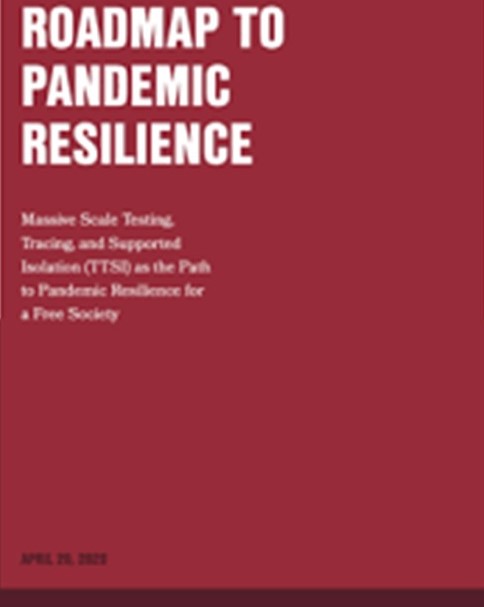
Roadmap for Pandemic Resilience: Massive Scale Testing, Tracing, and Supported Isolation (TTSI) as the Path to Pandemic Resilience for a Free Society. Danielle Allen et al. Harvard: Edmond J. Safra Center for Ethics, April 20, 2020.
As the world struggles with growing numbers of coronavirus cases, experts are putting their heads together, to try to figure out an effective strategy for pandemic resilience – living with this vicious virus, adapting to it, adjusting to it – and carrying on. This 56 page book provides ten measures for an effective strategy of pandemic resilience in the US. I believe it holds for other nations too. These steps are do-able! It requires:
- Innovation in testing methodologies. (Speed, accuracy, cost are all vital. And scale!)
- A Pandemic Testing Board established by the federal government with strong but narrow powers that has the job of securing the testing supply and the infrastructure necessary for deployment. One agency to do this – not 50 states competing!
- Federal and/or state guidance for state testing programs that accord with due process, civil liberties, equal protection, non-discrimination, and privacy standards. (Let’s have uniform standards for Mississippi, Alabama and New York)
- Readiness frameworks to support local health leaders, mayors, tribal leaders, and other public officials in setting up test administration processes and isolation support resources.
- Organizational innovation at the local level linking cities, counties, and public health districts, with specifics varying from state to state. (Cities, counties and public health districts need to work together seamlessly).
- Federal and state investment in contact tracing personnel, starting with an investment in 100,000 personnel (recommendation from JHU Center for Health Security). (The US has far far fewer such personnel today. Other countries have proved that contact tracing is vital).
- Clear mechanisms and norms of governance and enforcement around the design and use of peer-to-peer warning apps, including maximal privacy protection, availability of open source code for independent and regulatory audit, and prohibitions on the use of any data from these apps for commercial purposes, ideally achieved through preemptive legislation.
- Support for quarantine and isolation in the form of jobs protections and material support for time in quarantine and isolation as well as access to health care.
- An expanded U.S. Public Health Service Corps and Medical (or Health) Reserves Corps (paid service roles), and addition of Health Reserves Corps to the National Guard units of each state. (Harvard’s School of Public Health is in a rundown antiquated building; ever seen the gleaming new business school? Can we get our priorities right here, rather than mopping up the money
- * National Infectious Disease Forecasting Center to modernize disease tracking.
How many of these 10 commonsense ideas are now in place in the US? In your country? In my country. Very very few…..
…And – Another Helpful Drug!
By Shlomo Maital
Why do many COVID-19 sufferers die? A group of researchers at Hadassah Medical Center, Jerusalem, may have found a major cause.
Many COVID-19 patients die when blood clots form and damage key organs. According to the Jerusalem Post: “Hadassah researchers discovered that patients who form fatal blood clots have an increased level of alpha defensin protein in their blood.”
At least 30% of patients with coronavirus develop blood clots that block the flow of blood to their kidneys, heart and brain, as well as the lungs, according to international research.
The research team has discovered what they believe causes coronavirus patients to become seriously ill and even die. They also say they have a way to treat the cause before it’s too late.
According to Jerusalem Post’s Maayan Jaffe-Hoffman, “The Hadassah team studied more than 700 blood samples from 80 patients who were admitted to the medical center during the first peak of the coronavirus outbreak in Israel. The results show that alpha defensin speeds up blood clot formation, which can cause pulmonary embolism, heart attacks and stroke. In addition, when blood clots form in the alveoli, whose function it is to exchange oxygen and carbon dioxide molecules to and from the bloodstream, this can lead to respiratory distress and eventually intubation. [Alveoli are the tiny air sacs at the end of the bronchioles (tiny branches of air tubes in the lungs)]”..
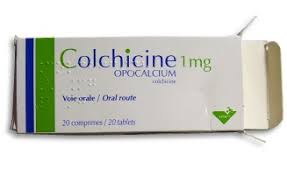
Multiple studies have shown that around 80% of coronavirus patients who are intubated have died, The Hadassah team is en route to a solution: administering the drug colchicine to coronavirus patients. Colchicine is an approved drug used in the prevention and treatment of gout attacks, caused by too much uric acid in the blood.
They have completed testing colchicine on mice and found that it successfully inhibited the release of alpha defensin. Now, they are waiting for the necessary approvals to test it on human coronavirus patients.
The researchers said that clinical trials would look at use of the drug both for severe cases and administering it to patients with mild or moderate symptoms to see if it will help decrease the chances of their developing a severe case of the disease.
Dexamethasone – At Last?
By Shlomo Maital
Two hours ago, the New York Times printed this news story, by Benjamin Mueller:
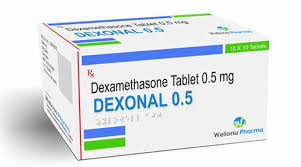
LONDON — “Scientists at the University of Oxford said on Tuesday that they had identified what they called the first drug proven to reduce coronavirus-related deaths, after a 6,000-patient trial in Britain showed that a low-cost steroid prevented the deaths of some hospitalized patients. The steroid, dexamethasone, a well-known anti-inflammatory drug, appeared to help patients with severe cases of the virus: It reduced deaths by a third in patients receiving ventilation, and by a fifth in patients receiving standard oxygen treatment, the scientists said. They found no benefit from the drug for patients who did not need respiratory support.”
How does it work? Apparently, as a steroid drug, it prevents the body’s immune system from over-reacting and making the patient even more ill. “Experts said it appeared that the steroid tamped down the overactive inflammatory response to the virus in some patients, known as a cytokine storm, rather than inhibiting the virus itself.”
Dexamethasone was first made in 1957 and was approved for medical use in 1961. So it is nearly 60 years old! Dexamethasone is cheap! In the United States, a month of medication typically costs less than US$25. In India, a course of treatment costs about 50 cents US. This is because the drug is now available as a generic. More than a million prescriptions a year are given in the US.
An Antibody “Cocktail” for COVID-19: Bottoms Up!
By Shlomo Maital

In medical research, sometimes old tried-and-true ideas become new.
In HIV AIDS research, researchers tried to find an antibody that would defeat the virus, if injected or consumed by patients. It didn’t work. The virus always found a way. The solution? Cocktails – combinations of antibodies, which taken together the virus could not defeat. And to this day, those who are HIV positive do quite well, relatively, when they regularly take the new ‘cocktail’. One of those drugs is called “Retrovir”. David Ho is generally regarded as the HIV cocktail pioneer, supported by the Rockefeller Foundation.
A similar approach proved effective with the Ebola virus. Late last year it was reported that: “ …a team of scientists demonstrated that a two-antibody cocktail called MBP134 could fully protect nonhuman primates and ferrets against lethal Ebola virus infections.”
Now comes a biotech company called Regeneron, which has embraced the same principle. According to CNN and Peter Sullivan, writing for thehill.com:
Regeneron is testing a cocktail of two antibodies to both treat and prevent the coronavirus, developed using people who have recovered from COVID-19 as well as genetically modified mice. The company did not give a firm timeline for its work, but these antibody cocktails could be ready sooner than a vaccine. A competitor company also working on the idea, Eli Lilly, said its antibody treatment could be as ready as early as September; it started trials earlier this month.
“We have created a unique anti-viral antibody cocktail with the potential both to prevent and treat infection,” Dr. George Yancopoulos, chief scientific officer of Regeneron, said in a statement. The antibody cocktail “could have a major impact on public health by slowing spread of the virus and providing a needed treatment for those already sick — and could be available much sooner than a vaccine.”
We learned from treating HIV AIDS that a two-pronged approach is needed: Develop anti-viral drugs, while you develop anti-viral vaccines. To this day no vaccine for HIV has been found.
This is happening with COVID-19 as well. Drugs and vaccines. Meanwhile, a vast army of hard-working scientists all over the world are collaborating, sharing results, and working day and night, to defeat this wily virus.
They give us reason for much hope.
Will the Dollar Be the Next COVID-19 Victim?
By Shlomo Maital

Will the dollar be the next victim of COVID-19? Bloomberg’s Stephen Roach, former Morgan Stanley chair and now a Yale U Professor, thinks it might. Here is why.
Here in short is his argument: “Already stressed by the impact of the Covid-19 pandemic, U.S. living standards are about to be squeezed as never before. At the same time, the world is having serious doubts about the once widely accepted presumption of American exceptionalism. Currencies set the equilibrium between these two forces — domestic economic fundamentals and foreign perceptions of a nation’s strength or weakness. The balance is shifting, and a crash in the dollar could well be in the offing.”
The dollar for 75 years, since 1945, has been a safe haven for investors – a port in a storm, for their money. This may no longer be true. As US deficits mount – so far this fiscal year alone, the federal deficit totals $738 billion, and will likely double, out of a $20 trillion GDP, or a 7% deficit.
Since Americans save very little, US deficits have been funded by, among others, China, which has bought massive amounts of US Treasury bonds in the past. This is highly unlikely to continue, given the toxic atmosphere between Trump and Xi Jinping. So the only way the US will be able to finance its massive deficit spending, will be for the Federal Reserve to buy Treasury bonds, implying an enormous tsunami of cash flowing into the economy. Short-term, this may be OK; but long term, it could well undermine the value of the dollar, as the world becomes awash in them.
The dollar problem predates the pandemic. Roach observes: “The seeds of this problem were sown by a profound shortfall in domestic U.S. savings that was glaringly apparent before the pandemic. In the first quarter of 2020, net national saving, which includes depreciation-adjusted saving of households, businesses and the government sector, fell to 1.4% of national income. This was the lowest reading since late 2011 and one-fifth the average of 7% from 1960 to 2005.”
So – to simplify: If Americans do not save, and if the US government is dissaving, and borrowing like mad – who will lend it the money? Americans? No. Foreigners? Probably not. So if nobody is willing to lend to the US, except the Federal Reserve, the only alternative is to flood the world with cheap dollars. And that may spell doom for the global value of the dollar.
This may be wrong. But it is worth thinking about – one more thing to worry about, because the global economy depends on the dollar as a main key currency.
Don’t Count Too Much on a Vaccine
By Shlomo Maital

Dr. William Haseltine
The Tyee is an independent online Canadian news magazine that primarily covers British Columbia. [Thetyee.ca]. Contributing writer Andrew Nikiforuk writes about a world-leading virologist Dr. William Haseltine, vilified in the past for doubting an AIDS vaccine could be produced (apparently, it can’t), and now sharing doubts about a COVID-19 vaccine. His views are worth heeding…. Warning: This blog is 1,000 words, twice as long as usual!
“William Haseltine: People should regard everyone they meet as infected and act accordingly. ‘That’s the only safe assumption you can make. And don’t assume that if you’ve been infected, you’re protected.’
When William Haseltine told a group of fellow scientists in 1986 that an AIDS vaccine would be unlikely because of the difficult nature of the virus, he was booed off the stage. His colleagues even threw stuff at him. “But we still don’t have a vaccine for AIDS,” he recently told Reuters. “We don’t know for sure that a [COVID-19] vaccine won’t be developed, but I can say with the same conviction — don’t count on it.”
In the last couple of weeks the virologist also has offered some jarring observations on the nature of the coronavirus, self-promotion by drug labs, the hazards of rapid reopenings and our global unpreparedness for what is yet to come.
Here are Haseltine’s eight key observations…
- Beware of those who purvey premature hope.
Haseltine’s years of experience cause him to caution against being manipulated by emotion. A number of firms have been giving “a false impression of progress” on the vaccine front, he worries. Cambridge-based Moderna, for example, made headlines last week with news of a safety trial on just eight healthy individuals for its vaccine. The value of the company’s stock exploded. Although the company said their experimental vaccine raised neutralizing antibodies, it said nothing about levels
- Even a vaccine that works likely won’t solve the pandemic.
Haseltine also wants citizens to appreciate this bit of wisdom: a vaccine will not likely end this pandemic for several reasons.
For starters the most affected population, people over the age of 60, are the most difficult population to develop vaccines for. As the immune system ages, the effectiveness and duration of vaccines wanes with it. “It is very difficult to develop a vaccine for older people,” notes Haseltine.
Second, coronaviruses make difficult vaccine candidates because they produce many proteins that allow them to trick and evade the immune system.
Third, Haseltine doesn’t think an adenovirus-based vaccine such as the one proposed by CanSino Biologics, and now being tested in Halifax, will do the trick either.
- A flattened curve is not a road to victory.
Haseltine also thinks many people aren’t taking the disease seriously enough. The veteran virus fighter compares COVID-19 to polio. It, too, was a cold virus with a nasty bite. One in 200 people infected came down with paralysis and of those 10 to 15 percent died of muscle paralysis. It, too, spread through what white coats call “the oral-fecal route” on people’s hands and contaminated surfaces.
As the world experiments with reopening after the first wave, often without adequate testing, contract tracing and isolation facilities in place, people should regard everyone they meet as infected and act accordingly.
“That’s the only safe assumption you can make,” he said. “And don’t assume that if you’ve been infected, you’re protected.” He advises people not to let down their guard or stop wearing a mask in crowded places until their city and region hasn’t recorded a COVID-19 case for a month.
- ‘Herd immunity’ is a dubious prospect.
Haseltine also thinks you can forget about herd immunity as some kind of saving grace. There is a reason that we all get colds every year and that’s because immunity to the four corona viruses that cause colds doesn’t last long.
“There’s no such thing as herd immunity for this disease. I doubt it will ever exist,” Haseltine said in a Reuters interview, because “people who have had it are getting reinfected.” He thinks Sweden made a bad mistake going for herd immunity, and then cites the nation’s death rate which is higher than any other Scandinavian country.
- We remain woefully unprepared.
The next thing Haseltine wants you to think about is our chronic and ongoing lack of pandemic preparedness. COVID-19 caught the world with its pants down because governments and corporations ignored all the warnings. If you want to know how predictable pandemics can be just watch the film Contagion, says Haseltine.
Nearly 15 years ago the emergence of SARS and then MERS demonstrated that coronaviruses could be an existential threat. Although researchers started work on 20 potential drugs for these coronaviruses, they all got shelved.
“Those drugs lay dusty on the shelves in China, in Singapore, in Hong Kong, in Europe, in the United States, and in the [United Arab] Emirates and Saudi [Arabia] where they were discovered and shown to work in animal models of both SARS and MERS.” The reason: there was no economic model to develop them. Haseltine thinks it is more likely researchers will find a suitable drug treatment for the virus before they develop a safe vaccine.
- Nature is not nearly as controllable as we wish.
The pandemic is also sending people a deep and profound message, says Haseltine. “We are part of Nature. We don’t control Nature. Do we control volcanoes? Do we control hurricanes? Viruses are part of nature and their job is to grow in us,” Haseltine recently told Reuters.
- Much bigger threats loom.
Globalization and human population growth have created pretty good ecosystems for new colonizing viruses. Every day the viral world makes trillions of random mutations and some of these mutations produce viruses that can adapt to human environments better than others. More pandemonium is coming, warns Haseltine.
“It is only a matter of time before a coronavirus that is far more lethal and contagious than this one emerges to ravage the world’s population,” says Haseltine. “When that happens, we will no longer be talking about a global death toll in the ‘mere’ hundreds of thousands.” He also suspects the world is overdue for a deadly influenza outbreak capable of removing one to two billion people from the planet.
- Changes in behavior can save us now. And far more certainly than any vaccine.
Last but not least, we should pay more attention to the most important part of this story: changing human behaviour can stop COVID-19 dead in its tracks.
Good-bye America ?
By Shlomo Maital

A terrible leaky social safety net, social and economic inequality, poor schools, a broken divisive political system, a worse-than-awful President (worst in history) – and a pandemic. It has finally caught up to America. All its problems seem to be converging, at one point in time. Here is how Bloomberg News sums it up:
¨ In the three months since isolation measures were first imposed in a belated effort to slow the spread of Covid-19, the world’s largest economy has become a basket case. One quarter of small businesses and two-fifths of restaurants have closed. Some 1 in 4 American workers is out of a job.
¨ At least 40 million people have filed for unemployment. And while the virus has devastated almost every economy it’s touched, individual Americans entered the crisis in an especially vulnerable position. The planet’s wealthiest country is renowned for having one of the weakest social safety nets among developed nations. It is home to more than two-fifths of all millionaires but has the highest poverty rate and the widest wealth gap among its peers.
¨ Despite a booming stock market (increasingly disconnected from the reality of everyday people) and robust job growth (largely low-paying service jobs) in recent years, more than 38 million Americans scrape by. The causes of U.S. inequality are well known, but they have jumped to the fore now that the nation is transfixed by disease, recession and outrage. —Josh Petri
¨ Racial repression is built into the American economy, Peter Coy writes in Bloomberg Businessweek. Almost two centuries after the U.S. defeated the slave states, the color of money is still white.
¨ Over the past four decades, the cost of policing in the U.S. has almost tripled, from $42.3 billion in 1977 to $114.5 billion in 2017, according to an analysis of U.S. Census Bureau data conducted by the Urban Institute on behalf of Bloomberg Businessweek. That budget is 10 times greater than the Centers for Disease Control and Prevention (which led the Trump administration’s botched response to the pandemic) and 12 times greater than the Environmental Protection Agency ( which has been dismantling environmental protections). Crime, however, has been trending downward since the early 1990s. As protests over police killings of unarmed black people continue, this disconnect is leading to calls to defund law enforcement agencies and instead fund mental health and social services.
¨ Trump’s performance during national upheaval and the pandemic appears to be having a disastrous effect on his reelection bid. Polls show him performing poorly in 2020 battleground states, and one of his campaign’s most recent ads, entitled “Make Space Great Again” violates NASA guidelines.
¨ Americans filed almost 2 million applications for unemployment benefits last week, reflecting a slowing of the torrent of job losses. Trump administration officials say they expect to spend up to $1 trillion in the next round of economic stimulus, though of course that’s up to Congress. Senate Majority Leader Mitch McConnell, who has said Democratic-leaning states crushed by the virus shouldn’t get financial help (despite being the biggest source of those federal dollars), said any new bailout wouldn’t occur until after July 20.

 TIMnovate