
You are currently browsing the category archive for the ‘Global Crisis Blog’ category.
Modern-day Prophets Who Predicted the Pandemic: We Ignored Them
By Shlomo Maital

Jeremiah Lamenting the Destruction of the Holy Temple, by Rembrandt
On Wednesday evening, the 9th day of the Hebrew month of Av, we Jews mark the anniversary of the destruction of the Holy Temple in Jerusalem 2,606 years ago, in 586 BCE. We sit on low benches and read the book of Lamentations — “How you sit, alone, great city, a great nation, now bereaved, like a widow”.
The prophet Jeremiah warned King Hezekiah – and foresaw the disaster. Hezekiah ignored him, then imprisoned him. Hezekiah paid a heavy price. Some scholars say Jeremiah wrote the Book of Lamentations.
Today, when we refer to prophecies of doom, we call them ‘jeremiads’, lower case ‘j’.
Fast forward from 586 BCE, when Nebuchadnezzar destroyed Jerusalem and took the people of Israel into exile, to Babylon — to 2020, and the pandemic.
We were warned. And by more than one “Jeremiah”. Here is the proof:
* Bill Gates, TED talk, 2015: If anything kills over 10 million people in the next few decades, it’s most likely to be a highly infectious virus rather than a war,” Gates said. “Not missiles, but microbes.” Gates noted that many countries worked for years to reduce the risk of nuclear war, and needed to give similar attention to a massive mobilization against a killer virus. “We’ve actually invested very little in a system to stop an epidemic,” he said, echoing warnings in recent years from infectious disease doctors. “We’re not ready for the next epidemic.”
Vaclav Smil, “Global Catastrophes and Trends” (book), Sept. 2012: “Consequently, the likelihood of another influenza pandemic during the next 50 years is virtually 100 percent”
Preparing for the Next Pandemic, By Michael T. Osterholm, Foreign Affairs, July/August 2005: “This is a critical point in our history. Time is running out to prepare for the next pandemic. We must act now with decisiveness and purpose.” And in “Deadliest Enemy: Our War Against Killer Germs”, he warned, the US is not properly prepared for a pandemic.
Robert G. Webster, “Flu Hunter: Unlocking the secrets of a virus”: “Nature will again challenge mankind with an equivalent of the 1918 influence virus. We need to be prepared.”
In 2018, the US intelligence community’s Worldwide Threat Assessment team warned that “a novel strain of a virulent microbe that is easily transmissible between humans continues to be a major threat”.
In the 2019 threat assessment: “We assess that the United States and the world will remain vulnerable to the next flu pandemic …that could lead to massive rates of death and disability, severely affect the world economy, strain international resources and increase calls on the US for support.” [The Trump administration, without explanation, postponed the DNI’s annual Worldwide Threat Assessment which warns that the U.S. remains unprepared for a global pandemic. The office of the DNI was scheduled to deliver the Assessment to the House Intelligence Committee on February 12].
US AID Director Jeremy Konyndyk, Politico, 2017: “At some point a highly fatal, highly contagious virus will emerge, like the 1918 Spanish flu pandemic, which infected one-third of the world’s population and killed between 50 and 100 million people”. He added that President Trump is unprepared for such a pandemic.
US National Security Council, Dr. Luciana Borio, director of medical and biodefense preparedness: in 2018: “The threat of pandemic flu is the number one health security concern. Are we ready to respond? I fear the answer is no”. (John Bolton disbanded the NSC team).
2006: Massachusetts Flu Pandemic Preparedness Plan: public health officials predicted as many as 2 million people could become ill. [4.25 million people have so far been ill with the coronavirus in the US and the numbers mount].
Stephen Soderberg’s movie Contagion, released in 2011, is about a fictional virus called MEV-1, which became a global pandemic after a bat spread it to a pig, who spread it to a person…. The fictional virus had a 72-hour incubation period and high fatality rate.
Albert Camus’ 1947 novel The Plague described an epidemic in Algeria….
Nobody listened to Jeremiah, who warned against allying with Egypt, against powerful Babylon. And nobody listened to the modern-day prophets either. Indeed, fake news/conspiracy mongers blame Bill Gates for the pandemic (along with George Soros), even though the Bill and Melinda Gates foundation has donated, by some reports, over $350 million to COVID-19 mitigation and innovation.
Why did we not heed Jeremiah? And for 2,606 years, why have we consistently turned a deaf ear to wise experts who warned of impending disaster and urged us to prepare?
Jeremiah too paid a price, sent into exile in Egypt. It would appropriate if modern-day naysayers too were sent into exile ….. at least metaphorically.
Dr. Maurice Hilleman – Uncelebrated Vaccine Hero Who Saved Millions
By Shlomo Maital

Dr. Maurice Hilleman – Saved Millions!
Vaccines are front and center in the news these days; strangely, rumors and news and false news and half-truths about vaccines drive the stock market up and down.
So perhaps it is worth recalling one of the world’s greatest vaccine innovators, Dr. Maurice Hilleman – thanks to a great piece in the New York Times, published a month ago and recently featured on the BBC. Hilleman, while working for Merck, was responsible for the measles mumps rubella (MMR) triple vaccine that has saved the lines of countless children. Here is the story:
At 1 a.m. on March 21, 1963, an intense, irascible but modest Merck scientist named Maurice R. Hilleman was asleep at his home in the Philadelphia suburb of Lafayette Hill when his 5-year-old daughter, Jeryl Lynn, woke him with a sore throat. Dr. Hilleman felt the side of her face and then the telltale swelling beneath the jaw indicating mumps. He tucked her back into bed, about the only treatment anyone could offer at the time. For most children, mumps was a nuisance disease, nothing worse than a painful swelling of the salivary glands. But Dr. Hilleman knew that it could sometimes leave a child deaf or otherwise permanently impaired. He quickly dressed and drove 20 minutes to pick up proper sampling equipment from his laboratory. Returning home, he woke Jeryl Lynn long enough to swab the back of her throat and immerse the specimen in a nutrient broth. Then he drove back to store it in the laboratory freezer. The name Maurice Hilleman may not ring a bell. But today 95 percent of American children receive the M.M.R. — the vaccine for measles, mumps and rubella that Dr. Hilleman invented, starting with the mumps strain he collected that night from his daughter.
We read endless stories of the US Federal government, UK government, and governments in China and Russia, throwing billions of dollars at pharmaceutical companies, buying in advance millions of doses of vaccines that are as yet unproven. And I think of Dr. Maurice Hilleman, one irascible physician and vaccine developer who saved more persons than any other scientist alive or dead.
It was by no means his only contribution. At Dr. Hilleman’s death in 2005, other researchers credited him with having saved more lives than any other scientist in the 20th century. Over his career, he devised or substantially improved more than 25 vaccines, including 9 of the 14 now routinely recommended for children. “One person did that!” said Dr. Anthony S. Fauci, a longtime friend of Dr. Hilleman’s and now director of the National Institute of Allergy and Infectious Diseases. “Truly amazing.”
Is there a Maurice Hilleman out there, applying perseverance, creativity, wisdom, and, yes, opportunism (his daughter’s illness) to save the world?
You Cannot Manage What You Cannot Measure:
How to Implement Evidence-Based COVID-19 Strategy
By Shlomo Maital

As a management educator, I stress a simple principle: Management begins with measurement. What you do not, cannot, measure, you cannot, will not, manage. But you have to measure wisely, correctly, accurately, and promptly.
Man, does this ever apply to the chaos we find ourselves now, in my country Israel and in other hotspot countries like the US!
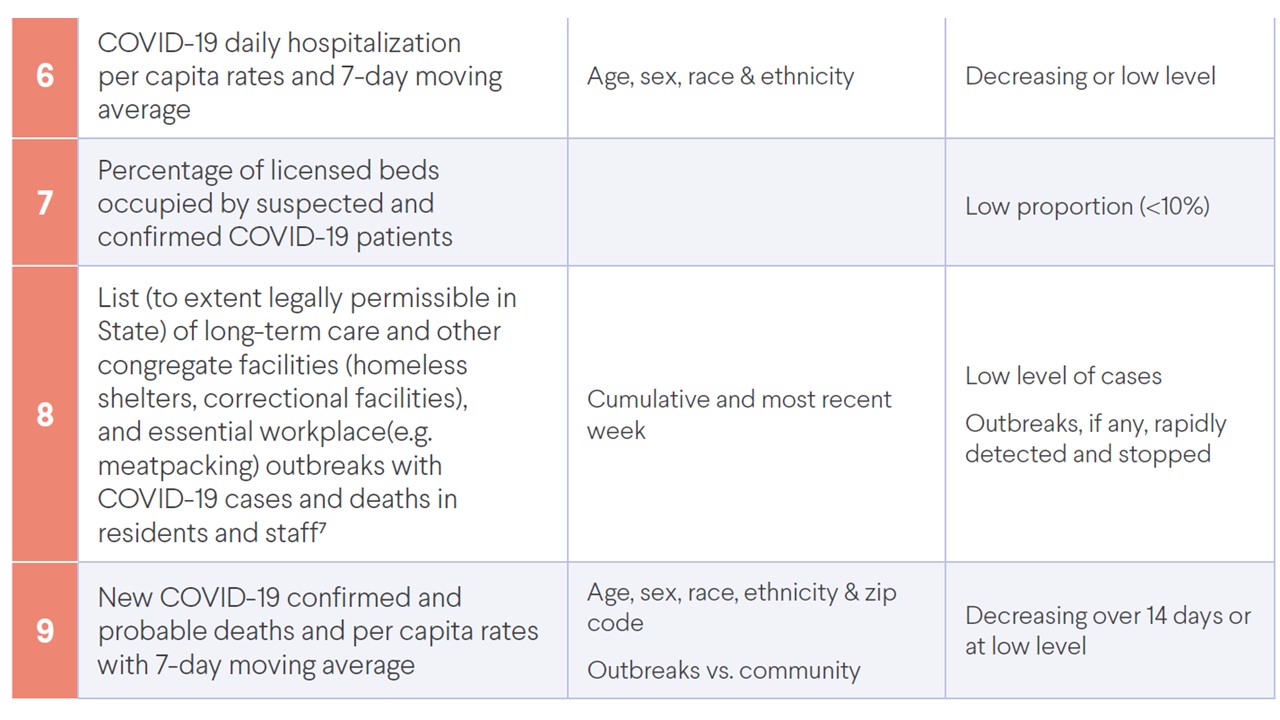
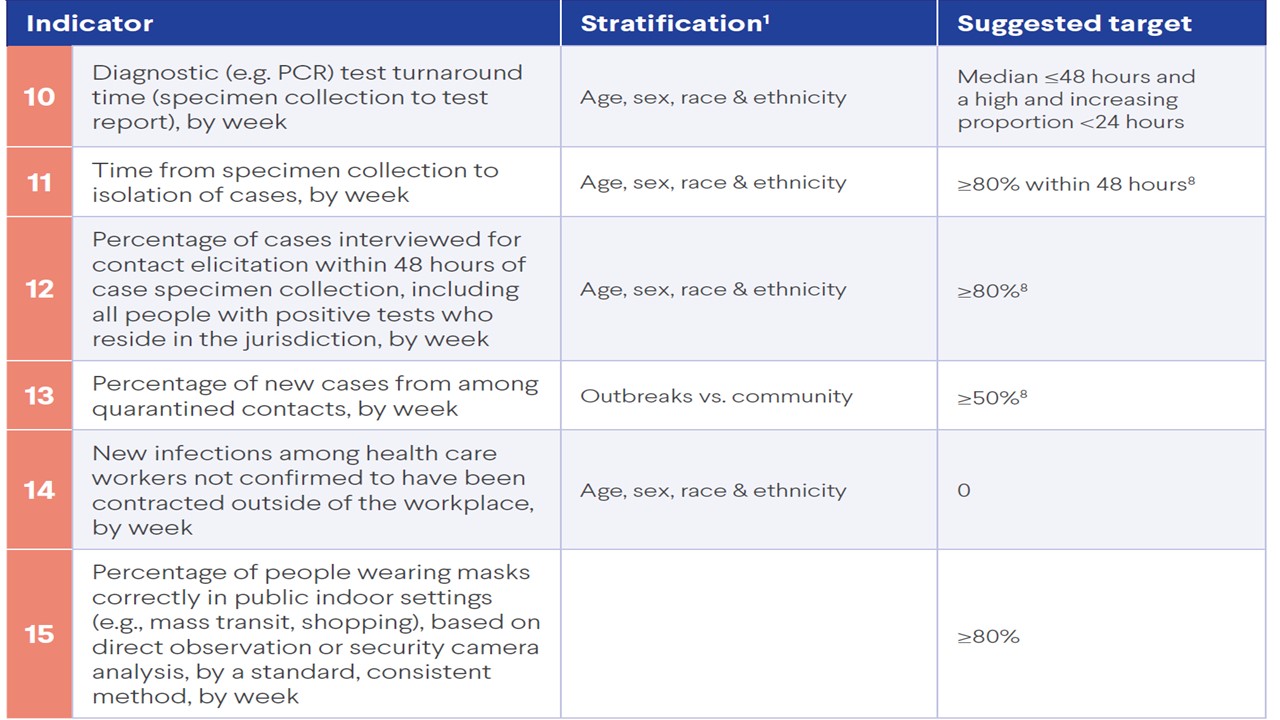
So, what should we be measuring? Here is a thorough, reasoned proposal by Tom Frieden and Cyrus Shahpar. Frieden is a former director of the Centers for Disease Control and Prevention, runs the nonprofit group Resolve to Save Lives, and Dr. Shahpar is the director of a team devoted to preventing epidemics. * https://www.nytimes.com/2020/07/21/opinion/coronavirus-state-data.html Here is the URL for the list of 15 (if it is hard to read the jpeg’s below: https://preventepidemics.org/covid19/resources/indicators/
Resolve to Save Lives, a coalition of national, state and academic partners including the American Public Health Association and the Johns Hopkins Center for Health Security, has developed a list of 15 indicators. Their report argues: Every state and county should be able to collect and publish nine of these immediately and the other six within a few weeks.
If we had these measures, our leaders, policymakers and the general public would know far better where we stand, what the goals are, how we are doing, and what lies ahead.
The mass media continue to report on new cases, total cases, and deaths. The result is misleading, because, for instance, “very ill” cases lag behind new cases by two weeks or more.
Here are the 15 measures that we really need, to manage the pandemic. CLI is COVID-like illness; ILI is influenza-like illness. PCR is polymerase chain reaction, widely used to rapidly make millions to billions of copies of a specific DNA sample, to detect, e.g., coronavirus. No country, I believe, has the full set of 15 – and very few countries have even a partial set of the 15.
So ideally: A team of epidemiologists, virologists and statisticians join together, and put in place a system for collecting data for the 15 indicators. In the US, this should be the Center for Disease Control and Prevention (notice: the acronym CDC omits the all-important P, Prevention!). The results are shown on a dashboard, simple, clear and understandable. And all of us can see for ourselves where we are, what is happening, what’s good, what’s bad, and how close we are to our goals. And, derived from the dashboard, what each of us needs to do to help reach the measured goals.

The EU is back – the US is not
By Shlomo Maital

The Brexit fiasco generated enormous pessimism about the future of the European Union. There was talk about Italy leaving the EU, after extreme elements there broached the idea, or even Netherlands, which resents handouts to spendthrift EU nations.
Well, the EU is back. Here is what the Financial Times reported on the bailout deal struck yesterday, after four long days of meetings, wrangling and compromise:
“EU leaders have struck a deal on a landmark coronavirus recovery package that will involve the European Commission undertaking massive borrowing on the capital markets for the first time. After days of sometimes bitter debate, the bloc’s heads of government agreed on a €750bn package aimed at funding post-pandemic relief efforts across the EU. The deal was announced in a tweet from Charles Michel, the European Council president at 05.31am (CET) on Tuesday and was hailed by Emmanuel Macron, the French president, as a “historic day for Europe”. The recovery fund centers on a €390bn programme of grants to economically weakened member states — a significantly smaller sum than the €500bn package originally proposed by Berlin and Paris in May. Leaders also signed off on the EU’s next seven-year budget, which will be worth €1.074tn. The deal, orchestrated by Angela Merkel, the German chancellor, and Mr Michel, is the fruit of marathon negotiations under way in Brussels since Friday morning. The summit was the second longest in the bloc’s history, falling just shy of the record set at a meeting in Nice in 2000.”
Once again, Angela Merkel, the lame-duck Chancellor of Germany, long after she announced her retirement, has returned to bring together disparate EU elements – from the autocratic Hungarian leader Viktor Orban, to the frugal four northern nations.
Smaller frugal nations won an agreement to increase their rebates from the EU — Austria’s annual reduction will be doubled to €565m a year ($644 m.) compared with previous proposals, while the Netherlands’ rebate will jump to €1.92bn ($2.2 b.) from €1.57bn ($1.78 b.) .
Contrast the ability of the fraught wrangling 27-nation European Union, moving to help the poor nations among it, with the hopeless helpless United States, where a) President Trump dumped responsibility for battling the pandemic on the 50 state governments and their governors, and saw as a result a horrendous second wave emerge, and b) led Republican opposition to provide financial help to state governments, while pressing them to re-open schools on Sept. 1, without the money it would take to do so safely.
A New York Tmes Op-Ed asks, which major nation will emerge strongest from the pandemic? Not the US. And no, not China. Answer: Germany, the enlightened leader of sanity and compromise in the European Union.
A Little Bird that LOVES Summer – and flies 40,000 miles a year to enjoy it
By Shlomo Maital

Arctic tern
So – we humans love summer, right. In normal times: vacation, hiking, Nature, beaches, ocean, sunshine… But there is a little bird, that weighs 100 grams, that REALLY loves summer. I mean, LOVES! And it flies 40,000 miles round trip, or more, just to enjoy permanent year-round summer.
But how?
So, Arctic terns breed during the summer, in the Arctic and northern temperate regions, in May-June. Then later in July they begin their migration south– far south, 12,000 miles to Antarctica. And they arrive in time for the Antarctic summer. Before winter again returns to the Antarctic, they fly back to the Arctic, another 12,000 miles.
25,000 miles round trip – the distance around the Earth, at the equator. All this, for a little bird that weighs 100 grams.
And if this is not amazing enough — baby birds do it too. Fledglings are born, and within three months, they do the long migratory flight from the Arctic to the Antarctic and back.
But wait. We do not do it justice. Arctic terns do not fly in a straight line, North Pole to South Pole and back. Tracking devices show this:
Eleven birds that bred in Greenland or Iceland covered 70,900 km (44,100 mi) on average in a year, with a maximum of 81,600 km (50,700 mi). The difference from previous estimates is due to the birds’ taking meandering courses rather than following a straight route as was previously assumed. The birds follow a somewhat convoluted course in order to take advantage of prevailing winds.
And consider this:
The average Arctic tern lives about thirty years, and will, based on …. research, travel some 2.4 million km (1.5 million mi) during its lifetime, the equivalent of a roundtrip from Earth to the Moon over 3 times.
There are so many wonders on our beautiful planet — I wish more people would support Green Planet programs — and respect the Arctic tern and other miraculous creatures that share the Earth with us.
It is not fanatical to claim that indirectly, this awful pandemic reflects our deep lack of respect for Nature, in all its facets, and our arrogant underestimation of Nature’s value and power. If a little bird that weighs one-fifth of a pound can travel a distance equal to the Moon and back over three times in its lifetime — maybe we humans should be a tad more humble.
By the way – we know all this, partly because experts place high-tech tags on the Arctic terns’ legs – the tag weighs only 1 gram, has a GPS chip on it, does not burden the bird and helps us understand its habits. Few people see the bird, because it always flies over water.
Univ. of Oxford Vaccine: Ready by September?!
Meet Sarah Gilbert!
By Shlomo Maital

Prof. Sarah C. Gilbert, Univ. of Oxford
A Bloomberg News report has optimistic information about the University of Oxford’s burgeoning COVID-19 vaccine, which, Bloomberg says, could be ready by September.* In a deal with Astra-Zeneca, the latter says it could quickly prepare as many as 2 billion doses. And sell them on a not-for-profit basis! And there is a lovely human side to this medical tale. So – meet Sarah Gilbert. She might just save your life.
“In April, Sarah Gilbert’s three children, 21-year-old triplets all studying biochemistry, decided to take part in a trial for an experimental vaccine against Covid-19. It was their mother’s vaccine—she leads the University of Oxford team that developed it—but there wasn’t a big family talk. “We didn’t really discuss it as I wasn’t home much at the time,” Gilbert told me recently. She’d been working around the clock, as one does while trying to end a pandemic, and at any rate wasn’t worried for her kids. “We know the adverse event profile and we know the dose to use, because we’ve done this so many times before,” she says. “Obviously we’re doing safety testing, but we’re not concerned.” With safety low on her list of worries (her triplets are fine), Gilbert is focused on quickly determining how effective the vaccine will be and how it will be made. In April, Oxford struck a deal with British pharmaceutical giant AstraZeneca Plc to spearhead global manufacturing and distribution and help run more trials around the world. AstraZeneca has agreed to sell the vaccine on a not-for-profit basis during the crisis if it proves effective and has lined up deals with multiple manufacturers to produce more than 2 billion doses.
Prof. Gilbert shuns the limelight. But she may soon well be one of the most famous scientists in the world:
” Gilbert has been all over the British press, but she appears to regard public attention as a distraction. For more than two decades she worked anonymously, developing vaccines while also, of necessity, churning out endless grant applications. Her research was rarely discussed outside scientific circles. Now she’s leading one of the most high-profile and advanced vaccine candidates against Covid-19, with Phase III, or final-stage, trials under way involving thousands of people in Brazil, South Africa, the U.K., and, soon, the U.S. Money is no longer a struggle. At the end of April, crunching a process that normally takes about five years into less than four months, Gilbert and her colleagues at Oxford’s Jenner Institute started a human trial on 1,100 people. When Gilbert testified before a parliamentary committee in early July, one member compared her effort to going into a shed and coming out with a jet engine. Gilbert’s team has leapfrogged other vaccine contenders to the point where it will likely finish vaccinating subjects in its big 10,000-person efficacy trial before other candidates even start testing on that scale, Kate Bingham, chair of the U.K. government’s Vaccine Taskforce, told the parliamentary committee in early July. “She’s well ahead of the world,” Bingham said. “It’s the most advanced vaccine anywhere.”
This is no overnight success. Gilbert has labored for years in her laboratory, to develop the knowledge and skill that perhaps has prepared her for this moment, to save the world:
” Gilbert, who is 58, has the hyper-efficient, serious demeanor you’d expect from someone who might be on the cusp of a breakthrough and hasn’t a minute to spare. When I first called her in early March, she abruptly ended the conversation after 10 minutes to speak to someone about the technical process of manufacturing the vaccine. It would have been crazy to take offense. Gilbert says she wakes up at around 4 a.m. most days “with lots of questions in my head,” works from home for a few hours, then rides her bicycle to the institute, where she works into the evening. The Oxford team, just a handful of people in January, now comprises roughly 250. The vaccine is a so-called viral vector type based on years of research by Gilbert and Adrian Hill, the head of the Jenner Institute. Traditional vaccines are made with a weakened or inactivated form of the germ that causes infection to stimulate an immune response. Those vaccines aren’t easy to develop and produce quickly. The Oxford team has developed a technology that can speed up the process by using a harmless virus as a kind of Trojan horse to carry the genetic material of a pathogen into cells to generate an immune response. In the case of Covid-19, Gilbert has taken a chimpanzee adenovirus (a common cold virus) and inserted genetic material from the surface spike protein of the SARS-CoV-2 virus as a way of tricking the immune system to fight back. The chimp adenovirus platform stimulates both antibodies and high levels of killer T-cells, a type of white blood cell that helps the immune system destroy infection.
The Oxford – Gilbert vaccine could still fail. But I don’t think so. Gilbert is confident.
“Gilbert has voiced remarkable confidence in her chances, saying the Oxford vaccine has an 80% probability of being effective in stopping people who are exposed to the novel coronavirus from developing Covid-19. She has said she could know by September. Asked by MPs in early July whether the world would have to struggle through the winter without a vaccine, Gilbert said, “I hope we can improve on those timelines and come to your rescue.” “We could say, ‘OK, we can start tomorrow.’ We don’t have to make 10 different varieties of this. We knew it could be manufactured”
Indian Scientists: Mythbusters!
By Shlomo Maital

There is a huge and growing amount of misinformation, disinformation, lies, conspiracy theories and bizarre ‘facts’ on the Internet about COVID-19.
In a famous TED lecture in 2015 Bill Gates predicted a catastrophic pandemic that would kill millions. He said we are simply not ready to deal with it. Today, crackpots claim he is responsible for the pandemic. George Soros, too, stars in this role.
I applaud and embrace a large group of Indian scientists who have decided to fight back. They have set up a superb website to debunk hoaxes.
Indian Scientists’ Response to CoViD-19 (ISRC) started as a group of Indian scientists who came together voluntarily in response to the COVID-19 pandemic. It has now grown to include more than 500 scientists, engineers, technologists, doctors, public health researchers, science communicators, journalists and a number of students; they hail from a range of disciplines but principally the physical and life sciences; they are affiliated to eminent research institutes of science and technology, universities, colleges, hospitals and private laboratories. The group also includes Indian scientists from laboratories all over the world.
On this website, you can find some 30 such ‘hoaxes’, some of the totally bizarre, and the scientists’ evidence they are totally made up. The material exists in some 20 languages.
https://indscicov.in/about-us/
I wish American scientists would join together and do the same.
Here is one example of a myth-buster post: It is clear, simple, easy to read. We need the same in the West…

One American in Three Will Refuse a COVID-19 Vaccine
By Shlomo Maital
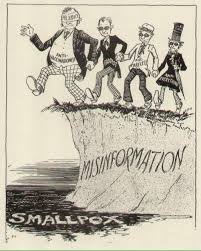
I’m not sure you will believe this. I could barely believe it.
A CNN public opinion poll in the United States revealed:
,,, we’re getting a closer look at how some Americans feel about the pandemic. A new national poll surveyed 1,000 adults and found 35% of Americans say they won’t get the coronavirus vaccine. Twenty-nine percent of Americans say they will definitely get the vaccine. Another third said probably.
No need for further comment. One American in three will turn down a COVID-19 vaccine when it is offered to them. And another third said, well, probably, not certain.
Two-thirds of Americans are not 100% certain they will seek a vaccine, when it is available.
A large part of the world is deeply worried, that they will not be able to get the vaccine, because the rich countries, pursuing America First policies, will keep it for themselves.
And in America (first), two-thirds are not 100% sure they will accept the vaccine.
So, many people will die through ignorance and conspiracy theories fed by social media.
We have seen in the past outbreaks of measles, in the US and elsewhere, through abysmal ignorance.
Here we go again.
What in the world has happened to this once-great nation?
p.s. President Donald Trump is busy promoting Goya beans and other products from the Oval Office. I did not make that up.
The Moderna mRNA Vaccine, Phase 1
5 Things We Need to Know – and Why We Should Celebrate (a Bit)
By Shlomo Maital

A sign of the times: A jargon-filled academic article published in the New England Journal of Medicine,* about a very small Phase 1 trial of a COVID-19 vaccine, has stock markets rising, or even soaring, social media buzzing, …. But — what is this really about? What is the state of Moderna’s vaccine, in simple language, as Moderna gears up for massive Phase 3 trials?
Here are 5 things you need to know and understand. From what I understand, the Moderna vaccine IS a big deal. It offers us great hope. Let’s try to understand why. This blog is long – nearly 1,500 words.
First – what’s the story about Moderna?
Moderna is a US biotech company based exclusively on messenger RNA (mRNA) (see below), in Cambridge, Massachusetts. (RNA is ribonucleic acid.)
Messenger RNA is RNA that tells the ‘ribosome’ (the protein factory inside the cell) which proteins to make and how to make them, by assembling amino acids.
The Moderna technology inserts synthetic (manmade) mRNA into living cells in order to reprogram the cells to develop immune responses. It is a novel technique abandoned by several large pharmaceutical and biotechnology companies who all failed to overcome the side effects of inserting RNA into cells. As of May 2020, no mRNA drug had been approved for human use. Moderna’s decision to try to develop a COVID-19 vaccine based on this risky unproven technology was a huge leap of faith. And, it may have worked.
Previously, Moderna conducted mostly failed trials with AstraZeneca, and in orphan diseases with Alexion Pharmaceuticals. In 2014, Moderna moved to focus on lower-margin mRNA vaccines. The strategic change led industry experts, and even Moderna employees, to question whether the company would survive. It looked bleak.
In December 2018, Moderna became the biggest initial biotech public offering of shares (IPO) in history, raising US$600 million for 8% of its shares, implying that the company was worth $7.5 billion – this, despite cumulative losses of $1.5 billion and equity raised of $3.2 billion.
As of May 2020, Moderna was valued at $30 billion, but none of its mRNA molecules had reached large clinical trials, and several had failed due to side-effects. It looked like a bubble to many.
And then came the huge leap into the unknown – the race to create a COVID-19 virus.
In July 2020, Moderna announced that its mRNA COVID-19 vaccine candidate in Phase 1 clinical testing had led to production of neutralizing antibodies in healthy adults. * And – the side effects were not serious (headaches, nausea). The article was peer-reviewed in the leading medical journal, New England Journal of Medicine.
Now, here are a few more things we need to know, from a trusted website.**
** https://horizon-magazine.eu/article/five-things-you-need-know-about-mrna-vaccines.html
1. “Vaccines based on messenger RNA are a whole new type of vaccine If an mRNA vaccine was approved for coronavirus, it would be the first of its type. ‘It’s a very unique way of making a vaccine and, so far, no (such) vaccine has been licenced for infectious disease,’ said Prof. Isabelle Bekeredjian-Ding, Paul Ehrlich Institute, Germany
“Vaccines work by training the body to recognize and respond to the proteins produced by disease-causing organisms, such as a virus or bacteria. Traditional vaccines are made up of small or inactivated doses of the whole disease-causing organism, or the proteins that it produces, which are introduced into the body to provoke the immune system into mounting a response.
“But mRNA vaccines, in contrast, trick the body into producing some of the viral proteins itself. They work by using mRNA, or messenger RNA, which is the molecule that essentially puts DNA instructions into action. Inside a cell, mRNA is used as a template to build a protein. ‘An mRNA is basically like a pre-form of a protein and its (sequence encodes) what the protein is basically made of later on,’ said Prof. Bekeredjian-Ding.
“To produce an mRNA vaccine, scientists produce a synthetic version of the mRNA that a virus uses to build its infectious proteins. This mRNA is delivered into the human body, whose cells read it as instructions to build that viral protein, and therefore create some of the virus’s molecules themselves. These proteins are solitary, so they do not assemble to form a virus. The immune system then detects these viral proteins and starts to produce a defensive response to them.
This is crucial. Vaccines are traditionally made by weakening or killing the virus or bug that causes illness. If they are not made properly, they can make people ill. So manufacturing them is very difficult, costly and time-consuming. mRNA vaccines are not dangerous, because the RNA they introduce triggers an immune reaction, but it cannot cause the illness itself!
- The mRNA vaccines could be more potent and straightforward to produce than traditional vaccines
“There are two parts to our immune system: innate (the defences we’re born with) and acquired (which we develop as we come into contact with pathogens). Classical vaccine molecules usually only work with the acquired immune system and the innate immune system is activated by another ingredient, called an adjuvant. Interestingly, mRNA in vaccines could also trigger the innate immune system, providing an extra layer of defence without the need to add adjuvants.
‘All kinds of innate immune cells are being activated by the mRNA,’ said Prof. Bekeredjian-Ding. ‘This primes the immune system to get prepared for an endangering pathogen and thus the type of immune response that is triggered is very strong.’
“There is still a lot of work to be done to understand this response, the length of the protection it could give and whether there are any downsides. Prof. Bekeredjian-Ding also explains that because you’re not introducing the whole virus into the body, the virus can’t mount its own self-defence and so the immune system can concentrate on creating a response to the viral proteins without interference by the virus. And by getting the human body to produce the viral proteins itself, mRNA vaccines cut out some of the manufacturing process and should be easier and quicker to produce than traditional vaccines. ‘In this situation, the major benefit is that it’s easy to produce (and) it will also probably be relatively easy to do an upscaling of production, which of course, is very important if you think about deployment throughout Europe and the world,’ said Prof. Bekeredjian-Ding. ‘It’s a very unique way of making a vaccine and, so far, no (such) vaccine has been licenced for infectious disease.’
- There are a lot of unknowns. “Because mRNA vaccines are only now beginning to be tested in humans, there are a lot of fairly basic unknowns which can only be answered through human trials. ‘What is really the current challenge, I think, is to understand whether these vaccines will really be able to mount a sufficiently protective immune response in the human and to understand, for example, which quantities of mRNA will be needed to do this,’ said Prof. Bekeredjian-Ding.
“Other outstanding questions include whether the proteins that have been chosen for the vaccine are the right ones to prevent a coronavirus infection in the body, how targeted the immune response is to this particular coronavirus, how long any immunity would last, and whether it causes side-effects such as increased inflammatory responses like redness and swelling or, in the worst case, aggravates disease.”
- It would be possible to vaccinate on a large scale. (NOTE: THIS IS A BIGGIE!)
“Once an mRNA vaccine has been approved, which could take 12-18 months, it should be easy to scale up production. Because the manufacturing process is shorter than for other vaccines – Prof. Bekeredjian-Ding estimates a few months rather than 1-2 years for conventional vaccines – there is potential for these vaccines to be scaled up quickly. This is useful in the context of coronavirus, which will likely need mass immunization programs.
‘I think we will need a very high population coverage, but it depends a little bit on the countries and the epidemiology,’ said Prof. Bekeredjian-Ding. ‘In the countries where coronavirus has been spreading very fast, we also expect that there’s many people who have been in contact with the virus and who have actually mounted a natural immune response. But on the other hand, if you look at Germany, for example, right now we’re all at home, barred, and not allowed to leave the house except for necessities.
And…I can’t resist adding this. The Chief Medical Officer of Moderna is Dr. Tal Zaks. He is Israeli. He studied at Ben Gurion University of the Negev. Regarding Moderna’s vaccine, he said that its experimental anti-COVID-19 vaccine “actually works,” after tests on a small number of volunteers, and that it will start Phase 3 testing on thousands of people in July.
“We got the first results today… and today we are showing that it actually works… we are able to stimulate the immune system,” Dr. Zaks said.
Dr. Zaks believed in Moderna’s mRNA vaccine from the outset, when many did not. Can we hope that this vaccine will end up saving many many lives, all over the world?
* An mRNA Vaccine against SARS-CoV-2 — Preliminary Report New England Journal of Medicine. July 15, 2020.
It’s NOT the Economy, Stupid!
Trump’s Former Chief of Staff Speaks Out
By Shlomo Maital
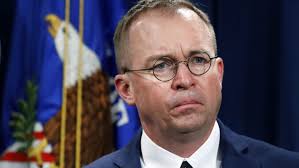
Mick Mulvaney, former Trump Chief of Staff
“It’s the economy, stupid” is a phrase coined by James Carville in 1992. Carville was a strategist in Bill Clinton’s 1992 presidential campaign against George H. W. Bush. His phrase was aimed at campaign workers. Carville wanted it to be one of three messages for them to focus on. The other two were boring and not worth mentioning.
Clinton used the 1991/2 recession in the United States to successfully defeat George H. W. Bush.
Fast forward. President Trump pushes prematurely to open schools and get the economy restarted. A massive second wave of coronavirus occurs. And his former Chief of Staff, Mick Mulvaney, speaks out against him, in a CNBC Op-Ed. Here is what Mulvaney, until very recently privy to the innermost circles of the Trump administration, said today:
“….lawmakers still see the need to run the [money] presses, they need to realize that the current economic crisis is public-health driven. As such, using ordinary fiscal tools might not be particularly efficacious. Put another way, the fact that people aren’t going on vacation probably has more to do with fear of getting sick than it does with their economic condition. Giving people a check, or some financial incentive to travel, won’t solve their problem. Make people feel safe to go back on an airplane or cruise ship, and they will of their own accord. Any stimulus should be directed at the root cause of our recession: dealing with Covid. I know it isn’t popular to talk about in some Republican circles, but we still have a testing problem in this country.”
Yes, you got it. It is NOT the economy, Stupid. (Mulvaney did not say ‘stupid’). If you don’t gain control of the pandemic, you will not be able to restart the economy, schools or no schools. It’s that simple. It is the VIRUS, Stupid! People won’t spend until you get control of it. And personal consumption is 70% of GDP, or $13 trillion, in 2019 (pre-pandemic).
Government programs can spill massive amounts of money into the economy, including IRS checks sent to dead people. But they can’t come close to what people spend, when and if they are comfortable, confident and reassured. So, it is NOT the economy, it is the public health crisis. Tackle that first!
It’s that simple. Trump’s inability to understand that will cost him a heavy defeat on Nov. 3 – but it will cost the American people far more, until Biden is inaugurated on Wednesday, January 20, 2021. That’s 190 days away! More than half a year. A lot of people are going to get sick, and some will die, during those six months.
Very very sad. Very very troubling. Very very angering.
,
 TIMnovate