How to Build Great Ideas On Key Facts

By Shlomo   Maital

Facts

 How do you develop great ideas for startups (whether social or business-oriented), that truly meet unsatisfied wants and change the world?

   I got an idea about ideas, from the current issue of TIME Magazine, of all places (Sept. 8 and 15 double issue).    This issue has an incredible number of interesting facts, presented creatively, visually. 

   You get great ideas from one key fact.  That fact at one fell swoop demonstrates vividly the need, and sets the stage for thinking big,  for tackling huge problems with huge impact, if successful.

    Examples?

  •    At present,  2.4 billion people are connected to the Internet; 44.8 percent of them are in Asia.  That means that 4.6 billion people have NO Internet connection.  How can this pressing need best be met?   Challenge:  Find a way to bring the Internet to 4.5 billion people who currently lack it. 
  •    At present, 2.8 billion people in the world cook over open fires; 4.3 million people die each year due to indoor air pollution, caused by open fires used for cooking. Most of the deaths are women and children. Challenge?  Find a way to save millions of lives, lost through inhalation of smoke from indoor cooking fires; 
  • Half the world’s children go to schools without electricity. Challenge: Find a way to bring electricity to the 1.3 billion people in the world who have no access to it.
  • Between 1998 and 2010,    463 children have died of overheating or hyperthermia in cars in the United States, the majority of whom were accidently left behind by caregivers.   Challenge: Find a simple way to prevent this.
  •    60 million plastic water bottles are used annually in the United States alone. Challenge:  Find a biodegradable plastic, that degrades in 90 days, and that also fertilizes plants.  (One of my students in Shantou Univ. China, is close to a solution).

*  Apple has $158.8 billion in unspent cash reserves.  Huge cash reserves are held (abroad) by Microsoft, Cisco, Google, Pfizer, and other U.S. companies.  Challenge: Feasible legislation to get them to bring the money home and invest it in America.

   And, one example of how this could work.

  • Why don’t we get heart cancer???   Because tumors grow when cells divide and multiply uncontrolled – but heart cells never split and multiply, beginning shortly after birth, unlike other cells.  


  •    Idea: Technion Prof. Yoram Palti thought that if you put an electro-magnetic field around, say, the brain, when brain tumor cells tried to divide, creating a narrow cell wall, you could explode them with the magnetic field. This could treat ‘untreatable’ tumors and stop them in their tracks. Basis: Cell division is largely by sick ‘cancer’ cells.   Palti, who is over 70, and his startup now have a proven device that stops brain tumors in their tracks, as well as lung cancer (very hard to treat).  Check out “Novocure”. Thanks, Prof. Palti!

Understanding the Mideast: A Guide for the Perplexed

By Shlomo  Maital     

free for all 

  Are you having trouble understanding what is going on in the Mideast?  What leads one human being to behead another human being – twice?   I LIVE in the Mideast, and have lived here for nearly 50 years.  And I’m having real trouble getting the picture.

    When in doubt, ask Tom Friedman,  New York Times columnist, who does his research through the soles of his feet.  Here is the best summary I know, (from his NYT column today),  in just a few words, and it explains why President Obama is not a wimp, but is justifiably cautious, listening to his experts. There are not one, not two, but  THREE civil wars ongoing. [ By the way, ISIS, Islamic State in Syria, is called ISIL by Obama, because the literal translation from the Arabic is Islamic State in the Levant, where Levant means the whole Near East…a one-letter different that is highly significant]:

   “…. There are three civil wars raging in the Arab world today:  1) the civil war within Sunni Islam between radical jihadists and moderate mainstream Sunni Muslims and regimes; 2)  the civil war across the region between Sunnis funded by Saudi Arabia and Shiites funded by Iran; and 3)  the civil war between Sunni jihadists and all other minorities in the region — Yazidis, Turkmen, Kurds, Christians, Jews and Alawites.

  Friedman might also have mentioned the festering conflict between Israelis and Palestinians,   a century old, predating the establishment of Israel. 

     So, what does Friedman recommend for battling ISIL?   “I support using U.S. air power and special forces to root it out, but only as part of a coalition, where everybody who has a stake in stability there pays their share and where mainstream Sunnis and Shiites take the lead by demonstrating that they hate ISIS more than they hate each other. Otherwise, we’ll end up in the middle of a God-awful mess of duplicitous allies and sectarian passions, and nothing good we do will last.”

    Makes sense?   In Israel, I live next door to a “God-awful mess of duplicitous allies and sectarian passions”.  There goes my neighborhood…. if yours is much better, be thankful.


Why Totally Useless Information Is VERY Useful

By Shlomo  Maital    

Useless Info 

 I’m reading Don Vorhees’ 2012 book, The Book of Totally Useless Information.  In it, he explains the ‘not-so-important’ questions in life, offering over 200 explanations.  Such as:  why Scottish Highlanders wear kilts, why there are 7 days in a week, why the British drive on the left, why a left-handed pitcher is known as a ‘southpaw’, why pregnant women crave pickles, why keyboards are arranged as QWERTY, why are teddy bears so named, and was Dr. Seuss really a ‘doctor’? 

    It’s all really interesting.  And it belies what the Roman philosopher Seneca said 2000 years ago:  What is the point of having countless books whose titles the reader could never read in a lifetime?   We do not have information overload, or useless information, or superfluous information – we LACK useful relevant answers to key questions. 

    Innovative people, creative people, are infinitely curious.  There is no such thing, for them, as useless information.   Because, you never know what ‘useless’ piece of information will suddenly prove highly useful, in a totally unexpected context.   So, remain curious, and learn all the ‘useless’ things you can. 

    And, if you’re curious – here are some of the answers: Scotsmen (never women) wear kilts, because they are practical, warm, and highly versatile. There are 7 days in a week, because that’s what the Babylonians decided. The British drive on the left, because the buggy driver sat on the right and used his whip – driving on the right endangered pedestrians, who might be accidentally whipped.  Pregnant women crave pickles because they contain salt, and because pregnant women need more salt, for their embryo (who swims in a salt bath).  Dr. Seuss never was a doctor. And QWERTY?  So arranged, so that typists had to type slowly, so that typewriter keys would not jam, …

    Any questions?

Scientists Who Endanger Their Lives:  The Case of Ebola

By Shlomo  Maital    

ebola

   Scientific papers published in Science rarely involve heroism, drama, and life-threatening courage.   This one does:

Gire, SK, Goba, A et al. Genomic surveillance elucidates Ebola virus origin and transmission during the 2014 outbreak. Science, 2014, online.

    Here is the story, as described in a dry press release by Harvard:

     “ n response to an ongoing, unprecedented outbreak of Ebola virus disease (EVD) in West Africa, a team of researchers from the Broad Institute and Harvard University, (MIT-Harvard),  in collaboration with the Sierra Leone Ministry of Health and Sanitation and researchers across institutions and continents, has rapidly sequenced and analyzed more than 99 Ebola virus genomes. Their findings could have important implications for rapid field diagnostic tests. The team reports its results online in the journal Science.”

       The research was led by Broad Institute researcher Pardis Sabeti, Augustine Goba, Director of the Lassa Laboratory at the Kenema Government Hospital in Sierra Leone, and Stephen Gire, first author,  a research scientist in the Sabeti lab at the Broad Institute and Harvard.  The team  shipped samples back to Boston, and then  20 people worked around the clock.   In one week:  they decoded gene sequences from 99 Ebola samples!  This is truly amazing. 

        What the team did was to act rapidly to collect samples of Ebola from a Sierra Leone hospital last April, when the outbreak began, and then gathered additional samples as the virus spread and mutated.  They did this under life-threatening conditions, especially those on the ground on-site, because at the time there was insufficient protective gear for hospital workers, and some indeed died. 

       They gathered 99 samples of Ebola in all. Then they decoded the genome of each sample.  This was unprecedented in its speed.   What they found was important.  The Ebola virus has only 7 genes (!) compared to the human genome, comprising more than 20,000 genes.  Like all viruses, Ebola penetrates the human cell and commandeers its DNA mechanism, to make more viruses rather than human DNA.  Ebola is fatal in 52 per cent of all cases.

      The Broad Institute researchers found that Ebola initially spread from an animal to a human.  BUT —  from then on, it ONLY spread among humans.  The initial call to avoid mangos and meat was uncalled for.  And like all viruses, they found that the virus evolved and mutated very quickly in humans.  So, we are in a race, between ‘brilliant’ humans with huge brains, and ‘stupid’ viruses with only 7 genes ..and at the moment, the viruses seem to be winning. 

   I salute the courageous scientists and their assistants on-site, for risking their lives to help save the lives of others.  Sometimes, not often, science is life-threatening,  and quickly, life-saving. 

     In this space, I’ve been fiercely critical of Big Pharma, which rips us off by charging scandalously high prices for drugs with minimal impact.  But for once,  Big Pharma is doing the right thing.   GSK Glaxo Smith Kline is helping the U.S. National Institutes of Health to develop an Ebola vaccine.  Only GSK’s huge productive capacity can do this quickly enough to combat the spread of Ebola. 


By Shlomo  Maital    

   Scientific papers published in Science rarely involve heroism, drama, and life-threatening courage.   This one does:

Gire, SK, Goba, A et al. Genomic surveillance elucidates Ebola virus origin and transmission during the 2014 outbreak. Science, 2014, online.

    Here is the story, as described in a dry press release by Harvard:

     “ n response to an ongoing, unprecedented outbreak of Ebola virus disease (EVD) in West Africa, a team of researchers from the Broad Institute and Harvard University, (MIT-Harvard),  in collaboration with the Sierra Leone Ministry of Health and Sanitation and researchers across institutions and continents, has rapidly sequenced and analyzed more than 99 Ebola virus genomes. Their findings could have important implications for rapid field diagnostic tests. The team reports its results online in the journal Science.”

       The research was led by Broad Institute researcher Pardis Sabeti, Augustine Goba, Director of the Lassa Laboratory at the Kenema Government Hospital in Sierra Leone, and Stephen Gire, first author,  a research scientist in the Sabeti lab at the Broad Institute and Harvard.  The team  shipped samples back to Boston, and then  20 people worked around the clock.   In one week:  they decoded gene sequences from 99 Ebola samples!  This is truly amazing. 

        What the team did was to act rapidly to collect samples of Ebola from a Sierra Leone hospital last April, when the outbreak began, and then gathered additional samples as the virus spread and mutated.  They did this under life-threatening conditions, especially those on the ground on-site, because at the time there was insufficient protective gear for hospital workers, and some indeed died. 

       They gathered 99 samples of Ebola in all. Then they decoded the genome of each sample.  This was unprecedented in its speed.   What they found was important.  The Ebola virus has only 7 genes (!) compared to the human genome, comprising more than 20,000 genes.  Like all viruses, Ebola penetrates the human cell and commandeers its DNA mechanism, to make more viruses rather than human DNA.  Ebola is fatal in 52 per cent of all cases.

      The Broad Institute researchers found that Ebola initially spread from an animal to a human.  BUT —  from then on, it ONLY spread among humans.  The initial call to avoid mangos and meat was uncalled for.  And like all viruses, they found that the virus evolved and mutated very quickly in humans.  So, we are in a race, between ‘brilliant’ humans with huge brains, and ‘stupid’ viruses with only 7 genes ..and at the moment, the viruses seem to be winning. 

   I salute the courageous scientists and their assistants on-site, for risking their lives to help save the lives of others.  Sometimes, not often, science is life-threatening,  and quickly, life-saving. 

     In this space, I’ve been fiercely critical of Big Pharma, which rips us off by charging scandalously high prices for drugs with minimal impact.  But for once,  Big Pharma is doing the right thing.   GSK Glaxo Smith Kline is helping the U.S. National Institutes of Health to develop an Ebola vaccine.  Only GSK’s huge productive capacity can do this quickly enough to combat the spread of Ebola. 

Which VC’s Offer Seed Money?

By Shlomo  Maital  

Slide1

Slide2

 The tables above show VC funds and angels that invested in zero-stage startups in the period Jan. 1 2009 through Aug. 21  2014,  in the U.S. and in Europe.   If you have an early stage startup and are seeking funding,  perhaps you should ‘pitch’ to one of these funds. 

    But notice:   How very few investments were made, in two huge areas, U.S. and EU, in  2009-2014.   VC funds, it is well known, have capital, but very little ‘venture’.  Seed money, and zero stage investors, are scarce everywhere, because the risks are so high, and because it is so difficult to pick winners at such an early stage. 

    I recommend that you consider bootstrapping – get your business going with just your own savings.   The farther along you are, the closer you are to a prototype, the   more the VC’s will listen respectfully to your pitch.

Why I Live in the House by the Side of the Road

By Shlomo  Maital

Big Belly

  In Sam Foss’s famous poem, he explains why he prefers the ‘house by the side of the road’, rather than the road itself:

            Let me live in my house by the side of the road,  

           Where the race of men go by-

            They are good, they are bad, they are weak, they are strong,

           Wise, foolish – so am I. Then why should I sit in the scorner’s seat,

             Or hurl the cynic’s ban?

           Let me live in my house by the side of the road And be a friend to man.

    As a management educator, I live (by definition) by the side of the road, rather than on the road,  and I try to teach those with courage, creativity and guts how to navigate startups on the road of life and be a friend to mankind.

    I’ve done this for 40 years.  By Oscar Wilde’s principle, “if you can do; if you can’t teach”…. I teach and admire those who actually do.

   Today, by the side of the road,  two events made me exceedingly happy.

  • FDA approval was granted for the ReWalk device, by an Israeli, Dr. Amit Gofer and his Argo Technologies, an exoskeleton that enables paraplegics to walk and even climb steps. Dr. Gofer is a quadriplegic and cannot use his own device – but is working on a ReWalk version suitable for quadriplegics too.    


   An American veteran was interviewed on National Public Radio and he explained why it is so important for him to be able to stand upright – and how he dreams of himself owning a ReWalk device (it costs $70,000, at the moment – if America built one less useless aircraft carrier, every single one of thousands of U.S. paraplegic soldiers/veterans could have a device!)

  • In downtown Brookline, part of Boston, MA., I saw a Big Belly solar powered trash compactor. (See photo). I teach this business case, about MBA student James Poss who won a business-plan contest and used the money in part to help launch this business.       The Big Belly saves 3 out of 4 garbage truck trips, helps the environment, is very esthetic, and is simply cool.    Poss thought he would sell them to ski resorts. None bought them – but the City of Boston did. Lesson:       Get your product out into the market, as fast as you can, and people will tell you how they want to use it, and WHO wants to use it, and you will often be very very surprised.       Until you get your product into the market, you will not have a clue about its true value-creating power.       Remember: make your product an MVP       – minimum viable product, and then launch it.   If you wait for perfection, you will almost always be too late.


   So —  if I could, I would be on the startup road.  But since I can’t,  perhaps a house close by the side of the road is OK, too.   On days like today, it feels great.          


Can Down’s Syndrome Help Cure Alzheimer’s?

By Shlomo  Maital   

Down's

About eight years ago, the BBC reported this: 

   Scientists believe they have found a possible cause for mental impairment in Down’s syndrome.   They have identified a gene that, if over-produced, can cause some brain cells to stop working properly. The next step, say the US researchers in journal Neuron, is to find the mechanism for the process.  This, they say, could ultimately lead to finding a way to “turn down” the gene expression so mental decline might be stopped or even reversed.   People with Down’s syndrome have three copies of chromosome 21, instead of the normal two – this is called trisomy 21.  ….Many people with Down’s syndrome go on to develop dementia, similar to early-onset Alzheimer’s disease, by the age of 40.   In both Down’s syndrome and this form of Alzheimer’s, brain cells, or neurons, responsible for learning, memory and attention, wither and die.    Lead researcher Professor William Mobley, director of the Neuroscience Institute at Stanford University, said: “We’ve been interested in those neurons and why they get sick for some time.”

   Now, reports the BBC, in its excellent Science program,  Down’s syndrome persons are making major contributions to Alzheimer’s research.  Because Down’s syndrome individuals almost all develop the same type of ‘plaque’ dementia that afflicts Alzheimer’s sufferers, potential preventive drugs can be tested on Down’s syndrome persons well before they are 40, to see which drug actually works as a preventative, and whether such drugs really do prevent  the brain’s neurons from being gummed up by protein.

    It would be truly wonderful, if the Down’s syndrome persons willing to help scientists research Alzheimer’s  really do help find a drug that acts as a preventative.  Perhaps one day,  just as many of us take 75 mg. of aspirin daily as a stroke preventive,  we will take 75 mg. of a preventive drug daily– and the scourge of Alzheimer’s dementia will be defeated.     Once the protein plaque has taken hold, little can be done.  But clearly the direction for battling Alzheimer’s lies in preventing or forestalling it.   Let’s hope. 

     Thanks, Down’s people.  We love you.

The Three Biggest Ideas in History – and The Biggest of All

By Shlomo  Maital   

 Big Idea

  I’m reading a big thick book,  Peter Watson’s book “Ideas: a history of thought and invention, from fire to Freud”, [Harper Perennial, 2006], over 800 pages, and 75 pages of close endnotes.

Let me try to summarize it for you,  though I recommend that you try to plough through it.

   Watson says that the three most influential ideas in history (only a very brave person would assert he could identify the three BIGGIES!) are:

  • The soul
  • The idea of Europe
  • The experiment.


  Now, Watson does not say this, but two of this big ideas have really not worked out too well.  The soul?  Well, this idea is a foundation of religion.  And religion has caused death, wars, suffering, persecution, and continues to do so (see ISIS, Hamas, and other fundamentalists), though for many (including me) religion does bring comfort and service to others. 

    Europe?  Well, European unity  has ended wars within Europe, especially between France and Germany.  But by placing monetary union ahead of political union, Europe put the cart before the horse, and horses are very poor at pushing carts, though good at pulling them.   There is a good chance England may opt out of Europe, and that will be a severe blow.

    But the experiment.  Now THERE is an idea.  How do you learn about the world? Well, you can pretend you know.  But as Goethe said,   thinking is better than knowing, but looking is best of all.   So, you learn about the world by trying experiments.  If you’r a scientist, you have a lab and you can do controlled experiments. If you’re a social scientist, you let the world be your lab and watch closely for natural experiments – places where unusual things happen – and learn from them.  If you’re an entrepreneur, by definition you are an experimentalist.  Your product is by definition an experiment.  The only way you will learn if it truly creates value, is by getting it out into the marketplace, and have people use it.

      So, Peter Watson,  you got one right out of three.  We all should become experimenters.  This is a mindset.  Don’t be afraid to try things.  Don’t be afraid to fail (most experiments fail).  See my previous blog.   And become an experimenter in your daily life as well. Try new foods, music, books, magazines, TV programs..welcome experiments, even though they may be uncomfortable.  (The old familiar stuff is comfortable, the new unfamiliar stuff is Uncomfortable).   Soon, you will become more comfortable with experiments.  And the mindset will spread to your work as entrepreneur and innovator.   


How Must Entrepreneurs Treat Failure?

A Practical Solution

By Shlomo  Maital   

    failure

  Last evening, I spoke to a group of Brazilian entrepreneurs, here in Sao Paulo, at an accelerator, Startup Farm, run very well by Alan Leite.  In the latest round, over 130 projects have been through Alan’s capable hands.  

   In my brief talk, I tried to practice what I preach, and listened carefully to precisely which messages I brought resonated.  The key one, by far?  About failure.  Entrepreneurship is less about success than about failure, how you perceive it, how you relate it, and how society relates to it.  There are cultures where failure is treated as a personal crime; those cultures will never ever have entrepreneurs.

    My wife Sharona, a psychologist, listened to my talk and gave me valuable feedback afterward. She reminded me of work by Stanford Psychology Professor Carol Dweck, who has done pioneering work on ‘mindset’.   

  Here is a brief summary, in the context of startup failure.

   Mindset is a mental attitude that determines how you respond to situations. There are two types of mindsets. One is a fixed mindset, which assumes that intelligence is a fixed trait, and that all our qualities and capabilities are fixed, constant and constrained. The second is a growth mindset, which assumes that intelligence (and other capabilities) are qualities that change, grow and develop, especially when we work hard at it.  Why don’t we see unmotivated babies? Dweck asks. Because when babies learn to walk, stumbling is not failure, it is a vital step on the road to success…and because you have to learn to walk, you have to stumble and fall luntil you do.   Absolutely true of entrepreneurs, too.

   Entrepreneurs should have a growth mindset.  And they should use it to shape their perception of failure. 

     Failure can be regarded as personal:   I personally have failed. Or worse, I myself AM a failure.  My startup failed; I am a failure.

  1. Wrong. Wrong.

     Failure can be regarded as a learning experience; my startup failed, but I am a brave and courageous entrepreneur, because I attempted something very challenging, and did not succeed, but learned a great deal, and eventually I WILL succeed to change the world. 

      This is how entrepreneurs, and all of society around them, should, can and MUST interpret failure.  It is part of a growth mindset; failure is a step toward success.   Thomas Edison actually said that, when he tried 10,000 experiments to invent the filament of a light bulb, and each failure brought him closer to the final successful answer.

     Here is how Carol Dweck advises us to develop a growth mindset: 1.            Learn learn learn  2.   Realize hard work is key   3.  Face setbacks.     Focus on effort, struggle, persistence despite setbacks. Choose difficult tasks. Focus on strategies. Reflect on different strategies that work or don’t work. Focus on learning and improving. Seek challenges. Work hard.

    Thank you Professor Dweck!


China: Big Nation, Big Worries

By Shlomo  Maital    

China debt

   A new survey shows that half of Americans believe the recession is still alive and well,  despite the booming stock market.  And close analysis shows that the world’s second biggest economy, China, also has big worries.  So when the world’s two largest economies are struggling, global managers need to be on their toes, to daily track events and manage risk. 

    My friend Clyde Prestowitz, formerly President Reagan’s trade advisor and now head of Economic Strategy, has provided us with some quality insights into China’s current predicament. “This is the start of a new ball game with China,”  Clyde warns.    Here is a summary:

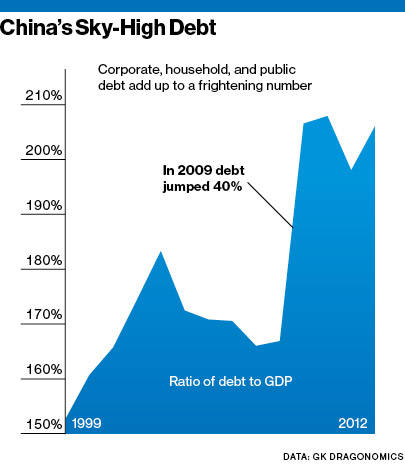
  • Xi Jinping’s two major goals are: 1)Restore the power of the center and ensure the sustainability of the Party’s rule. 2) Restore China to its historical position of prominence of the world stage.  This marks a departure from the line of Deng Xiaoping who urged : “observe calmly, secure our position, cope with affairs calmly, hide our capacities, bide our time, maintain a low profile, and never claim leadership.”   ●  Two schools of thought now contend in Beijing – one advocating the low profile approach, the other saying that this low profile has encouraged Japan and other Asian countries to push their claims in the North and South China Sea, and arguing that it is now time to show a more assertive posture. ● Xi seems clearly to be leaning toward this latter approach: What he is now basically saying to the US is rather something like:” We still have to catch up with you in many domains but from now on we intend to deal with you on an equal footing basis.  …While Xi Jinping is the most powerful Chinese leader since Mao, is his grip on power already beyond the risk of a backlash or not and how far are we from a fully stabilized power landscape in Beijing?   ● China’s high nominal GDP growth rate is not necessarily a good sign. It arises from an eventually unsustainable system that has already taken China’s total debt to about 250 percent of GDP while continuing on a path to much higher levels. Much of this debt has been contracted in the course of building enormous excess capacity in the real estate, manufacturing, and infra-structure sectors. Since excess capacity does not generate income for the paying off of debt, the debt load will eventually be shifted to some sector capable of paying.  ● Regardless of how it is paid, a shift in the structure and direction of the economy would entail at least a temporary slow-down of the Chinese economic growth rate to something like 3-6 5 GDP growth. Such a reduced growth rate would actually be a positive sign. However, because it would be seen negatively by many, and because it would be costly to vested interests, there will be enormous opposition to taking the steps necessary to achieve the temporarily slower growth rate.  ● This is obviously a crucial moment in China, during which a number of shifts are occurring, with major implications for the country itself as well as for the global economic and geopolitical balance. ●  While trying to decipher the developments it is important for decision-makers and China watchers to think outside the usual obsolete templates of “moderates” and “hard-liners” “reformists” and “conservatives” which serve only to blur the picture and distort judgment. The present reality in Beijing is too complex to be encapsulated in simplistic labels.
  • This is the start of a new ball game in dealing with China. It will keep us on our toes for years to come.

Blog entries written by Prof. Shlomo Maital

Shlomo Maital

Pages