COVID-19 Vaccine: We Need a GLOBAL Plan NOW!

By Shlomo Maital
   The race is on! Between 80 and 100 labs are hard at work trying to develop a COVID-19 vaccine that is both safe and effective. And eight of them have now begun clinical trials with human beings.

   Now is the time to develop a global strategic plan to produce and distribute the vaccine, worldwide, when it is proven and the Phase 3 trials end successfully. Rapid massive production will be highly complex, and several plants will be needed in several countries.

     The only organization capable of organizing such a plan is the WHO World Health Organization. President Trump has crippled it, by cutting off funding, as part of his bogus fake claim to blame the whole crisis on China and on the WHO for complicity.

     We need to know:   Where can the vaccine be produced? What reagents and raw materials will be needed?   What will the cost of production be? How will the vaccine be distributed fairly, worldwide, when demand will be massive, basically, for all 7.594 billion people in the world?   How will the vaccine be priced, so that those in poor countries will also get it and afford it?

     All these are crucial questions that need answers. Now is the time to start working on them.

     This is a crucial test for the US, Europe and Asia. If the principle “every man for himself” or “America First” prevails, there will be disaster. The rancor and hatred that will result will echo around the world for generations – and with good reason.

       There has to be a global agreement that, first, the vaccine science and technology will be freely provided to everyone, without a blocking patent or patents. Second, the science and technology of producing it will be shared freely for all nations to use, with teams of consulting experts available, with packed bags, to fly on a moment’s notice to assist and consult. Third, a very large fund, with billions of dollars, must be raised, to subsidize costs of the vaccine for poor countries. Fourth, within each country, the vaccine must be provided according to clear priorities, those most at risk, and not according to whomever can afford the cost. There must be steps to prevent and control illicit black markets, and fake vaccines sold by scammers – there will be a lot of those.

     THIS is the time for planning. The plan has to be global, so that there is not an arms race among countries, about who will be first to reap propaganda benefits and to serve only their own people.

     If “America first” prevails, as Trump wants, the good name, values and even affection for America will be destroyed for many decades. Fortunately, the presidential election on Nov. 3 may be the one thing that puts an end to this shameful episode in US history.

How Israel Solved the Ventilator Shortage:

Organizing Creativity

By Shlomo Maital

As the world seems to be slowly emerging from the pandemic, fears now turn to a possible second wave. So, we may still need ventilators, in large quantities.

     Here is how a creative Israeli team has attacked this problem, according to Rosella Tercatin, writing in the daily Jerusalem Post, May 10:

      “Manshema, a $200-a-piece open source technology created by an Israeli team, could solve the problem of the shortage of ventilators crucial to assist patients who contract the most serious forms of COVID-19 worldwide.

       “Around mid-March, a group of Israeli organizations – including the IDF, the Assuta Medical Center in Ashdod and Rafael Advanced Technology – engaged several hundreds of their affiliated experts in what they called a “COVID-19 sprint.” The participants were divided into 16 teams to work on finding solutions to a list of problems related to the pandemic. One of the teams decided to tackle the problem of creating a very simple but effective ventilator.

       “As explained to The Jerusalem Post by Mordechai Halfon, an officer at the Technological Division of the IDF Ground Forces, within two weeks a first working prototype of the machine was ready.

     “Our device does not intubate patients, no tube is inserted in their throat to push the air in, they can still breath on their own but the hard work is done by the machine,” he said. “It is catered specifically to COVID-19 patients, who required a very specific type of ventilation. This is why it is so simple, as opposed to regular ventilators which need to be suitable for many different kinds of needs.”

     “The Manshema team includes different kind of engineers, medical experts, product managers, who had never met before. Seven of them have been working on the project full time – Gil Bachar, Stav B., Elad Grozovski, Ronen Zilberman, Roi Galili Darnell, Ivry Shapira, Omri Mizrachi – others are contributing in different capacities.

   “At the beginning, the group worked on the task by themselves, meeting online when required. Afterwards, they started to meet at the Tel Aviv branch of Assuta.

     “The project is completely nonprofit and opensource, which means that all the relevant information is available to any manufacturer interested in producing them or medical center in using them all over the world.”


Coronavirus: Cheap Israeli technology may solve world ventilator shortage

The project is completely nonprofit and opensource.

By ROSSELLA TERCATIN  

MAY 10, 2020 17:

“Because we are talking about a world-wide pandemic, it was important for the ventilator to be cheap and easy to manufacture. We also wanted it to be disposable,” Stav B., a doctoral student at the Tel Aviv University, told the Post. “Quite at the beginning, we were selected by the Health Ministry as a pilot project and they supported us.”

Since the cost of production of every unit stands at about $200 and the time required at around two/three hours of work, while ventilators available to the market cost from several thousands to several dozen thousand dollars and have become harder and harder to find and purchase, the product could really revolutionize the fight against the virus even in the poorest countries.

“We have received a lot of support also from many companies here in Israel. We have found out that since nobody is involved in the initiative to make money, everyone has been very happy to help us in providing what we needed just for the goal of fighting the virus,” Halfon explained.

The product will undergo clinical trials at Assuta Medical Center in the next few weeks.

“In the first phase, we are going to test it on healthy volunteers, which should be easy to find, after on patients and critical patients. We are not sure how long it will take to complete the trial, but we are hoping that we are going to be ready before the next wave of the virus, if it comes,” the captain pointed out. “We believe that this machine can save a lot of lives.”

Halfon explained that when everything started, they did not think they would be able to arrive to this point.

“We worked through steps. First, we decided to dive into the actual requirements that the machine would need, then we focused on how the solution would look in a broader perspective and only then on how to build the machine,” he said.

“I think it is important to highlight two key elements in our work: the quality of the team effort and the will to do something good,” he concluded.

A Laboratory Study of “Love Your Fellow Man As Yourself”

By Shlomo Maital

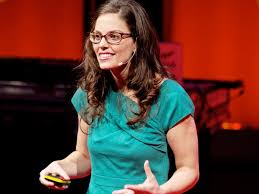
Molly J. Crockett, Yale Univ.

   A recent BBC program put me on to some lovely research done by Molly J. Crockett, at Yale University, on altruism and morality. Her work was published in the Proceedings of the National Academy of Sciences.*   She is a neuroscientist who uses lab experiments and functional MRI (brain mapping) to study moral behavior.

     In her lab, subjects administer small electric shocks to others and to themselves, for payment. Here is the main, surprising finding:

     “In two studies we show that most people valued others’ pain more than their own pain. This was evident in a willingness to pay more to reduce others’ pain than their own and a requirement for more compensation to increase others’ pain relative to their own. …… Our results provide evidence for a circumstance in which people care more for others than themselves.”

   In our synagogue we are studying philosopher Martin Buber’s pathbreaking book I and Thou, published in 1923 in German and in 1937 in English. In it Buber examines in deep philosophical terms our intimate relationship with God and with others.   “Thou”, archaic English used often for God, fails to capture the German “Du”, which is ‘familiar’, used only for persons with whom we are closely linked, usually our age or younger, as opposed to Dir, which is formal, respectful, used for those older than us. Buber’s key point is the very personal, intimate relationship we have with God, as ‘du’.

     How is Crockett’s work related to Buber?   Apparently, she explains in her BBC interview, when we are deciding on our moral behavior (administer a small painful shock to others), we step outside ourselves, and become “Thou”. The I-Thou transforms the I, as we empathize with the person with whom we are relating, and become ‘thou’. This is proven, by fMRI visuals showing the areas of the lateral pre-frontal cortex, which in general ‘imagine’ situations and outcomes.  

     So Buber’s I-Thou is indeed the foundation of morality, except that in Crockett’s work, a key part of morality is the ability to actually BECOME our neighbor, the person with whom we are interacting. So there IS a scientific foundation to the Jewish precept of “Love they neighbor as thyself”.   This occurs, when we actually become our neighbor, stepping outside of our own selves. It is highly significant that for most people, they prefer to administer an electric shock to themselves rather than to someone else. I know I certainly would.

   By the way, Crockett’s lab experiments are done under strict ethical standards. The electric shocks are slight, short and, as the BBC interviewer mentioned, perhaps no more than briefly putting your hands under hot water.  

   She has a brilliant 11 minute TED talking that is worth watching.

*Harm to others outweighs harm to self in moral decision making”. Molly J. Crockett, Zeb Kurth-Nelson, Jenifer Z. Siegel, Peter Dayan, and Raymond J. Dolan PNAS Proceedings of the National Academy of Sciences   December 2, 2014 111 (48) 17320-17325; first published November 17, 2014


A Look Inside Virus-Infected Cells

By Shlomo Maital

   Researchers at Israel’s Weizmann Institute have provided us with a revealing look inside cells infected with novel coronavirus. The research was led by Prof. Ido Amit, Dept. of Immunology, and reported in a front-page article in today’s Haaretz daily, by Ido Efrati.

       Amit is an expert in single-cell genomics, in which scientists analyze the DNA of single human cells. By analyzing single cells of severely ill patients with COVID-19, moderately ill ones and healthy persons, the scientists can map precisely how the insidious virus wreaks its havoc.

       Here is a short summary. The virus attacks epithelial cells in the lungs; these cells transport oxygen from the lungs to the blood, where it is distributed to the body’s vital organs.   This attack induces macrophages, a specialized cell that detects and (tries to) destroy the virus.   The Weizmann Institute scientists found that in seriously ill patients, the macrophages were replaced by monocytes, which are blood cells created by the body’s immune reaction. Ironically, an excess of those monocytes (as the body fights back against the virus) produces an overload of the immune reaction, known as a cytokine storm. This creates massive inflammation and actually hampers the immune system.

     The researchers, who have cooperated with other scholars in China and Italy, note that this cytokine storm occurs even before other signs appear.

     This suggests that a blood test could reveal which patients are high risk, even before their lungs show distress.   They also note that perhaps drugs or treatments can be developed to protect the lungs’ macrophages before the virus can seriously damage them.

     It is clear that those with unhealthy lungs, perhaps through smoking or other conditions, are more vulnerable.

       It is taking time, but thanks to cooperation among scientists worldwide, a clearer picture is beginning to emerge of precisely how the novel coronavirus makes us ill and kills some of us. This knowledge will ultimately lead to effective treatments.

Winter the Llama – Can She Save Humanity?

By Shlomo Maital

Winter the Llama

 OK, so I can see how an MIT scientist can save the world.

   But a llama? Winter the llama?

   So here’s the story, by Jillian Kramer, writing in the New York Times today:

   “Winter is a 4-year-old chocolate-colored llama with spindly legs, ever-so-slightly askew ears and envy-inducing eyelashes. Some scientists hope she might be an important figure in the fight against the novel coronavirus.   She is not a superpowered camelid. Winter was simply the lucky llama chosen by researchers in Belgium, where she lives, to participate in a series of virus studies involving both SARS and MERS. Finding that her antibodies staved off those infections, the scientists posited that those same antibodies could also neutralize the new virus that causes Covid-19. They were right, and published their results Tuesday in the journal Cell.

       “Scientists have long turned to llamas for antibody research. In the last decade, for example, scientists have used llamas’ antibodies in H.I.V. and influenza research, finding promising therapies for both viruses.   Humans produce only one kind of antibody, made of two types of protein chains — heavy and light — that together form a Y shape. Heavy-chain proteins span the entire Y, while light-chain proteins touch only the Y’s arms. Llamas, on the other hand, produce two types of antibodies. One of those antibodies is similar in size and constitution to human antibodies. But the other is much smaller; it’s only about 25 percent the size of human antibodies. The llama’s antibody still forms a Y, but its arms are much shorter because it doesn’t have any light-chain proteins.”

“This more diminutive antibody can access tinier pockets and crevices on spike proteins — the proteins that allow viruses like the novel coronavirus to break into host cells and infect us — that human antibodies cannot. That can make it more effective in neutralizing viruses.”

How an Overnight COVID-19 Test Took 35 Years to Invent

By Shlomo Maital

Dr. Fang  Zhang

   As Darwin observed, when he was praised for his breakthrough: Scientists stand on the shoulders of giants. Now, a new genetic test for COVID-19 may be as quick, simple and cheap as a self-administered pregnancy test, with two lines on a slip of paper.

     Here is the story. Let’s begin by noting that the hero is ethnic Chinese, Fang Zhang, a researcher at MIT’s Broad Institute. With massive anti-Asian and anti-Semitic hatred filling the Internet, it is fitting the hero should be named Zheng.

     Chapter One. Some 35 years ago, a biologist named Kary Mullis invented PCR. Polymerase chain reaction (PCR) is a method used in molecular biology to rapidly make millions to billions of copies of a specific DNA sample. This allows scientists to take a very small sample of DNA and amplify it to a large enough amount to study in detail. For example, suppose you are looking for the presence of the genetic material of a virus. You take a swab, use PCR, make millions of copies of the stuff, and then it becomes easy to detect it in a test tube.   Mullis won the Nobel Prize for this discovery, in 1993.

     Chapter Two. CRISPR: Clustered Regularly Interspaced Short Palindromic Repeats. (A palindrome is a word or phrase that reads the same forwards and backwards, e.g. a man a plan acanal panama. ) The discovery of clustered DNA repeats occurred independently in three parts of the world. The first description of what would later be called CRISPR is from Osaka University researcher Yoshizumi Ishino and his colleagues in 1987.

     Say you want to modify a specific gene – snip it out, replace it, test it, etc. First, you ‘tag’ it with a molecule (like putting a big road sign, “HERE I AM!”, on it). Second, you attach an enzyme to the tag. The enzyme cuts the CAN right at that spot!   You can then replace the faulty or offending gene with a different improved one.

     Chapter Three. MIT. Dr. Zhang and other researchers have retooled CRISP-R. They use it not to snip out a gene, but to give a signal that the enzyme has reached its target – a piece of genetic material that is unique to COVID-19. When this happens, a screaming signal is emitted, say, figuratively, a bright Day-Glo sign saying, Yikes, it’s the novel coronavirus!  

       Chapter Four. Translate the complex lab procedure to a simple cheap test. Take samples from a person’s throat and nose. Put it into a test tube with chemicals that tear open viruses.   Use an eye dropper to put some of the liquid into a second test tube containing CRISPR. Put the test tube in hot water, at 140 degrees F. (80 C.). Stick a piece of paper into the tube. If two lines appear: COVID-19 is present.

     The test worked on 12 patients, and can be simplified greatly and produced at $6 per test. This may enable massive population-wide testing, that can help open societies and economies without a massive second-wave of plague.

       Classic scientific breakthrough: 35 years, and an overnight breakthrough!


Why Mab is Fab: A Monoclonal Antibody Defeats COVID-19

By Shlomo Maital

   Scientists all over the world are desperately searching for a ‘silver bullet’ – a magical compound that can defeat the insidious, devious and evil novel coronavirus. It may be that scientists at Israel’s Institute for Biological Research have found it.

   First, a small science lecture.

   Antibodies are large, Y-shaped proteins produced mainly by plasma cells in the body, that are used by the body’s immune system to neutralize pathogenic bacteria and viruses that make us ill or kill us.

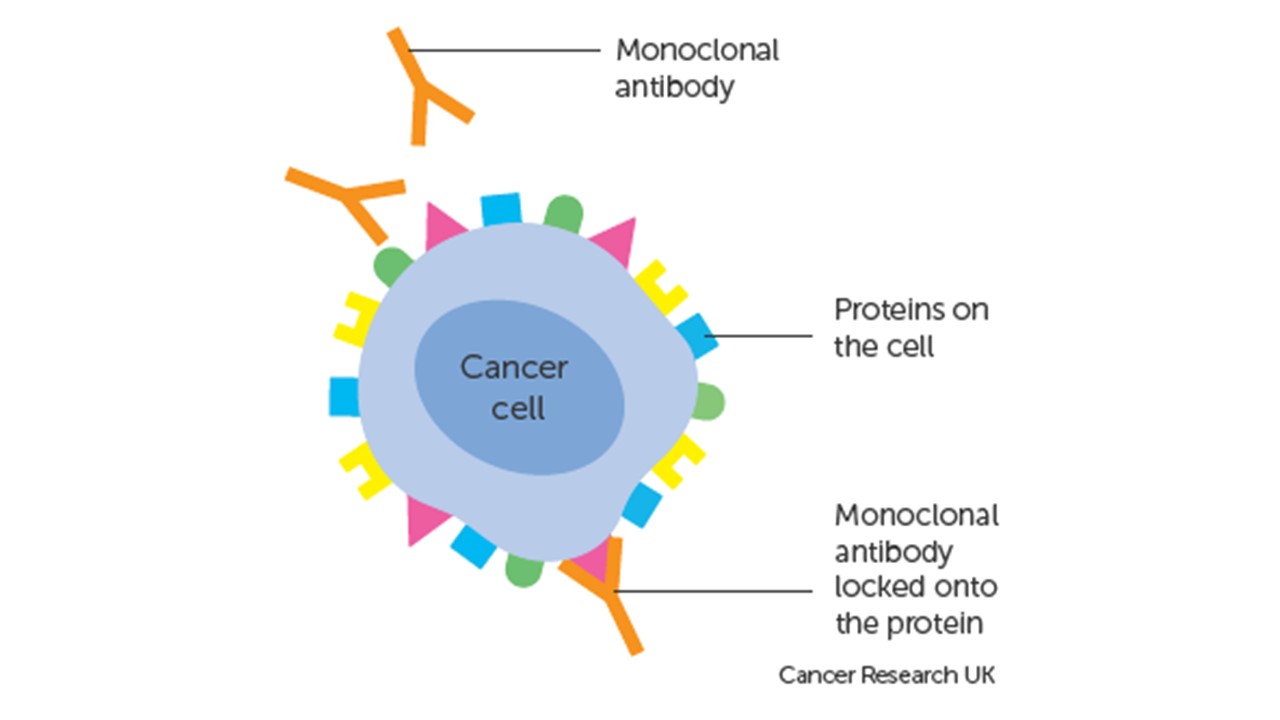
   Monoclonal antibodies (Mab’s, for short, the suffix added to drugs produced in this way) are antibodies made by identical immune cells that are all clones of a unique parent cell.  Monoclonal antibodies bind to the same part of an antigen [the bad stuff from a virus] that is recognized by the antibody.

   Put it this way: Monoclonal antibodies (Mab’s) are like little guided missiles, fired by the body at, for example, the spikes on the coronavirus that poke through cell walls and infect it. [See the diagram above].   Those little guided missiles neutralize those spikes and prevent the virus from infecting human cells by poking through their walls. The body then destroys the virus before it does damage.

     These Mab’s have been used so far mainly as promising anti-cancer drugs, as part of so-called immunotherapy. The anti-cancer drugs zero in on cancer cells and kill them. The key is the word “monoclonal” – unique little antibodies that aim specifically, uniquely, at an offending invading virus or cancer cell.

       A press announcement stated: “The Israel Institute for Biological Research (IIBR) has completed a groundbreaking scientific development, determining an antibody that neutralizes the coronavirus, SARS-CoV-2, according to a statement by the Defense Ministry. [That is the scientific name for the virus that causes COVID-19]. This scientific breakthrough has three key parameters: The antibody is monoclonal, new and refined, and contains an exceptionally low proportion of harmful proteins; the institute has demonstrated the ability of the antibody to neutralize the coronavirus;  the antibody was specifically tested on the aggressive coronavirus. Based on comprehensive scientific publications from around the globe, it appears that the IIBR is the first institution to achieve a scientific breakthrough that meets all three of the aforementioned parameters simultaneously,” the Defense Ministry said in a statement on behalf of the institute.

   The breakthrough is now being patented.

   In addition, to produce the COVIDi-19 Mab, “IIBR and the small southern town of Yeruham, Israel, on Monday night announced they have big plans to open Israel’s first vaccine production facility, in partnership with one of two prospective international pharmaceutical companies.”

     All over the world, vaccine production facilities are ramping up, long before the vaccines themselves have been proven safe and effective. So once a vaccine is found, it can be produced in large amounts quickly.

The Mab approach is promising, because it is a compound that can be taken orally, rather than by injection.

   Let us hope that this report is accurate and that the anti-corona Mab really works and can be produced massively and quickly, and safely.  Let’s hope the Israeli Mab is indeed fab.

Leadership: Give the Keys to Young Educated Women

By Shlomo Maital  

   Of some 200 countries in the world – which have had leaders most competent and successful in leading responses to the pandemic?

   Let’s begin with the losers. Aging autocratic poorly-educated men, in denial, who missed the boat. The ‘orange haired narcissist’, as NYT columnist Roger Cohen calls him, Donald J. Trump. The whacko Brazilian president Jair Bolsinaro, possibly facing impeachment (like his mentor Trump).  “So what?” was his response, when asked about Brazil’s death toll, highest in South America. Vladimir Putin, who cowardly shelters and lets others take the blame. Erdugan, who despite the crisis pursues his foes with paranoid insanity.

   And now for the winners. Young educated women. 39-year-old Jacinda Ardern, who saw what was happening and shut down New Zealand with only 53 proven cases. Finland’s Prime Minister Sanna Marin, 34, one of the youngest political leaders in the world. Norway’s Prime Minister Erna Solberg. (She’s 59, tough, “Iron Erna”, and young in spirit). And never forget German Chancellor Angela Merkel – not young, like the others, but educated, a scientist, and quietly compassionate and competent.  In Iceland, Katrin Jacobsdottir, 44, who organized free COVID-19 testing for all!  And don’t forget Taiwanese President Tsai Ing-Wen, 64.

     Now, a Yiddish saying goes, “for instance is not a proof”. But a spate of terrific female Prime Ministers who have led their country with bravery courage and excellence – this is not an accident, in the face of aging despot men who have utterly failed.

   So suppose the world was a locked house, with a set of keys. Who should get the keys? Smart competent women, who have fought their way up the political ladder against all the odds. Educated women, who speak well, do their homework, listen to experts, and win the trust of their people. Compassionate women, who understand human suffering and communicate this compassion.

     And the despotic men? As Trump loves to say,   “lock ‘em up”. Fast.   Before it’s too late. Figuratively, of course – at the ballot box. Tuesday Nov. 3, 2020, a crucial date for the US and the world. Bye bye, orange-haired narcissist. Hello, Democrat female educated courageous well-spoken Vice President. And future President.

Prof. Amnon Shashua: From Mobileye to COVID-19

By Shlomo Maital

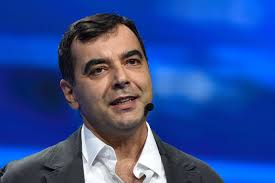
Prof. Amnon Shashua

    Many years ago, Hebrew University Computer Science Professor Amnon Shashua attended a computer vision conference in Europe. Automobile executives there asked him, how many cameras are needed on a car, to warn of danger? The prevailing wisdom: at least two, because we need two eyes for depth perception (through ‘triangulation’). Shashua said, no, we need just one camera. It can measure depth by comparing data at two points in time…   The executives scoffed. Shashua came home to Israel, and launched Mobileye, which saves lives through its little camera and sophisticated software. Mobileye was acquired by Intel for $15 b. Shashua continues to head it.  

     With the outbreak of COVID-19, Prof. Shashua has tackled the issue of strategy.   His claim: Mathematics has the answer. In the online magazine Medium, he and Shai Shalev-Shwartz have published their mathematical analysis of three different strategies, and they recommend one of them. The title asks the key question: “Can we contain COVID-19 without locking down?”.   Here is a summary. *

     “We present an analysis of a risk-based selective quarantine model where the population is divided into low and high-risk groups. The high-risk group is quarantined until the low-risk group achieves herd-immunity. We tackle the question of whether this model is safe, in the sense that the health system can contain the number of low-risk people that require severe ICU care (such as life support systems).

   “ One could consider three models for handling the spread of Covid-19.

*   Risk-based selective Quarantine: Divide the population into two groups, low-risk and high-risk. Quarantine the high-risk and gradually release the low-risk population to achieve a managed herd immunity of that population.

*   Containment-based selective quarantine: Find all the positive cases and put them in quarantine. This requires an estimation of the “contagious time interval” per age group, then given this time interval one could recursively isolate all the individuals at risk from a person that is carrying the virus using “contact tracing”. Another tool is predictive testing using contact-tracing to identify people with many contacts with other people and perform tests on them.

* Countrywide (or region-wide) lock-down until the spread of the virus is under control. The lock-down could take anywhere from weeks to months. This is the safest route but does not prevent a “second wave” from occurring.

     “In the event a risk-based quarantine approach would be contemplated by decision-makers, the purpose of this document is to provide decision-makers a formal and tight bounds to investigate whether the health system can cope with the number of severe cases that would reach ICU. Embedded in the reasoning is the idea of selective quarantine (based on age groups and existing pre-conditions, but could be any other criteria) where the ”high-risk” group (the one we suspect will have a high rate of severe cases) is quarantined and the other is allowed to spread the virus under certain distancing protocols. The underlying premise is that a full population-wide quarantine is not a solution in itself — it is merely a step to buy time followed by a more managed (non brute-force) approach. The managed phase underlying our thinking is to create herd immunity of the low-risk group in a controlled manner while keeping the economy going. It is all about keeping the health system in check and not overwhelming its capacity to handle severe cases. The question we ask in this document is whether we can estimate in advance, through sampling, that the number of severe cases arising from the low-risk group would not overwhelm the system?

   “…When the high-risk group is released from isolation they would be facing a largely immune population thus naturally facing a very slow spread of infection with a good chance to whither the storm until a cure or vaccine is available. In all other selective quarantine models the high and low risk are equally susceptible to be infected so that even if the health system is not overwhelmed still the mortality of the high-risk group is likely to be higher than the risk-based model.”

     This model has been proposed before by Nobel Laureate Paul Krugman (see my blog on his proposal, April 2).   Shashua serves on an advisory board in Israel, advising Health Ministry officials. I believe his ideas are being implemented, though cautiously.

     Warning: the article whose URL is given below can be dangerous to your health; it is highly mathematical.

*   https://medium.com/amnon-shashua/can-we-contain-covid-19-without-locking-down-the-economy-2a134a71873f


Defeating COVID-19’s Attack on Our Lungs:

A Preemies’ Treatment Migrates to Adults

By Shlomo Maital

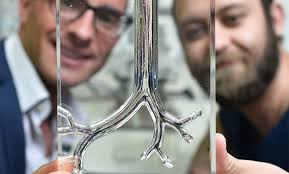
Prof. Josué Sznitman and Dr. Ostrovski, Technion

   In a previous blog, Dr. Richard Levitan explained how COVID-19 attacks the lungs: “The coronavirus attacks lung cells that make surfactant. This substance helps the air sacs in the lungs stay open between breaths and is critical to normal lung function. As the inflammation from Covid pneumonia starts, it causes the air sacs to collapse, and oxygen levels fall.”  

     Current treatment often involves use of ventilators. But the results are not impressive. Between 50% and 70% of those put on ventilators do not survive.

     Two Technion Biomedical Engineering Faculty researchers, Prof. Josué Sznitman and Dr. Ostrovski, have been working for years on a way to help babies born prematurely, who have ARDS (acute respiratory distress syndrome), to breathe better and recover. Their problem? Lack of surfactant, crucial for the lungs’ functioning.

     Sznitman notes that for 30 years now, we have known that injecting surfactant directly into neonates’ (preemies’) lungs “greatly helps their lungs function”. The success rate, he notes, is as high as 98%!

     So, Sznitman wondered, why not inject surfactant into the lungs of suffering COVID-19 patients? Not so simple. “Instillations in larger lungs quickly gather in pools, drowning some parts of the lungs and depriving others of the surfactant”, he explained to Haaretz reporter Asaf Ronel.

       Solution? Turn the liquid surfactant into foam. “Foam has more volume than liquid, and is less affected by gravity. So it can be spread in a uniform manner throughout the lungs and restore the ‘facelift’ to the epithelial cells that [lungs] need to function properly”, he explained. Tests with rats have been highly successful. Next month preclinical trials begin with pigs.

     I wish this treatment could be speeded up and fast-tracked. I think it could save many lives.

Blog entries written by Prof. Shlomo Maital

Shlomo Maital

Pages