
You are currently browsing the category archive for the ‘Global Crisis Blog’ category.
Meet Andrea Ray: Heroine
By Shlomo Maital

In our pandemic crisis, there are a huge number of unsung everyday heroes. Truck drivers who continue to drive the long hauls, delivery people, supermarket workers, police, Israel’s Home Front soldiers….
And, in particular, Andrea Ray, featured on Channel 12 this evening. Andrea was born in Venezuela and made Aliyah to Israel when she was 16. She studied hotel management and had a senior job in the Dan Hotels system.
Israel has taken over some of the Dan Hotels in Tel Aviv, and brought those who have tested positive for COVID-19, especially those flown home from abroad, to hotels. The area housing these patients is of course strictly quarantined, and the hotel is run jointly by the Home Front soldiers and Dan management.
Why is Andrea a hero? Who will care for the corona patients? Seriously? Spend many hours of the day mingling with those ill with the deadly virus?
You cannot tell someone to do this. You can only ask for volunteers.
And Andrea volunteered. This is what she does, every day, for hours and hours – cares for the needs of the patients, cheers them up, laughs with them, and brings them joy with her smile.
What if she falls ill? Well, I’ll get the virus and then I’ll get better, she says.
So, you’ve met Andrea Ray, heroine. Do you know other such heroes and heroines?
Unpacking the COVID-19 Stats: Four Measures
By Shlomo Maital
The COVID-19 statistics can be very confusing, and the press has not been great at dispelling the fog. Here is how the New York Times explains the four key measures:
- By Nate Cohn, Josh Katz, Margot Sanger-Katz and Kevin Quealy March 27, 2020
- 1. Cases per 1,000 people. This is a measure of the prevalence of coronavirus in the community. Confirmed Cases per 1,000 residents. An imperfect measure, because of spotty testing – are there few cases because of limited testing, or few cases because testing has shown this to be true? Hard to know.
- Confirmed cases per 1,000 by metro area
- New York City, at 2.15, is just below #1, Wuhan, China, 4.59, and Lombardy Region, Italy, 3.48, but Albany Ga. And New Orleans are surprisingly high, too, as ‘hot spots’, at 1.35, and 1.32, respectively.
- * HOW WIDESPREAD IS THE CORONAVIRUS IN THE COMMUNITY OR CITY?
- Each measure answers a different question.
| METRO AREA | POPULATION | CASES | PER THOUSAND |
| Wuhan, China | 11.1 mil. | 50,821 | 4.59 |
| Lombardy region, Italy | 10 mil. | 34,889 | 3.48 |
| New York | 20 mil. | 43,016 | 2.15 |
*HOW DEADLY IS THE VIRUS? WHAT IS THE DEATH RATE?
- Deaths per 1,000 people. This measure is likely to be more accurate, alas, than other measures. But this measure lags the number of infections by several weeks…
Deaths per capita are currently higher in the New York City area than in most other places.
| METRO AREA | POPULATION | DEATHS | PER THOUSAND |
| Lombardy region, Italy | 10 mil. | 4,861 | 0.48 |
| Wuhan, China | 11.1 mil. | 2,535 | 0.23 |
| Albany, Ga. | 153,000 | 10 | 0.07 |
| New Orleans | 1.3 mil. | 65 | 0.05 |
| Seattle | 3.9 mil. | 133 | 0.03 |
| Burlington, Vt. | 221,000 | 6 | 0.03 |
| New York | 20 mil. | 500 | 0.03 |
HOW FAST IS THE CORONAVIRUS SPREADING?
- Growth Rates Over Time.
Measure: the rate of cumulative cases over time, averaged over the previous week. This helps us learn, is the epidemic getting better or worse? Are we at the ‘apex’ (worst is behind us) or before it?
A growth rate of 40 percent on this chart means the cumulative number of cases is growing by 40 percent every day. A rate of 100 percent would mean that the number of cases was doubling daily.

March 1 March 8 March 22
HOW WELL HAS THE COMMUNITY OR CITY DONE, IN SLOWING DONE THE RATE AT WHICH THE CORONAVIRUS IS GROWING?
- Growth Rates by Case Count.
This measure is the rate of growth of the number of cases in a given place – it measures whether a community has slowed the rate of growth, before there is many cases. I.e., is the community flattening the curve?
Seattle and San Francisco succeeded in flattening the curve. How come? These measures help us ask the right questions
AVERAGE DAILY CHANGE IN TOTAL CASES, OVER THE PREVIOUS 7 DAYS
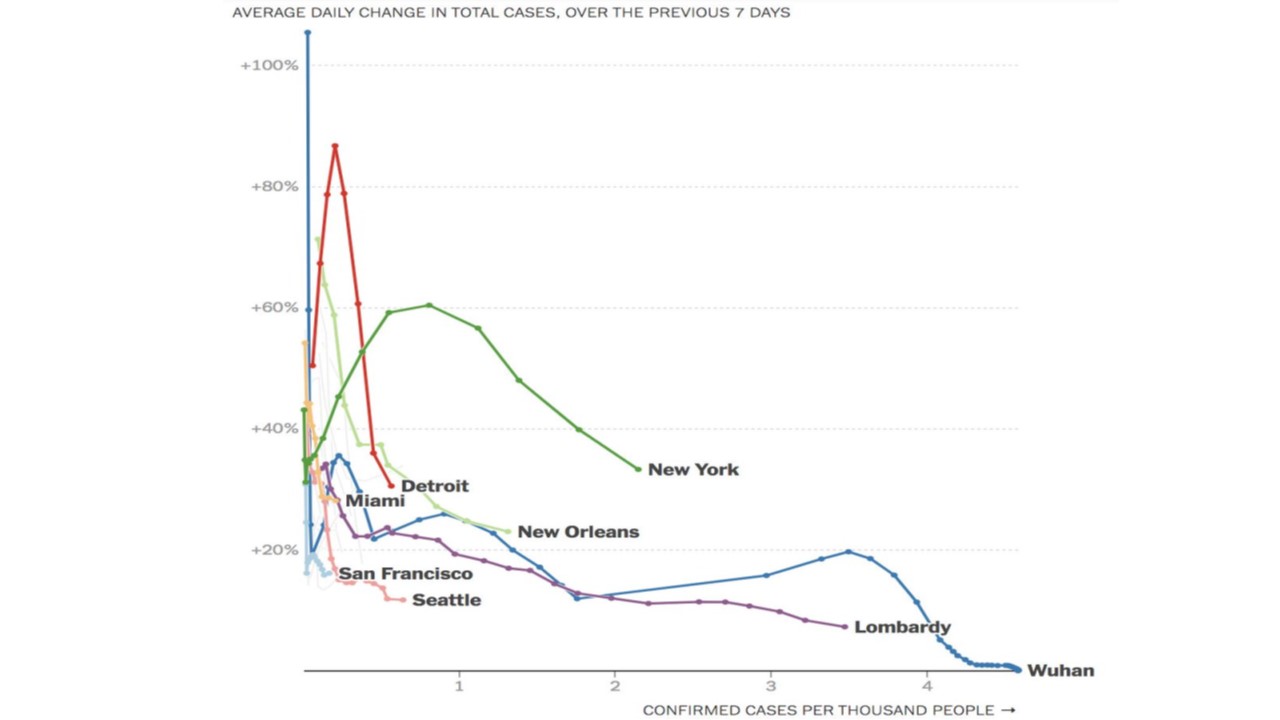
CONFIRMED CASES PER THOUSAND PEOPLE
= = = = = =
We need to be cautious when interpreting coronavirus statistics. And a wide variety of stats are being tossed at us, often by those who do not fully understand them.
Roubini’s Black Swan, Coronavirus Variety
By Shlomo Maital

Black swan cartoon vector illustration isolated on white background
Nuriel Roubini
Nuriel Roubini is famous for his book on Black Swans – totally unexpected events, whose possibility is denied (as people denied there were such things as black swans) and which occur with massive impact on our lives. COVID-19 is definitely the blackest of black swans….
Roubini is massively pessimistic. While I myself am far more optimistic – I see the ‘apex’ of the plague coming fairly soon, and then as the curve declines, optimism, stock prices and businesses recover and bounce back and spend to ‘catch up’ — I feel I should bring you readers the other side of the moon, the dark side, the black (swan) side. So, here is Roubini’s ‘take’. Everybody should figure out their own personal scenario… [Warning, this blog is twice as long as usual]
NEW YORK – The shock to the global economy from COVID-19 has been both faster and more severe than the 2008 global financial crisis (GFC) and even the Great Depression. In those two previous episodes, stock markets collapsed by 50% or more, credit markets froze up, massive bankruptcies followed, unemployment rates soared above 10%, and GDP contracted at an annualized rate of 10% or more. But all of this took around three years to play out. In the current crisis, similarly dire macroeconomic and financial outcomes have materialized in three weeks.
Earlier this month, it took just 15 days for the US stock market to plummet into bear territory (a 20% decline from its peak) – the fastest such decline ever. Now, markets are down 35%, credit markets have seized up, and credit spreads (like those for junk bonds) have spiked to 2008 levels. Even mainstream financial firms such as Goldman Sachs, JP Morgan and Morgan Stanley expect US GDP to fall by an annualized rate of 6% in the first quarter, and by 24% to 30% in the second. US Treasury Secretary Steve Mnuchin has warned that the unemployment rate could skyrocket to above 20% (twice the peak level during the GFC).
In other words, every component of aggregate demand – consumption, capital spending, exports – is in unprecedented free fall. While most self-serving commentatorshave been anticipating a V-shaped downturn – with output falling sharply for one quarter and then rapidly recovering the next – it should now be clear that the COVID-19 crisis is something else entirely. The contraction that is now underway looks to be neither V- nor U- nor L-shaped (a sharp downturn followed by stagnation). Rather, it looks like an I: a vertical line representing financial markets and the real economy plummeting.
Not even during the Great Depression and World War II did the bulk of economic activity literally shut down, as it has in China, the United States, and Europe today. The best-case scenario would be a downturn that is more severe than the GFC (in terms of reduced cumulative global output) but shorter-lived, allowing for a return to positive growth by the fourth quarter of this year. In that case, markets would start to recover when the light at the end of the tunnel appears.
But the best-case scenario assumes several conditions. First, the US, Europe, and other heavily affected economies would need to roll out widespread COVID-19 testing, tracing, and treatment measures, enforced quarantines, and a full-scale lockdown of the type that China has implemented. And, because it could take 18 months for a vaccine to be developed and produced at scale, antivirals and other therapeutics will need to be deployed on a massive scale.
Second, monetary policymakers – who have already done in less than a month what took them three years to do after the GFC – must continue to throw the kitchen sink of unconventional measures at the crisis. That means zero or negative interest rates; enhanced forward guidance; quantitative easing; and credit easing (the purchase of private assets) to backstop banks, non-banks, money market funds, and even large corporations (commercial paper and corporate bond facilities). The US Federal Reserve has expanded its cross-border swap lines to address the massive dollar liquidity shortage in global markets, but we now need more facilities to encourage banks to lend to illiquid but still-solvent small and medium-size enterprises.
Third, governments need to deploy massive fiscal stimulus, including through “helicopter drops” of direct cash disbursements to households. Given the size of the economic shock, fiscal deficits in advanced economies will need to increase from 2-3% of GDP to around 10% or more. Only central governments have balance sheets large and strong enough to prevent the private sector’s collapse.
But these deficit-financed interventions must be fully monetized. If they are financed through standard government debt, interest rates would rise sharply, and the recovery would be smothered in its cradle. Given the circumstances, interventions long proposed by leftists of the Modern Monetary Theory school, including helicopter drops, have become mainstream.2
Unfortunately for the best-case scenario, the public-health response in advanced economies has fallen far short of what is needed to contain the pandemic, and the fiscal-policy package currently being debated is neither large nor rapid enough to create the conditions for a timely recovery. As such, the risk of a new Great Depression, worse than the original – a Greater Depression – is rising by the day.
Unless the pandemic is stopped, economies and markets around the world will continue their free fall. But even if the pandemic is more or less contained, overall growth still might not return by the end of 2020. After all, by then, another virus season is very likely to start with new mutations; therapeutic interventions that many are counting on may turn out to be less effective than hoped. So, economies will contract again and markets will crash again.
Moreover, the fiscal response could hit a wall if the monetization of massive deficits starts to produce high inflation, especially if a series of virus-related negative supply shocks reduces potential growth. And many countries simply cannot undertake such borrowing in their own currency. Who will bail out governments, corporations, banks, and households in emerging markets?
In any case, even if the pandemic and the economic fallout were brought under control, the global economy could still be subject to a number of “white swan” tail risks. With the US presidential election approaching, the COVID-19 crisis will give way to renewed conflicts between the West and at least four revisionist powers: China, Russia, Iran, and North Korea, all of which are already using asymmetric cyberwarfare to undermine the US from within. The inevitable cyber attacks on the US election process may lead to a contested final result, with charges of “rigging” and the possibility of outright violence and civil disorder.1
Similarly, as I have argued previously, markets are vastly underestimating the risk of a war between the US and Iran this year; the deterioration of Sino-American relations is accelerating as each side blames the other for the scale of the COVID-19 pandemic. The current crisis is likely to accelerate the ongoing balkanization and unraveling of the global economy in the months and years ahead.2
This trifecta of risks – uncontained pandemics, insufficient economic-policy arsenals, and geopolitical white swans – will be enough to tip the global economy into persistent depression and a runaway financial-market meltdown. After the 2008 crash, a forceful (though delayed) response pulled the global economy back from the abyss. We may not be so lucky this time.
Leadership in the Time of Plague
By Shlomo Maital

New York State Governor Andrew M. Cuomo
Even though I live in Israel, I find myself glued to the TV nightly, watching New York State Governor Andrew M. Cuomo’s addresses and press conferences on CNN. This is true of much of America, including President Trump, who schedules his own TV appearances in order not to conflict with Cuomo’s.
As I watch Cuomo, I ask myself, what is leadership? What are the key qualities of political leaders, in the time of plague? Why is Cuomo’s leadership so effective, in contrast with Trump’s and other political leaders, including my own here in Israel?
A few tentative answers. First, blunt honesty. Cuomo tells it like it is. His warnings carry weight and credibility. (Compare with, say, Trump, whose superlatives, great, terrific, perfect, ring hollow – remember, if a leader lies to us once, we will forever doubt ANYthing he or she says in future). Second, command. Cuomo has done his homework and he’s smart. He commands the numbers and the complexity of the situation and explains it clearly to people. Third, compassion. Cuomo is a touch leader, pragmatic, hard-nosed. But when he talks about his mother Matilda, and saving her if needed, and saving all us old people, he shows empathy and sympathy. Leaders have that combination of toughness and soft compassion, used in every case where appropriate. Fourth, pragmatism. Use common sense, figure out what is needed, get it done, no excuses (the Singapore formula). Fifth, Speed. Forget platitudes, we need ventilators now, hospital beds now, masks now. Look, New York State is not Trump’s favorite. We suspect he has withheld ventilators from the nation’s strategic stockpile. New York State prosecuted Trump’s so-called charity foundation. But Cuomo has not libeled or criticized Trump by name – only Federal agencies – and it has paid off. So leaders know how to pick their enemies, with care.
I want to share an approach I’ve found useful, for myself. I’m 77 years old and made lots of mistakes in my lifetime. So have we all. And it is painful to look back on some of them. So, today, perhaps a bit too late, I use this approach: When I need to make a decision, or decide how to behave, I ask myself: Shlomo, OK, how will you feel about this decision, in 10 years, when you look back on it? Will your chest swell with pride or will your stomach turn over with shame? Use this, and you can’t go wrong. This is the time for leadership – not just by our political leaders but by every single one of us, challenged by the situation and faced with choices – to help others effectively or hunker down and care only for ourselves.
And in conclusion, consider these words by Thomas Paine, written during the bitter days of the American Revolution – times that try people’s souls.
“THESE are the times that try men’s souls. The summer soldier and the sunshine patriot will, in this crisis, shrink from the service of their country; but he that stands by it now, deserves the love and thanks of man and woman. Tyranny, like hell, is not easily conquered; yet we have this consolation with us, that the harder the conflict, the more glorious the triumph. What we obtain too cheap, we esteem too lightly: it is dearness only that gives every thing its value. Heaven knows how to put a proper price upon its goods; and it would be strange indeed if so celestial an article as FREEDOM should not be highly rated” Thomas Paine 1776
Substitute “life” for freedom, as we battle the plague to save lives….
Small Acts of Kindness…Are Really Big!
By Shlomo Maital
This morning, I rose early and went to shop for food at our local small grocery store. As first in line, I got to shop quickly — Y., the shopkeeper, was strict in limiting contact between shoppers and only let one or two of us in, at a time.
When I exited, loaded the groceries in the car and returned the shopping cart, a truck driver spotted me; he was delivering sanitary supplies. He cautioned me gently to use gel on my hands because the cart handle could have been infected. I think he noticed my grey hair and was concerned. I did as he said, and then – he gave me a pair of rubber gloves from his truck, and some highly prized alco-gel. I wished him well, he did the same…
This small incident touched me deeply. This truck driver is in the front line – he sees many people daily, some may be infected…. And yet, he is concerned for my wellbeing, and he doesn’t even know me. Same for Y. the shopkeeper. He too is in the front line. He makes sure we are all well stocked with groceries, including fresh fruits and vegetables, which Israel has aplenty.
These tiny acts of kindness, perhaps not so tiny, are happening all over the world. They embody a Hebrew saying, “All Israel is bonded one to another”… and I interpret that to mean, all humanity. We are NOT socially isolated, we are spatially separated and socially bonded. Tiny acts of kindness prove it.
Thanks, truck driver. And yes, I will indeed pass it forward – and so will we all.
On Dealing With Isolation: From an Astronaut
By Shlomo Maital
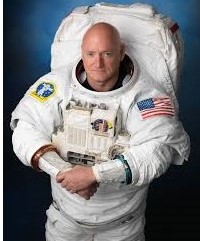
Scott Kelly, Astronaut
Many of us are currently in one form or another of isolation. How to deal with it? Astronaut Scott Kelly spent a year on the International Space Station – a pretty lonely place, away from his family and friends, and loved ones. How did he manage it? Here are a few of his tips, from The New York Times:
When I lived on the International Space Station for nearly a year, it wasn’t easy. When I went to sleep, I was at work. When I woke up, I was still at work. Flying in space is probably the only job you absolutely cannot quit. But I learned some things during my time up there that I’d like to share — because they are about to come in handy again, as we all confine ourselves at home to help stop the spread of the coronavirus. Here are a few tips on living in isolation, from someone who has been there.
Follow a schedule: On the space station, my time was scheduled tightly, from the moment I woke up to when I went to sleep. Sometimes this involved a spacewalk that could last up to eight hours; other times, it involved a five-minute task, like checking on the experimental flowers I was growing in space. You will find maintaining a plan will help you and your family adjust to a different work and home life environment. When I returned to Earth, I missed the structure it provided and found it hard to live without.
But pace yourself When you are living and working in the same place for days on end, work can have a way of taking over everything if you let it. Living in space, I deliberately paced myself because I knew I was in it for the long haul — just like we all are today. Take time for fun activities: I met up with crewmates for movie nights, complete with snacks, and binge-watched all of “Game of Thrones” — twice. And don’t forget to include in your schedule a consistent bedtime. NASA scientists closely study astronauts’ sleep when we are in space, and they have found that quality of sleep relates to cognition, mood, and interpersonal relations — all essential to getting through a mission in space or a quarantine at home.
Go outside One of the things I missed most while living in space was being able to go outside and experience nature. After being confined to a small space for months, I actually started to crave nature — the color green, the smell of fresh dirt, and the feel of warm sun on my face. That flower experiment became more important to me than I could have ever imagined. My colleagues liked to play a recording of Earth sounds, like birds and rustling trees, and even mosquitoes, over and over. It brought me back to earth. (Although occasionally I found myself swatting my ears at the mosquitoes. ) For an astronaut, going outside is a dangerous undertaking that requires days of preparation, so I appreciate that in our current predicament, I can step outside any time I want for a walk or a hike — no spacesuit needed. Research has shown that spending time in nature is beneficial for our mental and physical health, as is exercise. You don’t need to work out two and a half hours a day, as astronauts on the space station do, but getting moving once a day should be part of your quarantine schedule (just stay at least six feet away from others).
You need a hobby When you are confined in a small space you need an outlet that isn’t work or maintaining your environment. Some people are surprised to learn I brought books with me to space. The quiet and absorption you can find in a physical book — one that doesn’t ping you with notifications or tempt you to open a new tab — is priceless. Many small bookstores are currently offering curbside pickup or home delivery service, which means you can support a local business while also cultivating some much-needed unplugged time. You can also practice an instrument (I just bought a digital guitar trainer online), try a craft, or make some art. Astronauts take time for all of these while in space. (Remember Canadian astronaut Chris Hadfield’s famous cover of David Bowie’s Space Oddity?)
Keep a journal: NASA has been studying the effects of isolation on humans for decades, and one surprising finding they have made is the value of keeping a journal. Throughout my yearlong mission, I took the time to write about my experiences almost every day. If you find yourself just chronicling the days’ events (which, under the circumstances, might get repetitive) instead try describing what you are experiencing through your five senses or write about memories. Even if you don’t wind up writing a book based on your journal like I did, writing about your days will help put your experiences in perspective and let you look back later on what this unique time in history has meant.
Take time to connect: Even with all the responsibilities of serving as commander of a space station, I never missed the chance to have a videoconference with family and friends. Scientists have found that isolation is damaging not only to our mental health, but to our physical health as well, especially our immune systems. Technology makes it easier than ever to keep in touch, so it’s worth making time to connect with someone every day — it might actually help you fight off viruses.
Listen to experts: I’ve found that most problems aren’t rocket science, but when they are rocket science, you should ask a rocket scientist. Living in space taught me a lot about the importance of trusting the advice of people who knew more than I did about their subjects, whether it was science, engineering, medicine, or the design of the incredibly complex space station that was keeping me alive. Especially in a challenging moment like the one we are living through now, we have to seek out knowledge from those who know the most about it and listen to them. Social media and other poorly vetted sources can be transmitters of misinformation just as handshakes transmit viruses, so we have to make a point of seeking out reputable sources of facts, like the World Health Organization and the Johns Hopkins Coronavirus Resource Center.
We are all connected: Seen from space, the Earth has no borders. The spread of the coronavirus is showing us that what we share is much more powerful than what keeps us apart, for better or for worse. All people are inescapably interconnected, and the more we can come together to solve our problems, the better off we will all be. One of the side effects of seeing Earth from the perspective of space, at least for me, is feeling more compassion for others. As helpless as we may feel stuck inside our homes, there are always things we can do — I’ve seen people reading to children via videoconference, donating their time and dollars to charities online, and running errands for elderly or immuno-compromised neighbors. The benefits for the volunteer are just as great as for those helped. I’ve seen humans work together to prevail over some of the toughest challenges imaginable, and I know we can prevail over this one if we all do our part and work together as a team.
Online Education Blog #5
Can Online Education Replace Conventional Classroom Teaching?
By Shlomo Maital

My granddaughter Maya asks: “Can online education replace conventional classroom teaching?”
My (Shlomo) background: The Coursera four-course specialty “Cracking the Creativity Code”, with many thousands of students, has proved quite successful; I get many emails from all over the world. It was a team effort, with great Technion support. We learned a lot. Here is a major conclusion, in response to Maya, from a much stronger expert than me:
“Michelle Weise, who blogs at Harvard Business Review, argues persuasively that the “real revolution in online education isn’t MOOCs”. Instead, it is called “online competency-based education – and it’s going to revolutionize the workforce”. She argues: Say a newly minted graduate with a degree in history realizes that in order to attain her dream job at Facebook, she needs some experience with social media marketing. Going back to school is not a desirable option, and many schools don’t even offer relevant courses in social media. Where is the affordable accessible, targeted and high-quality program that she needs to skill-up? On-line competency based education is the key to filling in the skill gaps in the workplace”. Weise’s point of view is totally consistent with the motives and demographics of current MOOC learners, who are older, many with degrees, and who seek specific skills and competencies.” *
So — for now, online education is a temporary stopgap to replace the frontal classroom teaching in schools and universities, which are for now closed.
Let’s think ‘beyond virus’ – after COVID-19. Can we use this crisis, to reflect deeply on how we learn and teach, and think about how we could do this a whole lot better? (See my blog, on life after COVID-19, https://timnovate.wordpress.com/2020/03/24/the-world-after-…ew-from-mckinsey/
Some believe the greatest invention in the history of the world was public education – Schooling for all, ALL, K through 12. I tend to agree. Now – can we broaden that invention, and make education truly for all, everywhere, at all times, all ages? This means, first, broadband for all – only half the world today has Internet. What about the other half? They deserve it too. And it can be done. The wealthy countries can help. Second, rethink education. Roadmap future skills we will need – then organize online education to provide them. Or help provide them.
Everyone talks about the Industrial Revolution 4.0. What about launching a Public Education Revolution 2.0?
Let’s think big. Let’s see COVID-19 as an opportunity to rethink absolutely everything about how we teach and learn. Let’s not just go back to our classrooms, as if nothing has changed. EVERYthing has changed. And it is up to us to change it for the good
* Shlomo Maital Ronit Lis-Hacohen & Abigail Barzilai. Paper available on request.
Know the Enemy! Understanding the Coronavirus
By Shlomo Maital

Let’s try to understand this coronavirus enemy better, with the help of experts. (from the Washington Post, by Sarah Kaplan, William Wan and Joel Achenbach). Sorry, this blog is long, 1,500 words.
How long have viruses evolved? Are they actually ‘alive’?
“Viruses have spent billions of years perfecting the art of surviving without living — a frighteningly effective strategy that makes them a potent threat in today’s world. That’s especially true of the deadly new coronavirus that has brought global society to a screeching halt. It’s little more than a packet of genetic material surrounded by a spiky protein shell one-thousandth the width of an eyelash, and it leads such a zombielike existence that it’s barely considered a living organism. But as soon as it gets into a human airway, the virus hijacks our cells to create millions more versions of itself.
OK, so coronavirus is not alive …but how come it is so darn SMART?!
“There is a certain evil genius to how this coronavirus pathogen works: It finds easy purchase in humans without them knowing. Before its first host even develops symptoms, it is already spreading its replicas everywhere, moving onto its next victim. It is powerfully deadly in some but mild enough in others to escape containment. And for now, we have no way of stopping it. As researchers race to develop drugs and vaccines for the disease that has already sickened 350,000 and killed more than 15,000 people, and counting, this is a scientific portrait of what they are up against.
How to respiratory viruses like coronavirus make us ill?
“Respiratory viruses tend to infect and replicate in two places: In the nose and throat, where they are highly contagious, or lower in the lungs, where they spread less easily but are much more deadly. This new coronavirus, SARS-CoV-2, adeptly cuts the difference. It dwells in the upper respiratory tract, where it is easily sneezed or coughed onto its next victim. But in some patients, it can lodge itself deep within the lungs, where the disease can kill. That combination gives it the contagiousness of some colds, along with some of the lethality of its close molecular cousin SARS, which caused a 2002-2003 outbreak in Asia. Another insidious characteristic of this virus: By giving up that bit of lethality, its symptoms emerge less readily than those of SARS, which means people often pass it to others before they even know they have it. It is, in other words, just sneaky enough to wreak worldwide havoc.
So, we have to hand it to COVID-19 – it’s pretty darned smart. Even without a brain. All, through millions of years of evolution.
“Viruses much like this one have been responsible for many of the most destructive outbreaks of the past 100 years: the flus of 1918, 1957 and 1968; and SARS, MERS and Ebola. Like the coronavirus, all these diseases are zoonotic — they jumped from an animal population into humans. And all are caused by viruses that encode their genetic material in RNA. That’s no coincidence, scientists say. The zombielike existence of RNA viruses makes them easy to catch and hard to kill. Outside a host, viruses are dormant. They have none of the traditional trappings of life: metabolism, motion, the ability to reproduce. And they can last this way for quite a long time. Recent laboratory research showed that, although SARS-CoV-2 typically degrades in minutes or a few hours outside a host, some particles can remain viable — potentially infectious — on cardboard for up to 24 hours and on plastic and stainless steel for up to three days. In 2014, a virus frozen in permafrost for 30,000 years that scientists retrieved was able to infect an amoeba after being revived in the lab. When viruses encounter a host, they use proteins on their surfaces to unlock and invade its unsuspecting cells. Then they take control of those cells’ molecular machinery to produce and assemble the materials needed for more viruses.
How does coronavirus “proofread” errors, as it multiplies within the human body?
“Let’s say dengue has a tool belt with only one hammer,” said Vineet Menachery, a virologist at the University of Texas Medical Branch. This coronavirus has three different hammers, each for a different situation. Among those tools is a proofreading protein, which allows coronaviruses to fix some errors that happen during the replication process. They can still mutate faster than bacteria but are less likely to produce offspring so riddled with detrimental mutations that they can’t survive. Meanwhile, the ability to change helps the germ adapt to new environments, whether it’s a camel’s gut or the airway of a human unknowingly granting it entry with an inadvertent scratch of her nose.
Where did coronavirus come from?
“Scientists believe that the SARS virus originated as a bat virus that reached humans via civet cats sold in animal markets. This current virus, which can also be traced to bats, is thought to have had an intermediate host, possibly an endangered scaly anteater called a pangolin. “I think nature has been telling us over the course of 20 years that, ‘Hey, coronaviruses that start out in bats can cause pandemics in humans. Such viruses usually simply cause colds and were not considered as important as other viral pathogens, he said. think of them as being like influenza, as long-term threats,’” said Jeffery Taubenberger, virologist with the National Institute of Allergy and Infectious Diseases. Funding for research on coronaviruses increased after the SARS outbreak, but in recent years that funding has dried up.
Why is it proving so hard to come up with ‘weapons’ to fight coronavirus?
“Most antimicrobials work by interfering with the functions of the germs they target. For example, penicillin blocks a molecule used by bacteria to build their cell walls. The drug works against thousands of kinds of bacteria, but because human cells don’t use that protein, we can ingest it without being harmed. But viruses function through us. With no cellular machinery of their own, they become intertwined with ours. Their proteins are our proteins. Their weaknesses are our weaknesses. Most drugs that might hurt them would hurt us, too.
“For this reason, antiviral drugs must be extremely targeted and specific, said Stanford virologist Karla Kirkegaard. They tend to target proteins produced by the virus (using our cellular machinery) as part of its replication process. These proteins are unique to their viruses. This means the drugs that fight one disease generally don’t work across multiple ones. And because viruses evolve so quickly, the few treatments scientists do manage to develop don’t always work for long. This is why scientists must constantly develop new drugs to treat HIV, and why patients take a “cocktail” of antivirals that viruses must mutate multiple times to resist.
“Modern medicine is constantly needing to catch up to new emerging viruses,” Kirkegaard said. SARS-CoV-2 emerges from the surface of cells cultured in a lab. (National Institutes of Health/AFP). SARS-CoV-2 is particularly enigmatic. Though its behavior is different from that of its cousin SARS, there are no obvious differences in the viruses’ spiky protein “keys” that allow them to invade host cells. Understanding these proteins could be critical to developing a vaccine, said Alessandro Sette, head of the center for infectious disease at the La Jolla Institute for Immunology. Previous research has shown that the spike proteins on SARS are what trigger the immune system’s protective response. In a paper published this month, Sette found the same is true of SARS-CoV-2.
“This gives scientists reason for optimism, according to Sette. It affirms researchers’ hunch that the spike protein is a good target for vaccines. If people are inoculated with a version of that protein, it could teach their immune system to recognize the virus and allow them to respond to the invader more quickly.
“It also says the novel coronavirus is not that novel,” Sette said.
And if SARS-CoV-2 is not so different from its older cousin SARS, then the virus is probably not evolving very fast, giving scientists developing vaccines time to catch up.
“In the meantime, Kirkegaard said, the best weapons we have against the coronavirus are public health measures, such as testing and social distancing, and our own immune systems.”
Man oh man – this baby is a formidable enemy. And it’s not even alive. Maybe we all-powerful all-knowing human beings should be in future a little more modest about who we are and what we can do.
Creativity Is the Answer: Oxford’s New Ventilator!
By Shlomo Maital

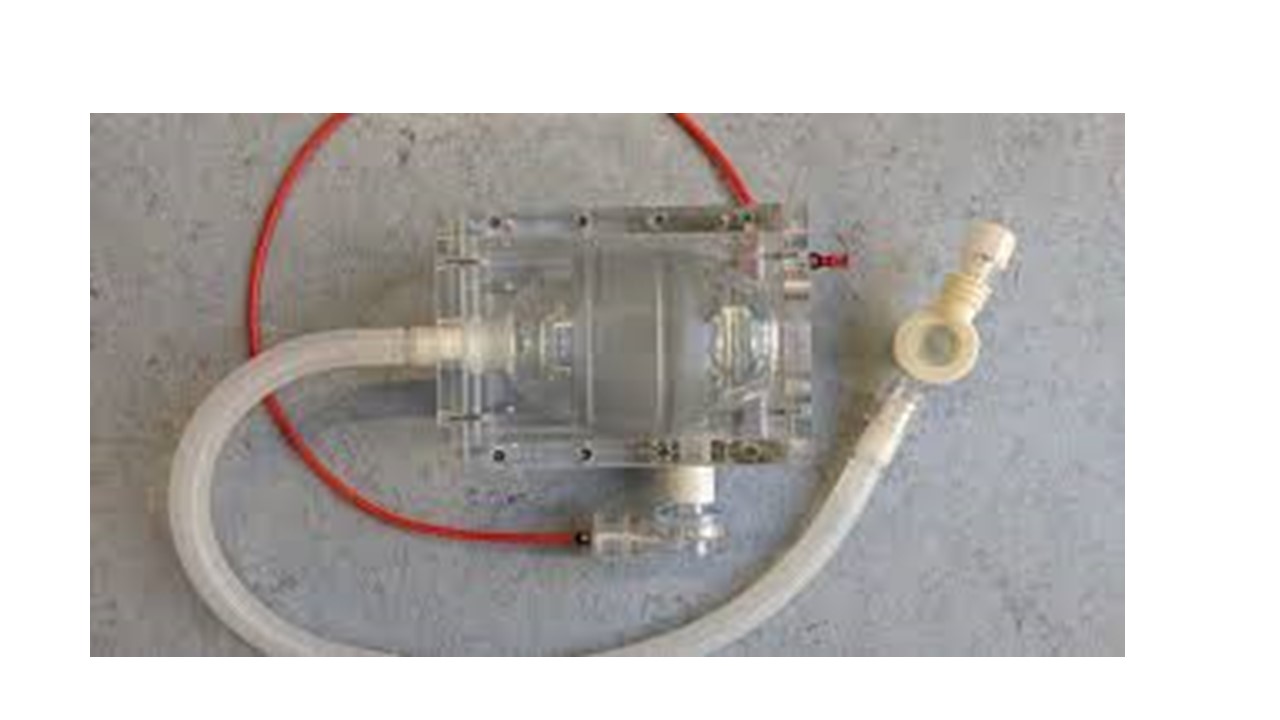
Prof. Andrew Farmery OxVent: simple, effective
In times of crisis, like the ones we are living today, resources and time are scarce – but creativity is plentiful. For example: Creative British doctors and scientists who have designed a primitive, simple, easy-to-produce ventilator, which SONY may mass produce. NY Governor Andrew Cuomo said today that his state has 10,000 ventilators, but it needs 30,000, as the coronavirus is spreading rapidly in his state – and the US Federal Govt. (FEMA) has sent…400 of them, even though there are 20,000 of them in an emergency US stockpile.
[A ventilator is a device that pumps air into the lungs of coronavirus victims, who struggle to breathe].
Here is the story.
Interviewer: “In just one week, a team at Oxford University and King’s College London have built a simple ventilator that could potentially save thousands of lives as part of the UK and the world’s fight against coronavirus. The OxVent is a rapid prototype ventilator that could keep people breathing while they battle the worst impacts of COVID-19. Andrew Farmery of the University of Oxford, one of the people involved in its development, talks about its past, present, and potential. … How are you?
Prof. Andrew Farmery: ” I’m very well, although slightly knackered. It’s been a very long week. It’s been absolutely incredible, from nothing a week ago when we first had an idle chat Monday morning last week, to this afternoon, when we pitched it to the Cabinet and the MHRA (Medicines and Healthcare Products Regulatory Agency). We’re waiting to hear whether they think it’s a goer or not.”
Farmery: “It’s laughably simple in some ways. It’s a compressible bag, a bit like a child’s rugby ball. It’s a compressible squeezy bag – the sort you use to resuscitate patients who have collapsed from cardiac arrest. Ambulances carry them around. But we’ve trapped it inside a rigid Perspex box and we inject compressed air into the rigid Perspex box that squeezes this bladder and pushes air out through some valves which we already have, and inflates the patient’s chest. There’s a second set of valves that allows gas to come out of the patient’s chest and also out of the rigid Perspex box. So it’s a sort of electro-pneumatic device. The air is injected into the box through what’s called a solenoid valve, which is controlled electronically, and we can regulate the flow of air compression gas that goes into the box, the speed with which it goes in, how much time is allowed for inspiration and expiration. We can control the pressures generated in the patient’s airway. All the things you would want, and we’re just doing it with this simple feedback controller.”
Farmery continues: “As well as an academic, I’m also a consultant anaesthetist, so I deal with ventilating patients every week. That’s what I do. The design had come out of what the clinicians want. We were slightly worried at the start when Boris [Johnson, UK PM] announced Land Rover and JCB were going to be making ventilators. I was slightly alarmed that they knew sod-all about ventilators and nobody had really taken the opinions of people like me and doctors and anesthetists around the country.”
“The electronics is based around a very simple circuit board called an Arduino – basically a tiny little circuit board used to teach kids about coding and electronics. It’s basically a toy, but that’s what the prototype is based on. We might even base the whole thing on that. It depends on whether we can knock PCBs out quickly enough. So the control engineers are still working on that, refining it. You’ve got to tell the solenoid valve what to do and then you’ve got to measure and monitor the pressures at various points with sensors to make sure that the solenoid is doing what you told it to do. That’s classic control engineering and they love that sort of thing, and they’re off on it already.”
SONY is exploring the possibility of making 5,000 of the new ventilators weekly I hope the design can be shared with other countries, including my own, Israel.
Online Education Blog #4
5 Tips from Harvard Business School
By Shlomo Maital (with Maya Taya Arie)

Tips from Harvard Business School for online educators:
5 Essentials Tips for Teaching Online
For educators who have never taught online before—and for those brushing up on the basics—online teaching expert Bill Schiano shares his top five tips for creating a successful virtual classroom experience.
- Make eye contact.
If you want to engage students, you’ve got to be looking at that camera. Make your notes easy to see. If I’m looking down at my notes, you’ll see my bald spot, but you won’t see my eyes. You’re not engaged with me. Try posting a photo of your students near your webcam—remember that you’re talking to people, not a machine.
- Involve your students as much as possible.
Make your class session as interactive as you can. If you’re planning to just lecture, then record the lecture and make the recording available asynchronously instead. In a live session, remind yourself at least every 15 minutes to intersperse some form of interaction—be it taking questions, running polls, or calling on students to share examples, so it’s not just you speaking.
- Bring your best self.
As much as you can, engage yourself and show your passion. Maybe it’s with your hand gestures and vocal intonation, or maybe it’s with the conviction of your words. Remember why you became a teacher and use that energy, that sense of purpose, and convey that passion to your students. It’s even more essential online because you need to be bigger when you’re online—you’re often competing with more distractions and students who feel like they can go on mute and tune out.
- Remember that online connections are real connections.
Decide what the tone of your class is going to be—casual, formal, or somewhere in between. That’s going to help you decide what your assignments will look like, how you’re going to introduce your students to one another, and what it’ll feel like to be part of the community you’re building. The more you can build that community, the more your students are going to feel invested in the course, and the more likely they are to engage in the work. You want everyone in the class to want everyone else to be better. Many of your students will want that strong sense of connection, too, because they’ll miss being able to physically go to campus and talk to people.
- Embrace the opportunity.
You now have the opportunity to work with students online, which means they have an opportunity to learn online—this is going to help them develop skills that will be extremely useful to them in their careers. As more and more work gets done virtually, being comfortable interacting virtually and getting acclimated to the tools they’ll use in online courses will be helpful to them long term. Keep that big picture in mind whenever you’re struggling—and know that, with practice, you can absolutely translate your physical classroom skills to an online environment.
Excerpted from “Adapting Quickly to Teaching Online,” a webinar by Bill Schiano, Professor of Computer Information Systems at Bentley University.

 TIMnovate