
You are currently browsing the tag archive for the ‘COVID-19’ tag.
COVID-19: The 80-20 Law & Superspreading
By Shlomo Maital

Some 124 years ago, an Italian economist, Vilfredo Pareto, showed that about 80% of the land in Italy was owned by 20% of the population. Since then management consultants and other experts have extended this Pareto Law, 80-20, to all realms of our lives:
- roughly 20% of the exercises and habits have 80% of the impact
- by fixing the top 20% of the most-reported bugs, 80% of the related errors and crashes in a given system are eliminated
- 80% of crimes are committed by 20% of criminals
Now comes “80-20” in the context of COVID-19.
Today’s New York Times has an article by two infectious disease researchers, Dillon C. Adam and Benjamin Cowling, “Just stop the superspreading”. For Hong Kong, they found that “superspreading [a small number of virus spreaders infecting a large number of people] overwhelmingly contributed to the transmission of SARS-Cov2 in the city overall… In our study just 20 per cent of cases all of them involving social gatherings accounted for an astonishing 80 per cent of transmissions.” And, they add, another 10 per cent of cases accounted for the remaining 20 per cent of transmissions. In other words, 30 per cent of cases account for ALL of the transmissions!
Does this apply only to Hong Kong, a very densely populated city? No. Many other studies confirm the 80-20 principle.
Bottom line?
The researchers note, “Forget about maintaining – or, if infections resurge, resuming – sweeping measures designed to stem the virus’s spread in all forms. Just focus on stopping the superspreading.” Stop that 20 per cent, and you stop 80 per cent of the new cases.
But how?
In Israel, the premier football league has resume play. Two teams played in the Bloomfield Stadium; spectators were banned and the stands were empty. But after their team HaPoel Tel Aviv won 2-0, thousands of fans gathered outside the stadium, clustered together, and celebrated the win. Police were helpless.
Israel’s COVID-19 Success: Smart? Lucky? Or Just …Young?!
By Shlomo Maital

Israel is deemed to have had relative success in controlling the coronavirus pandemic. It has been counted among the ranks of South Korea, Austria and Taiwan, all of which acted rapidly and effectively, and as a result had relatively favorable statistics.
However, a closer look at the data reveals a different picture.

Source: Meirav Arlosoroff, The Marker, May 28/2020.
A study by Prof. Zvi Eckstein, formerly deputy governor of the Bank of Israel, reaches the following conclusion. Israel and Austria had similar rates of infection — about 1,800 cases of COVID-19 per million inhabitants.
Israel had significantly lower death rates than the EU average (about 1%, compared with 6.3% for the EU), and lower than Austria, (4%). (See Figure above).
However, Eckstein notes, Israel has significantly younger populations that EU nations, and than South Korea and Taiwan, owing to a relatively high fertility rate. In addition, the mortality rate from COVID-19 is particularly high among the elderly, over 65 and over 80. In many countries, most of the elderly are in homes for the aged, which have been notorious incubators for the coronavirus in many countries. In Israel, a relatively larger proportion of the elderly live in their own homes or with children. In Israel, as in the US, there have been tragic cases of infection and death in homes for the elderly, but proportionately fewer such homes limited these tragedies.
So, was Israel smart? Lucky? Or, simply, does it have a younger population, less vulnerable? According to Eckstein, probably the latter. Perhaps this may shorten the very long line of political leaders and officials who would like to take credit.
COVID-19: Plasma DOES Help!
By Shlomo Maital

Plasma is a component of our blood. Some 44% of our blood comprises red cells (that carry oxygen to and from the heart and the lungs and other organs), 1% are white blood cells that fight ‘invaders’, and 55% is plasma. It is the liquid part of the blood that carries cells and proteins throughout the body.
There is a theory that plasma from patients who have had COVID-19 and recovered contain antibodies, that can be helpful for other patients in overcoming the illness – especially those who are very seriously ill.
Research in Israel has provided serious confirmation. For those who are very seriously ill with COVID-19, many of them elderly with other serious preconditions, some 50% or so do not recover. When they are administered plasma, that contains antibodies generated by the body to fight the virus, drawn from recovered patients, he rate of recovery improves from about half to one-third, 33%.
Many Israelis have volunteered to donate plasma, after recovering – especially among the ultra-Orthodox community, which has been heavily afflicted by COVID-19.
Israel now has a special plasma bank, with many doses of such plasma, in the event that there is a second wave of the virus. Meanwhile, on May 18, there were only 16 new cases, and two deaths. In total Israel has suffered 278 deaths from COVID-19, a relatively low number, out of some 17,000 cases; of those, 13,435 have fully recovered. Only 50 persons remain in critical condition, on ventilators.
Kerala and KK Shailaja Show the Way!
By Shlomo Maital

KK Shailaja, Kerala Health Minister
On Jan. 21: The first case of the coronavirus is confirmed in the United States, in Seattle.
On Jan. 22: Trump makes his first comments about the coronavirus, saying he is not concerned about a pandemic: “No. Not at all. And we have it totally under control. … It’s going to be just fine.”
Contrast this with the Health Minister of Kerala, K.K. Shailaja, a former teacher. (She is known affectionately as Shailaja Teacher). Kerala is a state in southwest India, with some 35 million people, and its population is quite highly educated; its politics are socialist and, let’s say it, Communist.
According to a fine article in The Guardian by Laura Spinney:
“On 20 January, KK Shailaja phoned one of her medically trained deputies. She had read online about a dangerous new virus spreading in China. “Will it come to us?” she asked. “Definitely, Madam,” he replied. And so the health minister of the Indian state of Kerala began her preparations. Four months later, Kerala has reported only 524 cases of Covid-19, four deaths and – according to Shailaja – no community transmission. The state has a population of about 35 million and a GDP per capita of only £2,200. By contrast, the UK (double the population, GDP per capita of £33,100) has reported more than 40,000 deaths, while the US (10 times the population, GDP per capita of £51,000) has reported more than 82,000 deaths; both countries have rampant community transmission.
What does Shailaja Teacher and Kerala understand, that President Trump does not?
The Guardian continues: “Three days after reading about the new virus in China, and before Kerala had its first case of Covid-19, Shailaja held the first meeting of her rapid response team. The next day, 24 January, the team set up a control room and instructed the medical officers in Kerala’s 14 districts to do the same at their level. By the time the first case arrived, on 27 January, via a plane from Wuhan, the state had already adopted the World Health Organization’s protocol of test, trace, isolate and support. As the passengers filed off the Chinese flight, they had their temperatures checked. Three who were found to be running a fever were isolated in a nearby hospital. The remaining passengers were placed in home quarantine – sent there with information pamphlets about Covid-19 that had already been printed in the local language, Malayalam. The hospitalised patients tested positive for Covid-19, but the disease had been contained. “The first part was a victory,” says Shailaja. “But the virus continued to spread beyond China and soon it was everywhere.” In late February, encountering one of Shailaja’s surveillance teams at the airport, a Malayali family returning from Venice was evasive about its travel history and went home without submitting to the now-standard controls. By the time medical personnel detected a case of Covid-19 and traced it back to them, their contacts were in the hundreds. Contact tracers tracked them all down, with the help of advertisements and social media, and they were placed in quarantine. Six developed Covid-19.”
Spinney observes: “ The Communist Party of India (Marxist), of which she is a member, has been prominent in Kerala’s governments since 1957, the year after her birth. (It was part of the Communist Party of India until 1964, when it broke away.) Born into a family of activists and freedom fighters – her grandmother campaigned against untouchability – she watched the so-called “Kerala model” be assembled from the ground up; when we speak, this is what she wants to talk about.”
Trump vilifies socialism without understanding what it is, calls the Democrats ‘socialists’, and his sycophants caution against becoming “like Denmark” (a society and economy far more equitable, healthy and unified than the US). Imagine what Trump would say about Kerala, if he knew where India was on the map or what Shailaja Teacher had done.
How many people died, because Trump leads the US and not Communist Shailaja? How many lives could have been saved, had Trump acted weeks or even days sooner?
And will voters rightly fix the blame on his shoulders, on November 3, in the US?
Postscript: One of the world’s leading medical journals is The Lancet. Read The Lancet’s unprecedented Editorial, showing how Trump gutted the Center for Disease Control (CDC), politicized it, and made it unable to deal properly with the COVID-19 crisis. No-one can remember the last time when a scientific journal like the Lancet has editorialized so fiercely.
[Special thanks to Pramod Arikal, my former student, for drawing my attention to this important story].
How Israel Solved the Ventilator Shortage:
Organizing Creativity
By Shlomo Maital

As the world seems to be slowly emerging from the pandemic, fears now turn to a possible second wave. So, we may still need ventilators, in large quantities.
Here is how a creative Israeli team has attacked this problem, according to Rosella Tercatin, writing in the daily Jerusalem Post, May 10:
“Manshema, a $200-a-piece open source technology created by an Israeli team, could solve the problem of the shortage of ventilators crucial to assist patients who contract the most serious forms of COVID-19 worldwide.
“Around mid-March, a group of Israeli organizations – including the IDF, the Assuta Medical Center in Ashdod and Rafael Advanced Technology – engaged several hundreds of their affiliated experts in what they called a “COVID-19 sprint.” The participants were divided into 16 teams to work on finding solutions to a list of problems related to the pandemic. One of the teams decided to tackle the problem of creating a very simple but effective ventilator.
“As explained to The Jerusalem Post by Mordechai Halfon, an officer at the Technological Division of the IDF Ground Forces, within two weeks a first working prototype of the machine was ready.
“Our device does not intubate patients, no tube is inserted in their throat to push the air in, they can still breath on their own but the hard work is done by the machine,” he said. “It is catered specifically to COVID-19 patients, who required a very specific type of ventilation. This is why it is so simple, as opposed to regular ventilators which need to be suitable for many different kinds of needs.”
“The Manshema team includes different kind of engineers, medical experts, product managers, who had never met before. Seven of them have been working on the project full time – Gil Bachar, Stav B., Elad Grozovski, Ronen Zilberman, Roi Galili Darnell, Ivry Shapira, Omri Mizrachi – others are contributing in different capacities.
“At the beginning, the group worked on the task by themselves, meeting online when required. Afterwards, they started to meet at the Tel Aviv branch of Assuta.
“The project is completely nonprofit and opensource, which means that all the relevant information is available to any manufacturer interested in producing them or medical center in using them all over the world.”
Coronavirus: Cheap Israeli technology may solve world ventilator shortage
The project is completely nonprofit and opensource.
By ROSSELLA TERCATIN
MAY 10, 2020 17:
“Because we are talking about a world-wide pandemic, it was important for the ventilator to be cheap and easy to manufacture. We also wanted it to be disposable,” Stav B., a doctoral student at the Tel Aviv University, told the Post. “Quite at the beginning, we were selected by the Health Ministry as a pilot project and they supported us.”
Since the cost of production of every unit stands at about $200 and the time required at around two/three hours of work, while ventilators available to the market cost from several thousands to several dozen thousand dollars and have become harder and harder to find and purchase, the product could really revolutionize the fight against the virus even in the poorest countries.
“We have received a lot of support also from many companies here in Israel. We have found out that since nobody is involved in the initiative to make money, everyone has been very happy to help us in providing what we needed just for the goal of fighting the virus,” Halfon explained.
The product will undergo clinical trials at Assuta Medical Center in the next few weeks.
“In the first phase, we are going to test it on healthy volunteers, which should be easy to find, after on patients and critical patients. We are not sure how long it will take to complete the trial, but we are hoping that we are going to be ready before the next wave of the virus, if it comes,” the captain pointed out. “We believe that this machine can save a lot of lives.”
Halfon explained that when everything started, they did not think they would be able to arrive to this point.
“We worked through steps. First, we decided to dive into the actual requirements that the machine would need, then we focused on how the solution would look in a broader perspective and only then on how to build the machine,” he said.
“I think it is important to highlight two key elements in our work: the quality of the team effort and the will to do something good,” he concluded.
Winter the Llama – Can She Save Humanity?
By Shlomo Maital

Winter the Llama
OK, so I can see how an MIT scientist can save the world.
But a llama? Winter the llama?
So here’s the story, by Jillian Kramer, writing in the New York Times today:
“Winter is a 4-year-old chocolate-colored llama with spindly legs, ever-so-slightly askew ears and envy-inducing eyelashes. Some scientists hope she might be an important figure in the fight against the novel coronavirus. She is not a superpowered camelid. Winter was simply the lucky llama chosen by researchers in Belgium, where she lives, to participate in a series of virus studies involving both SARS and MERS. Finding that her antibodies staved off those infections, the scientists posited that those same antibodies could also neutralize the new virus that causes Covid-19. They were right, and published their results Tuesday in the journal Cell.
“Scientists have long turned to llamas for antibody research. In the last decade, for example, scientists have used llamas’ antibodies in H.I.V. and influenza research, finding promising therapies for both viruses. Humans produce only one kind of antibody, made of two types of protein chains — heavy and light — that together form a Y shape. Heavy-chain proteins span the entire Y, while light-chain proteins touch only the Y’s arms. Llamas, on the other hand, produce two types of antibodies. One of those antibodies is similar in size and constitution to human antibodies. But the other is much smaller; it’s only about 25 percent the size of human antibodies. The llama’s antibody still forms a Y, but its arms are much shorter because it doesn’t have any light-chain proteins.”
“This more diminutive antibody can access tinier pockets and crevices on spike proteins — the proteins that allow viruses like the novel coronavirus to break into host cells and infect us — that human antibodies cannot. That can make it more effective in neutralizing viruses.”
How an Overnight COVID-19 Test Took 35 Years to Invent
By Shlomo Maital

Dr. Fang Zhang
As Darwin observed, when he was praised for his breakthrough: Scientists stand on the shoulders of giants. Now, a new genetic test for COVID-19 may be as quick, simple and cheap as a self-administered pregnancy test, with two lines on a slip of paper.
Here is the story. Let’s begin by noting that the hero is ethnic Chinese, Fang Zhang, a researcher at MIT’s Broad Institute. With massive anti-Asian and anti-Semitic hatred filling the Internet, it is fitting the hero should be named Zheng.
Chapter One. Some 35 years ago, a biologist named Kary Mullis invented PCR. Polymerase chain reaction (PCR) is a method used in molecular biology to rapidly make millions to billions of copies of a specific DNA sample. This allows scientists to take a very small sample of DNA and amplify it to a large enough amount to study in detail. For example, suppose you are looking for the presence of the genetic material of a virus. You take a swab, use PCR, make millions of copies of the stuff, and then it becomes easy to detect it in a test tube. Mullis won the Nobel Prize for this discovery, in 1993.
Chapter Two. CRISPR: Clustered Regularly Interspaced Short Palindromic Repeats. (A palindrome is a word or phrase that reads the same forwards and backwards, e.g. a man a plan acanal panama. ) The discovery of clustered DNA repeats occurred independently in three parts of the world. The first description of what would later be called CRISPR is from Osaka University researcher Yoshizumi Ishino and his colleagues in 1987.
Say you want to modify a specific gene – snip it out, replace it, test it, etc. First, you ‘tag’ it with a molecule (like putting a big road sign, “HERE I AM!”, on it). Second, you attach an enzyme to the tag. The enzyme cuts the CAN right at that spot! You can then replace the faulty or offending gene with a different improved one.
Chapter Three. MIT. Dr. Zhang and other researchers have retooled CRISP-R. They use it not to snip out a gene, but to give a signal that the enzyme has reached its target – a piece of genetic material that is unique to COVID-19. When this happens, a screaming signal is emitted, say, figuratively, a bright Day-Glo sign saying, Yikes, it’s the novel coronavirus!
Chapter Four. Translate the complex lab procedure to a simple cheap test. Take samples from a person’s throat and nose. Put it into a test tube with chemicals that tear open viruses. Use an eye dropper to put some of the liquid into a second test tube containing CRISPR. Put the test tube in hot water, at 140 degrees F. (80 C.). Stick a piece of paper into the tube. If two lines appear: COVID-19 is present.
The test worked on 12 patients, and can be simplified greatly and produced at $6 per test. This may enable massive population-wide testing, that can help open societies and economies without a massive second-wave of plague.
Classic scientific breakthrough: 35 years, and an overnight breakthrough!
Why Mab is Fab: A Monoclonal Antibody Defeats COVID-19
By Shlomo Maital
Scientists all over the world are desperately searching for a ‘silver bullet’ – a magical compound that can defeat the insidious, devious and evil novel coronavirus. It may be that scientists at Israel’s Institute for Biological Research have found it.
First, a small science lecture.
Antibodies are large, Y-shaped proteins produced mainly by plasma cells in the body, that are used by the body’s immune system to neutralize pathogenic bacteria and viruses that make us ill or kill us.
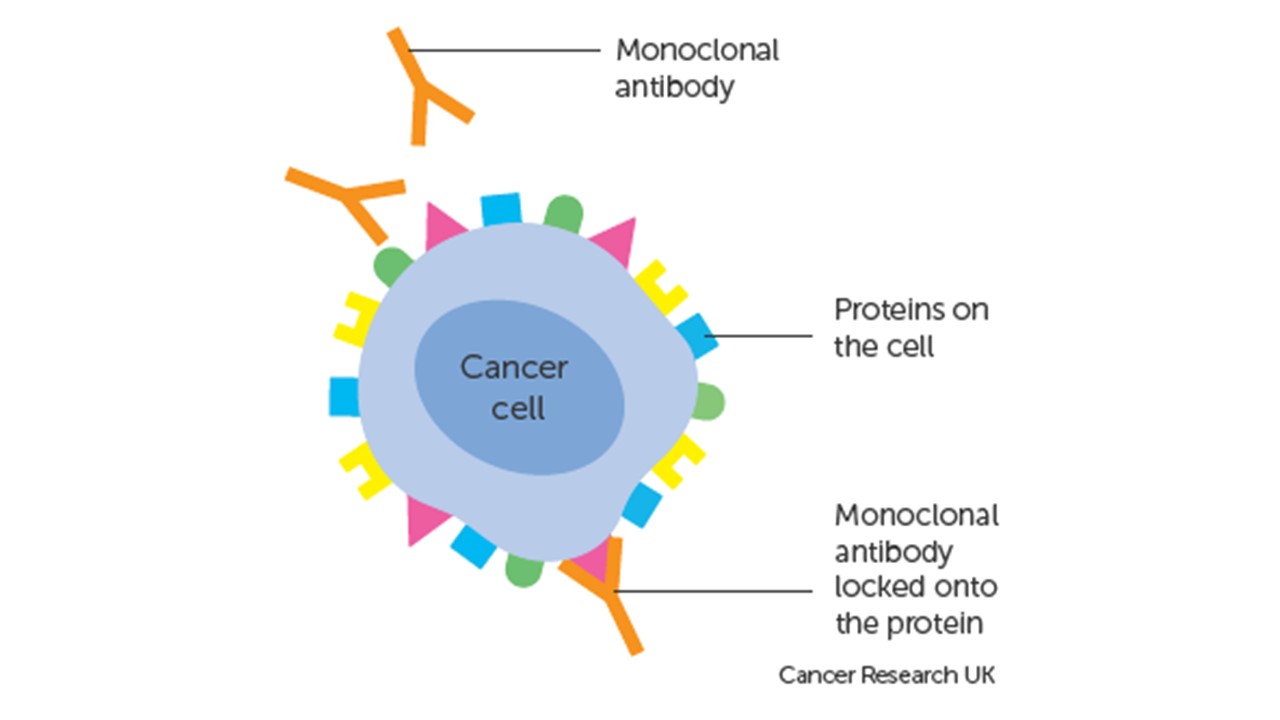
Monoclonal antibodies (Mab’s, for short, the suffix added to drugs produced in this way) are antibodies made by identical immune cells that are all clones of a unique parent cell. Monoclonal antibodies bind to the same part of an antigen [the bad stuff from a virus] that is recognized by the antibody.
Put it this way: Monoclonal antibodies (Mab’s) are like little guided missiles, fired by the body at, for example, the spikes on the coronavirus that poke through cell walls and infect it. [See the diagram above]. Those little guided missiles neutralize those spikes and prevent the virus from infecting human cells by poking through their walls. The body then destroys the virus before it does damage.
These Mab’s have been used so far mainly as promising anti-cancer drugs, as part of so-called immunotherapy. The anti-cancer drugs zero in on cancer cells and kill them. The key is the word “monoclonal” – unique little antibodies that aim specifically, uniquely, at an offending invading virus or cancer cell.
A press announcement stated: “The Israel Institute for Biological Research (IIBR) has completed a groundbreaking scientific development, determining an antibody that neutralizes the coronavirus, SARS-CoV-2, according to a statement by the Defense Ministry. [That is the scientific name for the virus that causes COVID-19]. This scientific breakthrough has three key parameters: The antibody is monoclonal, new and refined, and contains an exceptionally low proportion of harmful proteins; the institute has demonstrated the ability of the antibody to neutralize the coronavirus; the antibody was specifically tested on the aggressive coronavirus. Based on comprehensive scientific publications from around the globe, it appears that the IIBR is the first institution to achieve a scientific breakthrough that meets all three of the aforementioned parameters simultaneously,” the Defense Ministry said in a statement on behalf of the institute.
The breakthrough is now being patented.
In addition, to produce the COVIDi-19 Mab, “IIBR and the small southern town of Yeruham, Israel, on Monday night announced they have big plans to open Israel’s first vaccine production facility, in partnership with one of two prospective international pharmaceutical companies.”
All over the world, vaccine production facilities are ramping up, long before the vaccines themselves have been proven safe and effective. So once a vaccine is found, it can be produced in large amounts quickly.
The Mab approach is promising, because it is a compound that can be taken orally, rather than by injection.
Let us hope that this report is accurate and that the anti-corona Mab really works and can be produced massively and quickly, and safely. Let’s hope the Israeli Mab is indeed fab.
Leadership: Give the Keys to Young Educated Women
By Shlomo Maital

Of some 200 countries in the world – which have had leaders most competent and successful in leading responses to the pandemic?
Let’s begin with the losers. Aging autocratic poorly-educated men, in denial, who missed the boat. The ‘orange haired narcissist’, as NYT columnist Roger Cohen calls him, Donald J. Trump. The whacko Brazilian president Jair Bolsinaro, possibly facing impeachment (like his mentor Trump). “So what?” was his response, when asked about Brazil’s death toll, highest in South America. Vladimir Putin, who cowardly shelters and lets others take the blame. Erdugan, who despite the crisis pursues his foes with paranoid insanity.
And now for the winners. Young educated women. 39-year-old Jacinda Ardern, who saw what was happening and shut down New Zealand with only 53 proven cases. Finland’s Prime Minister Sanna Marin, 34, one of the youngest political leaders in the world. Norway’s Prime Minister Erna Solberg. (She’s 59, tough, “Iron Erna”, and young in spirit). And never forget German Chancellor Angela Merkel – not young, like the others, but educated, a scientist, and quietly compassionate and competent. In Iceland, Katrin Jacobsdottir, 44, who organized free COVID-19 testing for all! And don’t forget Taiwanese President Tsai Ing-Wen, 64.
Now, a Yiddish saying goes, “for instance is not a proof”. But a spate of terrific female Prime Ministers who have led their country with bravery courage and excellence – this is not an accident, in the face of aging despot men who have utterly failed.
So suppose the world was a locked house, with a set of keys. Who should get the keys? Smart competent women, who have fought their way up the political ladder against all the odds. Educated women, who speak well, do their homework, listen to experts, and win the trust of their people. Compassionate women, who understand human suffering and communicate this compassion.
And the despotic men? As Trump loves to say, “lock ‘em up”. Fast. Before it’s too late. Figuratively, of course – at the ballot box. Tuesday Nov. 3, 2020, a crucial date for the US and the world. Bye bye, orange-haired narcissist. Hello, Democrat female educated courageous well-spoken Vice President. And future President.
Prof. Amnon Shashua: From Mobileye to COVID-19
By Shlomo Maital
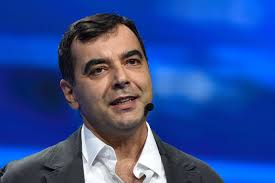
Prof. Amnon Shashua
Many years ago, Hebrew University Computer Science Professor Amnon Shashua attended a computer vision conference in Europe. Automobile executives there asked him, how many cameras are needed on a car, to warn of danger? The prevailing wisdom: at least two, because we need two eyes for depth perception (through ‘triangulation’). Shashua said, no, we need just one camera. It can measure depth by comparing data at two points in time… The executives scoffed. Shashua came home to Israel, and launched Mobileye, which saves lives through its little camera and sophisticated software. Mobileye was acquired by Intel for $15 b. Shashua continues to head it.
With the outbreak of COVID-19, Prof. Shashua has tackled the issue of strategy. His claim: Mathematics has the answer. In the online magazine Medium, he and Shai Shalev-Shwartz have published their mathematical analysis of three different strategies, and they recommend one of them. The title asks the key question: “Can we contain COVID-19 without locking down?”. Here is a summary. *
“We present an analysis of a risk-based selective quarantine model where the population is divided into low and high-risk groups. The high-risk group is quarantined until the low-risk group achieves herd-immunity. We tackle the question of whether this model is safe, in the sense that the health system can contain the number of low-risk people that require severe ICU care (such as life support systems).
“ One could consider three models for handling the spread of Covid-19.
* Risk-based selective Quarantine: Divide the population into two groups, low-risk and high-risk. Quarantine the high-risk and gradually release the low-risk population to achieve a managed herd immunity of that population.
* Containment-based selective quarantine: Find all the positive cases and put them in quarantine. This requires an estimation of the “contagious time interval” per age group, then given this time interval one could recursively isolate all the individuals at risk from a person that is carrying the virus using “contact tracing”. Another tool is predictive testing using contact-tracing to identify people with many contacts with other people and perform tests on them.
* Countrywide (or region-wide) lock-down until the spread of the virus is under control. The lock-down could take anywhere from weeks to months. This is the safest route but does not prevent a “second wave” from occurring.
“In the event a risk-based quarantine approach would be contemplated by decision-makers, the purpose of this document is to provide decision-makers a formal and tight bounds to investigate whether the health system can cope with the number of severe cases that would reach ICU. Embedded in the reasoning is the idea of selective quarantine (based on age groups and existing pre-conditions, but could be any other criteria) where the ”high-risk” group (the one we suspect will have a high rate of severe cases) is quarantined and the other is allowed to spread the virus under certain distancing protocols. The underlying premise is that a full population-wide quarantine is not a solution in itself — it is merely a step to buy time followed by a more managed (non brute-force) approach. The managed phase underlying our thinking is to create herd immunity of the low-risk group in a controlled manner while keeping the economy going. It is all about keeping the health system in check and not overwhelming its capacity to handle severe cases. The question we ask in this document is whether we can estimate in advance, through sampling, that the number of severe cases arising from the low-risk group would not overwhelm the system?
“…When the high-risk group is released from isolation they would be facing a largely immune population thus naturally facing a very slow spread of infection with a good chance to whither the storm until a cure or vaccine is available. In all other selective quarantine models the high and low risk are equally susceptible to be infected so that even if the health system is not overwhelmed still the mortality of the high-risk group is likely to be higher than the risk-based model.”
This model has been proposed before by Nobel Laureate Paul Krugman (see my blog on his proposal, April 2). Shashua serves on an advisory board in Israel, advising Health Ministry officials. I believe his ideas are being implemented, though cautiously.
Warning: the article whose URL is given below can be dangerous to your health; it is highly mathematical.
 TIMnovate